By KT Reporter
Uganda issued its position paper at the UN Climate Change Conference, pushing for more funds for climate change mitigation and the need for low global temperatures, and the need to allow it and other countries to develop their oil and gas resources.
Uganda Radio Network has seen a 156-page document prepared by a team of climate experts from the Ministry of Water under its climate change department.

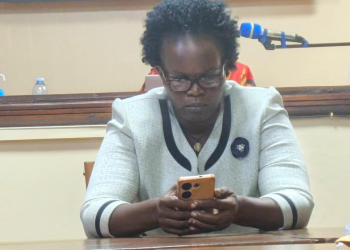
The document that was widely circulated at the conference in Brazil outlines Uganda’s key expectations from the annual climate summit. Uganda’s delegation at the COP30 is led by the State Minister for Water, Beatrice Anywar.
The UNFCCC Conference of the Parties offers nations a platform to agree on solutions to global climate challenges.
Anywar said Uganda continues to engage actively in an African group of negotiators, an LDC group, and G77 plus China, ensuring that the priorities of Africa and other vulnerable regions are fully implemented, reflected in the global climate decisions.
She said Uganda is highly susceptible to the impacts of climate change, ranging from floods, landslides, thunderstorms, lightning, and droughts to pest outbreaks. Those, she said, continue to disrupt lives and livelihoods across the country.
“These challenges threaten our progress towards achieving the Vision 2040 and National Development Plan,” she said.
The UNFCCC Conference of the Parties provides a platform for all nations to describe and agree on collective solutions to the world’s most pressing climate challenges.
Uganda’s key issues are across the thematic areas of adaptation, climate change, climate finance, technology development and transfer, capacity building, and loss and damage.
Others are the impact of climate change on agriculture, legal and compliance matters, and emerging cross-cutting issues such as youth, migration, water and sanitation, and health.
Uganda works with African, LDC, and G77 plus China negotiator groups to ensure Africa’s and vulnerable regions’ priorities are considered in global climate decisions.
Anywar urged the Ugandan delegation to the COP30 conference in Belém, Brazil, to engage constructively with unity, evidence, and purpose, defending Uganda’s interests while contributing to solutions that secure a sustainable, inclusive, and resilient world for the betterment of the nation.
Uganda’s negotiators this time around include Professor John-Baptiste Kadu on climate change adaptation, Associate Professor Mackey Akoori Echuman Okure on climate change mitigation, and Dr. Barilega Akankwasa on capacity building, Mr. Juvenel Ntachyo Muhumuza on climate finance, Fred Machulu Onduri on technology and transfer, Winnie Matsiko on gender and climate change, Eunice Asingiza, legal and compliance, Andrew Masaba on response measures, and Imelda Kanzomba on agriculture. The technical negotiators are led by the Permanent Secretary of the Ministry of Water, Dr. Alfred Okot Okidi.
Uganda’s position on fossil fuels
There is a lot at stake for low-income oil-producing countries at COP30. Nearly two years ago at COP28, governments committed to pursuing a just, orderly, and equitable transition away from fossil fuels. Now in Belém Brazil, it is time for them to look for them to translate those commitments into action.
Climate activists are demanding that COP30 deliver a clear plan to phase out fossil fuels and one that fast-tracks renewables. The issue of phase-out or transitioning from fossil fuels is a sticky one for Uganda as it plans to begin pumping its oil from the ground.
Uganda’s primary interest in the COP30 session should be to eliminate any text containing an unbalanced socio-economic justification of transitioning from fossil fuels from the final decision.
Uganda is pushing for the deletion of a provision requiring the phase-out of fossil fuels in the text.“If deletion is not achievable, the fallback should be to negotiate for an inclusion option of negative impacts posed on economies of new fossil fuel producers alongside the socio-economic opportunities of transitioning away from fossil fuel,” reads part.
It says Uganda needs to strategically demand equity, transition support, and transition policy flexibility that is country-determined and non-prescriptive.“If parties find it unacceptable, Uganda should negotiate for its support, or better still, option three of no text on this. Uganda should advocate for the Just Transition Work Programme (JTWP).
Just Transition Work Programme is an initiative of the United Nations Framework Convention on Climate Change (UNFCCC) that aims to promote pathways that ensure that the goals of the Paris Agreement are achieved justly and equitably.
These pathways should be multi-faceted (including energy, socio-economic, workforce, and other dimensions), must include social protection, and must be specific to country contexts by considering nationally defined development priorities.
Uganda is concerned that the push for a phase-out of fossil fuels, which includes oil and gas, would have dire effects on the ongoing oil and gas developments.“This should be a concern for Uganda. It addresses oil and gas risks from unilateral measures constraining project finance, emphasising the need for equitable ambition without stranding assets,” says Uganda’s position paper.
“There is a need for access to technology providers and resources vital for decarbonisation in Uganda, transport, and affordable housing. It supports Uganda’s greenhouse gas reduction targets, including through electric vehicles, charging infrastructure, biofuels, and critical minerals value addition,” it said.
Other issues for Uganda at COP30
Uganda, as an LDC, is fronting for the realization of the goal through Article 9.1, but the developed countries, which are the key actors as providers of climate finance, are basing it on Article 2.1c.
The issue of interest to Uganda is the Loss and Damage associated with Climate Change. At COP30, countries will be asked to present new and more ambitious climate plans capable of attracting private investments essential for accelerating action.
Climate-vulnerable countries, including Uganda, are seeking strong outcomes on climate and adaptation finance, stronger multilateralism, and the impact of the International Court of Justice ruling.
Uganda is experiencing climate change-related loss and damage, both extreme events such as landslides in highland ecosystems and slow-onset events such as the Glacier Retreat or loss of snow cover in the Rwenzori.
So the negotiations on loss and damage are important to Uganda. Climate finance negotiations will focus on how new climate finance goals will be delivered.
The COP30 Presidency published a summary note capturing the substance of consultations carried out during the first week of the COP on the most contentious issues among Parties, namely: the implementation of Article 9, paragraph 1 of the Paris Agreement on finance; responding to the synthesis report on nationally determined contributions (NDCs) and addressing the 1.5°C ambition and implementation gap; promoting international cooperation and addressing the concerns with climate change related trade-restrictive unilateral measures; and the synthesis of biennial transparency reports.
The end of the first week of COP30 marked an important and delicate transition point from the technical phase of the negotiations to the political phase, with ministers from around the world arriving in Belém to resolve outstanding issues in the second week.
This next phase will also see the COP30 Presidency take a more active role in guiding Parties towards agreement.
-URN. Give us feedback on this story through our email: kamwokyatimes@gmail.com