By KT Reporter
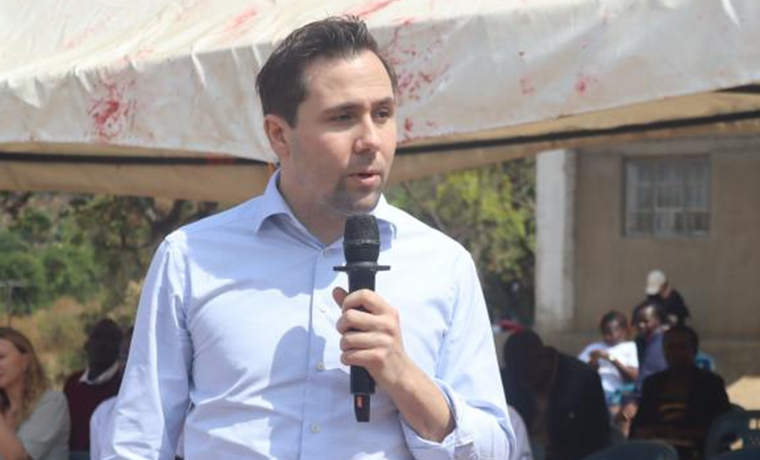
The Minister for International Development Cooperation and Foreign Trade in the Government of Sweden, Benjamin Dousa, has emphasized the importance of ensuring access to affordable legal aid services for all.
During a field visit on Wednesday to monitor projects supported by the Swedish Government in Vurra Sub-County, Arua district, Dousa explained that access to justice is fundamental to the functioning of any state. He added that it facilitates growth, prosperity, and equal rights for all citizens.

Clare Anena Lagoro, a senior legal officer at the Uganda Law Society (ULS), who provides free legal aid services in Arua district, shared that land conflicts are the most common legal issues they handle in the region. Lagoro stated that ULS handles at least 20 land conflict cases per month, alongside several cases involving child neglect. Other frequent legal issues include theft, the use of narcotics, and assault.
Joel Pario, the LC3 chairperson of Vurra Sub-county, urged the Uganda Law Society and FIDA (International Federation of Women Lawyers) to extend their presence to the most remote areas of the community, where many people are too poor to access justice. Pario recalled that many locals, when preparing to receive the donors, were unaware of the event and asked about its purpose.
He also appealed to donors and development partners to utilize Vurra’s proximity to the Democratic Republic of Congo and empower locals to tap into business opportunities at the border. Pario suggested that establishing a regional border market would help reduce the number of criminal and civil cases that development partners are working to resolve.
“We have business opportunities, and we need to engage in value addition, especially in honey production. This cooperation will address some of the challenges that women are facing,” Pario said.
Alfred Okuonzzi, the chairperson of Arua district, acknowledged that many people in the area have limited access to legal aid services, making support from donors and legal aid organizations vital.
“The legal services were meant for the wealthy, and the poor had no access. Now, they are receiving legal aid for free,” Okuonzzi said. According to a 2025 research report by LASPNET (Legal Aid Service Providers Network), women face significant barriers to accessing justice due to various factors.
These include laws that are either gender-neutral or discriminatory, poverty, and illiteracy, all of which hinder women from navigating justice systems because of the complexities and costs involved. Within traditional and informal justice mechanisms, women are often subjected to patriarchal norms, further reinforcing inequalities and violence-URN. Give us feedback on this story through our email: kamwokyatimes@gmail.com