By KT Reporter
A new national learning assessment by Uwezo has revealed ongoing concerning trends in Ugandan children’s education, showing stagnation and decline in overall learning outcomes.
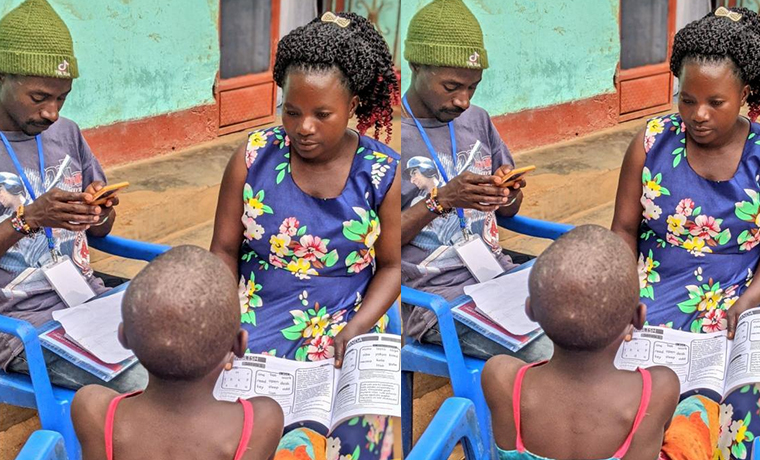
The study, conducted between July and August 2024 across 29 districts, 410 primary schools, and 8,608 households, assessed the literacy and numeracy competencies of 21,057 children. Titled Are Our Children Learning? Learning Recovery and Challenges for Uganda, the report builds on previous Uwezo assessments conducted since 2010, tracking progress in children’s basic reading and numeracy skills.

“(There are) divergent trends for children’s literacy and numeracy. Reading levels in the upper primary classes are lower than in 2021 and may reflect the long-term impact of the school closures of 2020-21. However, the numeracy levels are generally higher than in 2021, despite the closures,” reads part of the report.
One of the key takeaways from the report is the widening gap in literacy. Compared to 2021, fewer children in primary school can read and comprehend stories at their expected level.
The percentage of P3-P7 pupils who could read and understand a P2-level local language story has dropped from 30 percent in 2021 to 20 percent in 2024, while among P7 pupils, the ability to read and comprehend a P2-level local language story has declined from 68 percent to 51.1 percent. Similarly, the proportion of P3-P7 learners who could read a P2-level English story and complete basic arithmetic tasks fell from 30 percent to 20 percent, highlighting stagnation in learning recovery efforts.
Perhaps most concerning is the rising number of children who have not yet reached the expected competence in English. In 2021, 11.3 percent of P7 learners had not attained P2-level proficiency in English, but by 2024, this figure had almost doubled to 23.2 percent. While presenting and discussing the findings, Dr. Maria Goretti Nakabugo, Uwezo’s Executive Director, said that the data point to the fact that there is a significant number of pupils are progressing through the education system without mastering basic literacy skills.
“The decline in literacy skills is deeply concerning. If children cannot read and comprehend at the expected level, their ability to learn in all other subjects is compromised. We must focus on strengthening early literacy programs, training teachers, and encouraging reading both at school and at home,” said Nakabugo.
Numeracy Improvement Offers a Glimmer of Hope
Despite the grim statistics in literacy, numeracy has shown some resilience, with slight improvements recorded since 2021. The proportion of P3-P7 learners able to perform all four arithmetic operations increased from 50 percent to 60 percent, while P3 learners solving basic arithmetic problems rose from 20 percent to 30 percent. Among 10-year-olds, the ability to complete mathematical tasks also improved from 20 percent in 2021 to 30 percent in 2024.
Dr. Nakabugo described the improvement in numeracy as a “pocket of hope” and “good progress.” She further explained that for a long time, educational efforts have been heavily focused on literacy, but in recent years, there may have been a shift toward strengthening numeracy interventions.
Additionally, she pointed out that research has shown numeracy competencies tend to improve with age. With many learners repeating classes due to COVID-19 disruptions, this could also help explain the observed gains in numeracy.
Beyond the disparities in literacy and numeracy, the report raises concern about the overall competency levels of children at different stages of learning. The findings indicate that many children are failing to acquire skills typically expected for their age.
For instance, among 10-year-olds, the ability to read and comprehend a P2-level English story dropped from 15.8 percent in 2021 to 14.3 percent in 2024, while their ability to read a P2-level local language story fell even further from 11.2 percent to 7.3 percent
These figures underscore the fact that children are progressing through the school system without mastering basic reading skills at the right age, a challenge that could have long-term implications on learning outcomes at higher levels.
Signs of Recovery, but Challenges Remain
While the report highlights significant setbacks in literacy, there are early indications of recovery in some areas. The proportion of five-year-olds who could recognize letters of the English alphabet improved from 20 percent in 2021 to 30 percent in 2024, showing that young learners are gradually developing foundational literacy skills.
However, the number of P3 learners who could read beyond the word level in English dropped from 22.4 percent to 18.5 percent and those who could read beyond the word level in local languages declined from 16.5 percent to 14 percent. These slight declines suggest that despite efforts to rebuild learning after the pandemic, progress remains slow and inconsistent.
Meanwhile, the report also highlighted that staffing levels and resources in primary schools, particularly in the public sector, have seen little to no improvement. As a result, many of the recommendations remain largely unchanged from those made in 2021.
Key suggestions include prioritizing efforts to strengthen literacy and numeracy instruction at the lower primary level, addressing the needs of learners who are falling behind, and enhancing literacy support for both primary school leavers and dropouts.
Petua Katamba, a parent from Namutumba District, welcomed the report, stating that it provides an unbiased assessment of whether learners are truly progressing. She noted that based on the findings, teachers and other stakeholders can identify problem areas and work towards solutions.
However, she emphasized that several underlying factors contribute to the reported learning outcomes, including inadequate school infrastructure, parent-teacher relationships, and student-feeding programs, all of which need urgent attention.
Commenting on the findings, Dr Cleophas Mugenyi, the Commissioner for Basic Education at the Ministry of Education, expressed optimism about the gradual recovery from the effects of the prolonged COVID-19 school closures in 2020 and 2021.
Dr Mugenyi was particularly pleased to see evidence of a rebound in pre-primary enrollment, noting significant improvements in the lower primary age group, with fewer children falling into the non-reader and non-numerate categories. To him, this indicates that as the foundation is strengthened, learning outcomes will gradually improve.
While acknowledging the challenges highlighted in the report, Mugenyi urged stakeholders to focus not only on the setbacks but also on the opportunities for progress.
“Many people like to read from lamentations, focusing on the negatives, but to me, this report is also a book of revelation—its recommendations offer a path forward. If these are taken seriously, we will see gradual improvement,” he said.
He further emphasized that over the years, Uwezo reports have been a valuable resource in shaping education policy at the ministry, helping guide interventions aimed at improving learning outcomes across the country-URN. Give us feedback on this story through our email: kamwokyatimes@gmail.com