By KT Reporter
Despite recent advancements in gender equality and women’s empowerment, experts and activists are sounding the alarm over a rising backlash that threatens to reverse these hard-earned achievements.
According to several gender specialists, while policies and initiatives have expanded women’s access to education, leadership roles, and economic opportunities, a growing social and political pushback is beginning to erode these gains.

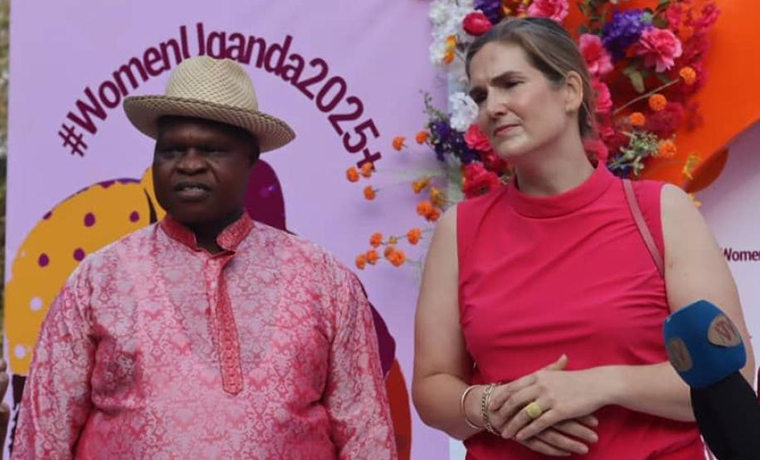
Richard Ssewakiranga, a Gender expert and Human Rights Activist, noted that the resistance to gender equality and women’s empowerment seems intentional and strategic, posing a serious challenge to the progress made in recent years.
Ssewakiranga made the remarks in a keynote address at an event co-hosted by the Dutch and Kenyan ambassadors to Uganda at the Dutch ambassador’s residence on Wednesday.
He stressed that solidarity—both among gender activists and with women more broadly—is essential in resisting the growing backlash against gender equality. Emphasizing the need to bridge divides and recognize a shared humanity, he affirmed that empowerment knows no borders.
Other attendees—including diplomats stationed in Uganda, NGO leaders, and politicians—emphasized the growing influence of conservative ideologies, policy reversals, and opposition to feminist movements, as well as the failure to enforce key laws, as key drivers of the backlash against gender equality.
The discussion also prominently featured concerns about funding cuts for gender equality programs in some countries and the increasing threats and discrimination faced by women leaders and activists in others.
Engaging Men in the Fight for Gender Equality The Dutch Ambassador, Frederieke Quispel and her Kenyan counterpart, Joash Maangi, stressed the need to engage men in the conversation on women’s rights, emphasizing that gender equality is not solely a women’s issue but a shared responsibility.
“Ensuring that women are treated equally is not a privilege—it is their right,” the Dutch Ambassador stated.
She recounted a personal experience that inspired a new campaign launched in collaboration with UN Women. “I was surprised by how little my husband knew about gender inequality in the workplace, and then I realized—we, as women, often discuss these issues among ourselves but rarely include men in the conversation,” she explained.
She underscored the need to actively involve men, many of whom were raised by strong mothers, have daughters, and are willing to support the fight for gender equality.
The Kenyan Ambassador, Maa,ngi echoed this sentiment, highlighting the importance of male allies in strengthening the movement. “When men and women work together, the impact is greater,” he said, encouraging more men to join the cause.
He also challenged misconceptions around masculinity, arguing that true strength lies in respect for women. “Some men struggle with an inferiority complex, believing that masculinity means dominance. But real strength is found in politeness and respect, not in subjugating women,” he stated.
Rejecting the long-standing stereotype of women as the “weaker sex,” he pointed out their resilience and emphasized that gender-based violence—both economic and physical—is a major tool used to suppress women’s rights.
Paulina Chiwangu, the United Nations Women country representative, voiced similar concerns at a separate event, warning that the ongoing backlash against gender equality is being deliberately driven by certain groups. She underscored the importance of “fighting back the fight back” to safeguard the progress achieved in women’s empowerment.
Chiwangu also highlighted that some actors are pressuring governments and civil society organizations to eliminate gender-related terminology from discussions and official documents, using funding as a means of coercion. However, she reaffirmed UN Women’s unwavering commitment to preserving gender-focused language and ensuring that hard-won progress is not undone.
The Power of Data in Fighting Back Chiwangu also highlighted the importance of data in countering resistance, stressing that better data collection, analysis, and utilization in both the public and private sectors are crucial.
“What gets measured gets done,” she stated. “Without gender statistics, inequality remains invisible”
Her remarks came as the Economic Policy Research Centre (EPRC) launched training manuals and a program to equip government agencies and CSOs with skills to effectively collect and analyze gender-related data. She emphasized that better data provides stronger evidence to counter backlash, urging stakeholders to keep pushing forward despite resistance.
Her remarks coincided with the launch of training manuals and a capacity-building program by the Economic Policy Research Centre (EPRC), aimed at equipping government agencies and CSOs with the skills to collect and analyze gender-related data.
Speaking on behalf of EPRC’s Executive Director, Ibrahim Kasirye stressed that addressing gender inequalities in Uganda requires accurate, timely, and relevant gender statistics. “Data reveals who is left behind, why they are there, and why they are excluded,” he said.
However, he cautioned that producing gender data is not enough. “Data must speak and be used to inform action,” he added. To this end, EPRC has introduced training manuals and a mentorship program designed to strengthen the capacity of gender data users, producers, and advocates.
“Addressing gender inequalities is not the responsibility of a single institution—it demands a whole-of-government and whole-of-society approach,” Kasirye emphasized-URN. Give us feedback on this story through our email: kamwokyatimes@gmail.com