By KT Reporters
Children in Napak District have resorted to using panya routes to escape to Kampala and Nairobi, Kenya’s capital. The district has recorded the highest number of child trafficking cases, with children aged between 4 and 16 years trafficked into the streets of Kampala to beg, while others continue to Nairobi.
Despite the government’s efforts to combat child trafficking, including the establishment of roadblocks manned by security forces, the porous nature of the routes continues to facilitate the movement of trafficked children. These children use panya routes in the sub-counties of Apeitolim, Poron, and Iriiri to evade security checkpoints.

The routes connect Napak to neighboring districts like Katakwi and Kapelebyong in Teso, from where the children can board public vehicles bound for unknown destinations. According to security forces, the trafficked children sometimes disguise themselves as pedestrians to pass through the security checkpoints before boarding public transport.
Michael Longole, the Mt. Moroto Regional Police Spokesperson, said traffickers have taken advantage of these panya routes to secretly transport children out of Karamoja. Longole added that while security checkpoints are in place along major highways, the children’s tactics allow them to circumvent these measures.
“We have so far intercepted 64 children and 16 perpetrators, of which 12 have been committed to high court since January,” Longole said. He also revealed that security forces have mapped out and intensified patrols along these commonly used routes and have launched a public awareness campaign against child trafficking as part of the sub-county policing model.
//Cue in: “We have the panya…”
Cue out: “…also be committed.”//
Molly Nangiro, the Napak District Senior Probation and Welfare Officer, noted that some parents are complicit in facilitating their children’s escape to the streets. She explained that children aged between 3 and 14 years are often deployed to beg in the streets, while those aged 15 and above are engaged in domestic work and in cereal stores, where they handle commodities like maize, beans, and groundnuts.
Nangiro further highlighted the vulnerability of girls who are trafficked to Nairobi, where they are exposed to sexual abuse due to a lack of accommodation. “The men who have accommodation take advantage of these girls, assaulting them, and little is done to rescue them,” Nangiro said.
Many of these girls return home with children whose paternity is often uncertain. However, Nangiro reported some progress. Community sensitization on child trafficking has helped parents understand the dangers involved, leading to increased reporting of trafficking cases.
//Cue in: “The girls above…”
Cue out: “…them to Kampala.”//
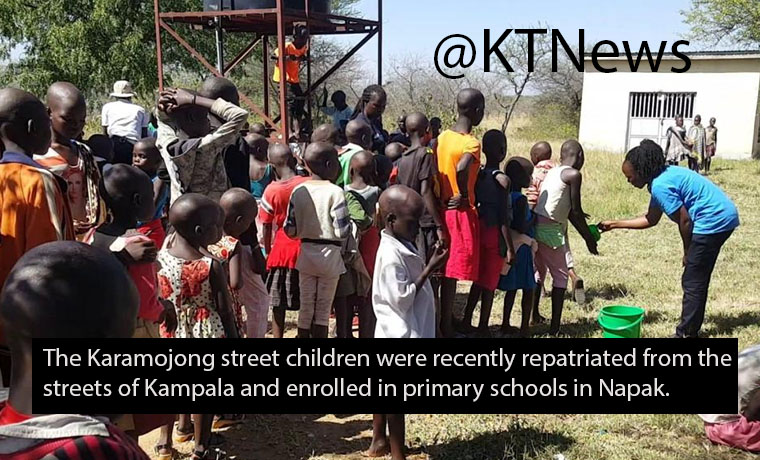
Between February and June 2024, 425 children, aged 3 to 15, who had been begging on the streets of Kampala, were repatriated and enrolled in primary schools in Napak District. Give us feedback on this story through our email: kamwokyatimes@gmail.com