

Ugandan military officers who retired from service and invested their retirement money in land are allegedly losing their properties to powerful individuals, including people with connections inside government, in fresh allegations that DP says expose the depth of the country’s land grabbing problem.
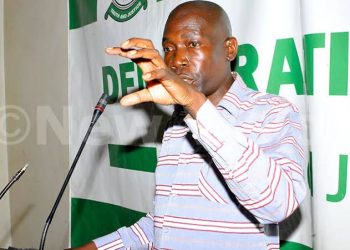
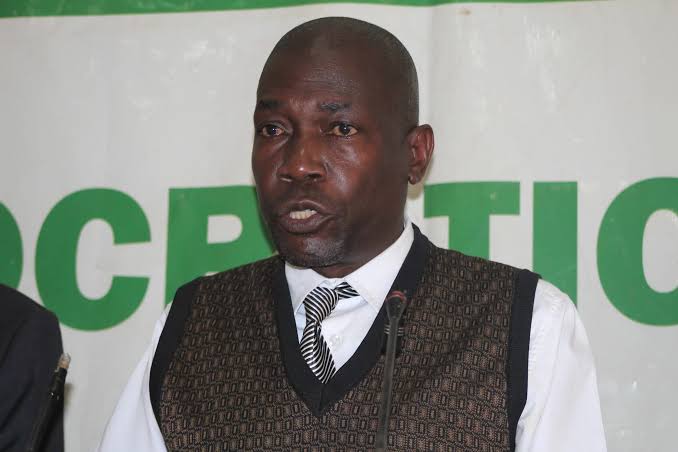
Fred Mwesigwa, a DP Member and Norbert Mao’s Personal assistant has challenged President YK Museveni to intervene, arguing that the country cannot preach national reconciliation while people who served it are allegedly being dispossessed of their hard-earned property.
He said he had been investigating cases involving former UPDF officers who used their retirement packages to purchase land but later found themselves fighting powerful government officials attempting to take over their investments.
“The money which the government gave them, they used it to buy land. The land has been stolen, almost 60%” Mwesigwa said.
He singled out a former Special Forces Command officer, Major Wanyama, whom he said purchased approximately 20 acres around the lakeside in Buyukwe with plans to establish a resort and cooperative project.
According to Mwesigwa, the property was subsequently attacked and the resort destroyed by powerful individuals seeking to take over the land.
He claimed that some of the people who reportedly travelled to the property in an Isuzu truck were arrested but later released by police authorities in the district.
“Some people within government went and destroyed the resort. And the people who went there in an Isuzu truck were arrested, and police in the district decided to release them,” he said.
Mwesigwa further alleged that the land dispute involved powerful individuals and that people had been killed in the area.
He offered to provide the officer’s telephone contact and supporting documents to substantiate his account.
He also cited another case involving a retired UPDF officer who allegedly purchased approximately 400 acres in Luwero, intending to establish a farm, but whose investment was subsequently threatened by connected land grabbers.
Mwesigwa said he had the names of several other affected officers but had not yet obtained their permission to identify them publicly.
He argued that the alleged dispossession of retired soldiers was particularly disturbing because many of them had invested money given to them by government upon retirement, expecting it to sustain them after years of military service.
The revelation formed part of his wider argument that Uganda’s proposed national reconciliation process must address economic injustices and land conflicts instead of concentrating exclusively on political positions and the sharing of government positions.
Mwesigwa said these were among the grievances that should be tabled during discussions around Gen Salim Saleh and Prof Ogenga Otunnu’s proposed Consociational Democracy Agreement.
Mwesigwa insisted that the proposed dialogue should include retired soldiers because they were among the people who had experienced the country’s conflicts and understood the consequences of political instability.
“Those are people who went to the firing squad. They have fought. We should not ignore them,” he said.
He called for the participation of political parties, religious leaders, cultural institutions, women, youth, academics, businesspeople, elders, retired judges and other organised groups in the proposed national consultations, maintaining that Uganda’s problems could not be resolved through violence or by depending on foreign governments to negotiate solutions on behalf of its citizens.
“Violence will never help this country. Fighting will never help this country, yet Uganda is a very good country,” Mwesigwa said.
He also criticized the continued abuse of state institutions, particularly the Police and army, and where allegations of criminality and land grabbing are concerned, insisting that investigations and arrests must follow established legal procedures.
“I’m not saying that people should protect criminals. A criminal is a criminal, but there are procedures to summon a criminal or to arrest. Let everything be done legally or constitutionally,” he said.
Mwesigwa argued that these grievances demonstrate why Gen Saleh’s proposed dialogue should involve more than politicians seeking positions in a future government, because the country needed an arrangement through which ordinary people and different organized groups could present their grievances, negotiate solutions and hold institutions accountable.