

At least 1.5 billion women and girls, representing more than one-third of the global female population, live in areas highly exposed to climate hazards, where poverty, insecure livelihoods and gender inequality increase their vulnerability, according to a new UN Women report.
The findings, released as world leaders gather in Antalya, Turkey, for the 31st United Nations Climate Change Conference (COP31), warn that climate change could push an additional 141 million women and girls into extreme poverty by 2050 under a worst-case emissions scenario.
The UN Women fact sheet, titled Gender Equality in the Age of Climate Crisis, says women and girls in countries that have contributed least to global greenhouse gas emissions are bearing some of the greatest consequences of climate change.

These include declining incomes, food insecurity, increased unpaid care work and greater exposure to gender-based violence.
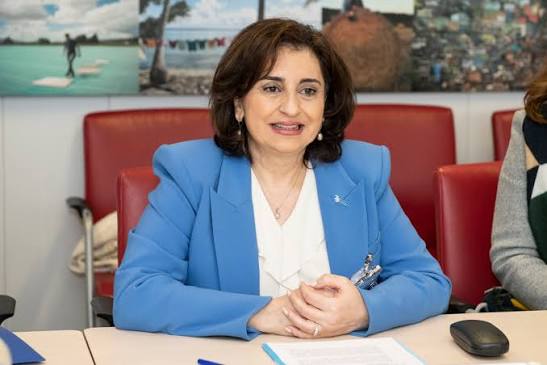
UN Women Executive Director Sima Bahous says women are already playing important roles in responding to climate change but remain disadvantaged in access to resources and decision-making.
“Across the world, women are already leading the fight for a better future – in their communities, in laboratories, in parliaments and on the front lines of the climate crisis. We must give women and girls equal rights, resources and the power to lead, and they will help drive the change our world so urgently needs,” Bahous said.
The fact sheet warns that the world is on course for at least 1.8 degrees Celsius of global warming, increasing the risk of severe droughts, floods, wildfires and cyclones, with potentially irreversible damage to communities and ecosystems.
UN Women says rising temperatures are already widening economic inequalities between women and men. Data from 24 countries shows that a one-degree Celsius increase in average temperatures is associated with women losing 34 per cent more of their total income than men.
The report attributes the difference partly to women’s limited opportunities to move into non-agricultural employment or migrate when harvests fail.
Climate change is also increasing the time women spend collecting water and fuel and caring for family members affected by disasters.
Of the 1.8 billion people worldwide without water on their premises, women are the primary water collectors in two-thirds of households. Under a high-emissions scenario, the time spent collecting water could increase by up to 30 per cent by 2050.
The report further links prolonged climate-related droughts to increased risks of sexual violence. Across 14 countries, exposure to prolonged extreme drought was associated with 21 per cent higher odds of sexual violence against adolescent girls and young women.
Climate-related displacement, loss of livelihoods and competition for scarce resources can worsen existing conditions that expose women and girls to gender-based violence.
Although efforts to reduce the practice have accelerated over the past decade, UN Women found that in 24 of 46 countries with available data, child marriage rates were higher in more arid environments than in more humid areas.
The organisation also raises concerns about women’s limited access to electricity as demand for energy increases, partly driven by artificial intelligence technologies. An estimated 326 million women and girls still lack access to electricity.
Women remain underrepresented in climate and energy decision-making, holding only 12 per cent of energy portfolios globally. Meanwhile, women environmental defenders face harassment and even death while protecting their communities and natural resources.
The report says developing countries receive less than one-third of the climate finance they need, while only four per cent of climate-focused Official Development Assistance prioritises gender equality.
Despite these challenges, UN Women says investments in green employment could create opportunities for women. With appropriate interventions, women could secure up to 66 per cent of net new green jobs, equivalent to 68 million additional jobs by 2035.
Governments are increasingly acknowledging the gender dimensions of climate change in their national climate action plans, known as Nationally Determined Contributions (NDCs). UN Women says 73 per cent of countries now recognise climate risks specific to women and girls, although only slightly more than one-third address these risks comprehensively.
At COP31, UN Women is calling on governments to place gender equality and women’s rights at the centre of climate policies, including ensuring that climate finance reaches women and their organisations.
It is also urging governments to protect women environmental human rights defenders, increase women’s participation in climate decision-making and address the additional care responsibilities and risks of violence associated with climate change.
The organisation says the Belém Gender Action Plan must be fully implemented and financed to translate international commitments into practical improvements in the lives of women and girls affected by climate change-URN. Give us feedback on this story through our email: kamwokyatimes@gmail.com