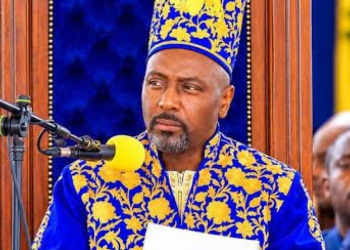
Economist Dr Fred Muhumuza has questioned Bank of Uganda’s decision to raise its benchmark interest rate to 12%, arguing that government borrowing and persistent fiscal deficits are distorting investment decisions and weakening the productive sectors needed to generate foreign exchange.
Muhumuza said the 2.25 percentage-point increase in the Central Bank Rate (CBR) could raise repayment costs for borrowers with variable-rate loans and make it more difficult for businesses to invest in production, particularly for export markets.
Bank of Uganda raised the CBR from 9.75% to 12% at a special Monetary Policy Committee meeting on October 14, 2026, citing growing inflation risks arising from exchange rate depreciation, higher global oil prices and disruptions linked to the conflict in the Middle East.

However, Muhumuza argues that while monetary tightening may help contain inflationary pressures, it does not address what he considers the deeper problem: government borrowing that encourages investors to put money into financial securities rather than productive enterprises.
“So CBR is really trying to give a panadol to a symptom, and yet the underlying cause is deeply seated down there,” said Muhumuza, formerly an advisor to the Minister of Finance, Planning and Economic Development.
He argued that Uganda’s prolonged period of high interest rates, combined with attractive returns on government securities, has made lending to or investing in productive businesses less attractive than investing in government debt.
Muhumuza said an investor with one billion Shillings could opt to buy government securities offering an annual return of 17% rather than invest in a business producing goods for export. Such investment decisions, he argued, could divert capital from agriculture, manufacturing and other productive activities that generate foreign exchange, while leaving the country dependent on imports.
“The means of funding a fiscal deficit don’t matter. The problem is the fiscal deficit,” Muhumuza said, arguing that government must confront the scale of its spending and borrowing rather than rely on monetary policy to manage the resulting economic pressures.
He said the growth in money supply over the past decade had been driven largely by government fiscal policy, making it difficult for the central bank to resolve the problem through monetary measures alone.
Muhumuza called for a review of government expenditure priorities and domestic borrowing, arguing that fiscal authorities need to determine which spending commitments can be reduced or deferred without undermining essential public services.
He also advocated greater use of long-term financing from institutions such as the World Bank and African Development Bank for infrastructure projects, instead of relying on short-term domestic borrowing to finance investments whose returns may take years to materialise.
His remarks come as Bank of Uganda warns that external pressures are threatening price stability and economic growth.
Reading the October monetary policy statement, Governor Michael Ating-Ego said the current account deficit had widened by 1.4 billion US dollars to 4.6 billion dollars, reflecting lower agricultural commodity prices, reduced tourism receipts and rising oil prices.
The goods trade deficit widened to 2.8 billion dollars in the 12 months to August 2026, from 2.4 billion dollars in the corresponding period a year earlier. The services deficit also deteriorated, reaching 3.3 billion dollars from 2.2 billion dollars, partly because of higher freight charges.
Ating-Ego said headline inflation rose to 4.6% in September, from 4.1% in August, while core inflation increased to 3.7% from 3.5%.
The Bank projects inflation to average between 5.5% and 6% over the next 12 months, with headline inflation expected to reach between 7% and 7.5% during the period.
Ating-Ego said the rate increase was intended to contain inflation, limit the second-round effects of higher energy prices and exchange rate depreciation, and keep inflation expectations anchored around the medium-term target.
He also said economic growth had slowed, with the Bank revising its forecast for the 2026/27 financial year to between 6% and 6.5%, down from an earlier projection of 7% to 7.5%.
The Bank attributed the downward revision to tighter global and domestic financial conditions, exchange rate depreciation, geopolitical uncertainty and elevated global energy prices.
Muhumuza questioned the implications of the projected slowdown, saying policymakers should explain which sectors would be affected most and what measures would protect businesses, jobs and investment.
He warned that the consequences of tighter monetary policy could extend beyond a temporary slowdown, particularly where businesses already have substantial debts.
He cited the effects of previous periods of high interest rates and the COVID-19 pandemic, arguing that some businesses that collapsed during those periods never recovered.
Muhumuza said the public needed more detailed explanations of the analysis behind monetary policy decisions, including the simulations used to assess the likely effects on different sectors of the economy. He pointed to the Bank of England’s publication of extensive monetary policy analysis as an example of the kind of explanation he would like to see from Uganda’s central bank.
He also questioned policy arrangements that, in his view, encourage savers to move funds away from banks towards investment channels offering more favourable tax treatment on returns from government securities.
Such distortions, he argued, undermine financial intermediation and weaken the connection between savings and productive investment. Muhumuza said the response to Uganda’s economic pressures should therefore extend beyond interest rate adjustments to include fiscal reforms that address government borrowing and improve incentives for investment in production.
While the Bank of Uganda maintains that tighter monetary policy is necessary to contain inflation risks, the debate raises a question about how monetary and fiscal policies can work together to stabilise prices without unnecessarily constraining investment, business activity and employment.Economist Dr Fred Muhumuza has questioned Bank of Uganda’s decision to raise its benchmark interest rate to 12%, arguing that government borrowing and persistent fiscal deficits are distorting investment decisions and weakening the productive sectors needed to generate foreign exchange.
Muhumuza said the 2.25 percentage-point increase in the Central Bank Rate (CBR) could raise repayment costs for borrowers with variable-rate loans and make it more difficult for businesses to invest in production, particularly for export markets.
Bank of Uganda raised the CBR from 9.75% to 12% at a special Monetary Policy Committee meeting on October 14, 2026, citing growing inflation risks arising from exchange rate depreciation, higher global oil prices and disruptions linked to the conflict in the Middle East.
However, Muhumuza argues that while monetary tightening may help contain inflationary pressures, it does not address what he considers the deeper problem: government borrowing that encourages investors to put money into financial securities rather than productive enterprises.
“So CBR is really trying to give a panadol to a symptom, and yet the underlying cause is deeply seated down there,” said Muhumuza, formerly an advisor to the Minister of Finance, Planning and Economic Development.
He argued that Uganda’s prolonged period of high interest rates, combined with attractive returns on government securities, has made lending to or investing in productive businesses less attractive than investing in government debt.
Muhumuza said an investor with one billion Shillings could opt to buy government securities offering an annual return of 17% rather than invest in a business producing goods for export. Such investment decisions, he argued, could divert capital from agriculture, manufacturing and other productive activities that generate foreign exchange, while leaving the country dependent on imports.
“The means of funding a fiscal deficit don’t matter. The problem is the fiscal deficit,” Muhumuza said, arguing that government must confront the scale of its spending and borrowing rather than rely on monetary policy to manage the resulting economic pressures.
He said the growth in money supply over the past decade had been driven largely by government fiscal policy, making it difficult for the central bank to resolve the problem through monetary measures alone.
Muhumuza called for a review of government expenditure priorities and domestic borrowing, arguing that fiscal authorities need to determine which spending commitments can be reduced or deferred without undermining essential public services.
He also advocated greater use of long-term financing from institutions such as the World Bank and African Development Bank for infrastructure projects, instead of relying on short-term domestic borrowing to finance investments whose returns may take years to materialise.
His remarks come as Bank of Uganda warns that external pressures are threatening price stability and economic growth.
Reading the October monetary policy statement, Governor Michael Ating-Ego said the current account deficit had widened by 1.4 billion US dollars to 4.6 billion dollars, reflecting lower agricultural commodity prices, reduced tourism receipts and rising oil prices.
The goods trade deficit widened to 2.8 billion dollars in the 12 months to August 2026, from 2.4 billion dollars in the corresponding period a year earlier. The services deficit also deteriorated, reaching 3.3 billion dollars from 2.2 billion dollars, partly because of higher freight charges.
Ating-Ego said headline inflation rose to 4.6% in September, from 4.1% in August, while core inflation increased to 3.7% from 3.5%.
The Bank projects inflation to average between 5.5% and 6% over the next 12 months, with headline inflation expected to reach between 7% and 7.5% during the period.
Ating-Ego said the rate increase was intended to contain inflation, limit the second-round effects of higher energy prices and exchange rate depreciation, and keep inflation expectations anchored around the medium-term target.
He also said economic growth had slowed, with the Bank revising its forecast for the 2026/27 financial year to between 6% and 6.5%, down from an earlier projection of 7% to 7.5%.
The Bank attributed the downward revision to tighter global and domestic financial conditions, exchange rate depreciation, geopolitical uncertainty and elevated global energy prices.
Muhumuza questioned the implications of the projected slowdown, saying policymakers should explain which sectors would be affected most and what measures would protect businesses, jobs and investment.
He warned that the consequences of tighter monetary policy could extend beyond a temporary slowdown, particularly where businesses already have substantial debts.
He cited the effects of previous periods of high interest rates and the COVID-19 pandemic, arguing that some businesses that collapsed during those periods never recovered.
Muhumuza said the public needed more detailed explanations of the analysis behind monetary policy decisions, including the simulations used to assess the likely effects on different sectors of the economy. He pointed to the Bank of England’s publication of extensive monetary policy analysis as an example of the kind of explanation he would like to see from Uganda’s central bank.
He also questioned policy arrangements that, in his view, encourage savers to move funds away from banks towards investment channels offering more favourable tax treatment on returns from government securities.
Such distortions, he argued, undermine financial intermediation and weaken the connection between savings and productive investment. Muhumuza said the response to Uganda’s economic pressures should therefore extend beyond interest rate adjustments to include fiscal reforms that address government borrowing and improve incentives for investment in production.
While the Bank of Uganda maintains that tighter monetary policy is necessary to contain inflation risks, the debate raises a question about how monetary and fiscal policies can work together to stabilise prices without unnecessarily constraining investment, business activity and employment-URN. Give us feedback on this story through our email: kamwokyatimes@gmail.com