Authorities in Gulu District Local Government and Gulu City Council have raised concerns over inadequate office space, saying the shortage is affecting staff productivity and service delivery.
The concerns come six years after Gulu Municipality was elevated to city status on July 1, 2020, a change that required the district local government to relocate its headquarters from the city to Awach Town Council, about 30 kilometres away. However, the district is yet to fully relocate its staff to Awach, citing inadequate office space.
Most district employees have continued operating from their former offices in the city. Only the Resident District Commissioner’s office has fully relocated to Awach, where it is renting premises, while some health workers are stationed at Awach Health Centre IV.

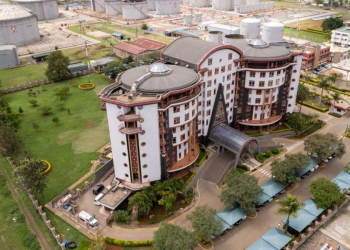
Justine Simpleman Obol, the Gulu District Chairperson, said the district has 1,146 staff, most of whom continue to work from offices within Gulu City. Obol said a newly constructed administrative facility in Awach, which is yet to be commissioned, has only 22 office blocks and cannot accommodate the entire district workforce. He called for government intervention to address the shortage.
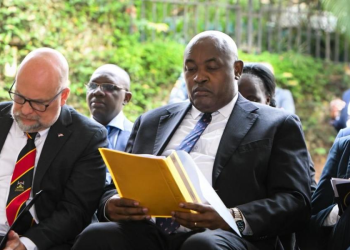
Obol said the continued lack of adequate office space was hampering the district’s ability to effectively deliver services within its jurisdiction. The concerns were raised on Thursday during an engagement organised by the Ministry of Public Service in Gulu City with local government officials from the Acholi Sub-region.
The meeting itself highlighted the longstanding dispute over government property between Gulu District and Gulu City. Although hosted by Gulu City Council and attended by Minister for Public Service Gen. (Rtd) Edward Katumba Wamala, the engagement was held at Gulu District Council property.
Gulu City Town Clerk Innocent Ahimbisibwe also raised concerns about inadequate workspace, saying the city council recently recruited 85 staff, bringing its workforce to 1,383, about 69 per cent of the approved staffing level. Ahimbisibwe said many employees lack dedicated workspaces, forcing some to work in shifts.
“We request that our attention be put to the government. Having recruited the 85, most of them are traditional and need workspaces, so sometimes they sit in shifts and supervision is hard because they are so scattered all over. So that is one big challenge,” he said.
Gulu City and Gulu District have for years disagreed over the occupation and ownership of properties that belonged to the district before the municipality was elevated to city status. The contested properties include the Gulu District administration block, Gulu District Council Hall, Pece Stadium and the former SOS Children’s Village, which is now used to rehabilitate former Lord’s Resistance Army combatants.
The government previously committed one billion shillings towards constructing administrative facilities for 11 newly created cities. Gulu City, however, had proposed an eight-billion-shilling administration block on 104 acres of land donated by the community in Awach Town Council.
Joan Nantwenda, the Commissioner for Human Resources at the Ministry of Local Government, said districts and cities are responsible for planning and budgeting for their administrative infrastructure.
Nantwenda said the Ministry of Local Government can only lobby for funding for local governments that have incorporated infrastructure needs into their budgets. “If you put money in your budget, we hope that the Ministry of Finance will be kind enough to look for resources and put them in your budget. It’s your responsibility; local government can only support you by pushing the agenda,” she said-URN. Give us feedback on this story through our email: kamwokyatimes@gmail.com