Residents of Lotisan and Rupa sub-counties in Moroto District are spending nights in dry riverbeds guarding hand-dug wells from pastoralists, as an acute water crisis worsens across the district. The crisis has been triggered by the drying up of several water sources, including the mega Kobebe Dam, which has completely dried up amid heavy siltation. The shortage has intensified competition for the little water available for both domestic use and livestock.
Kobebe Dam previously served more than 50,000 cattle belonging to pastoralists from the Matheniko, Bokora and Jie communities, as well as herders from Turkana in Kenya. But after the dam dried up, herders moved their livestock to Kotido District in search of water.
However, they were later pushed back by the Jie community as water sources there came under pressure from the influx of animals. The herds have since returned to Rupa and Lotisan, where they are competing with communities for the remaining water sources.

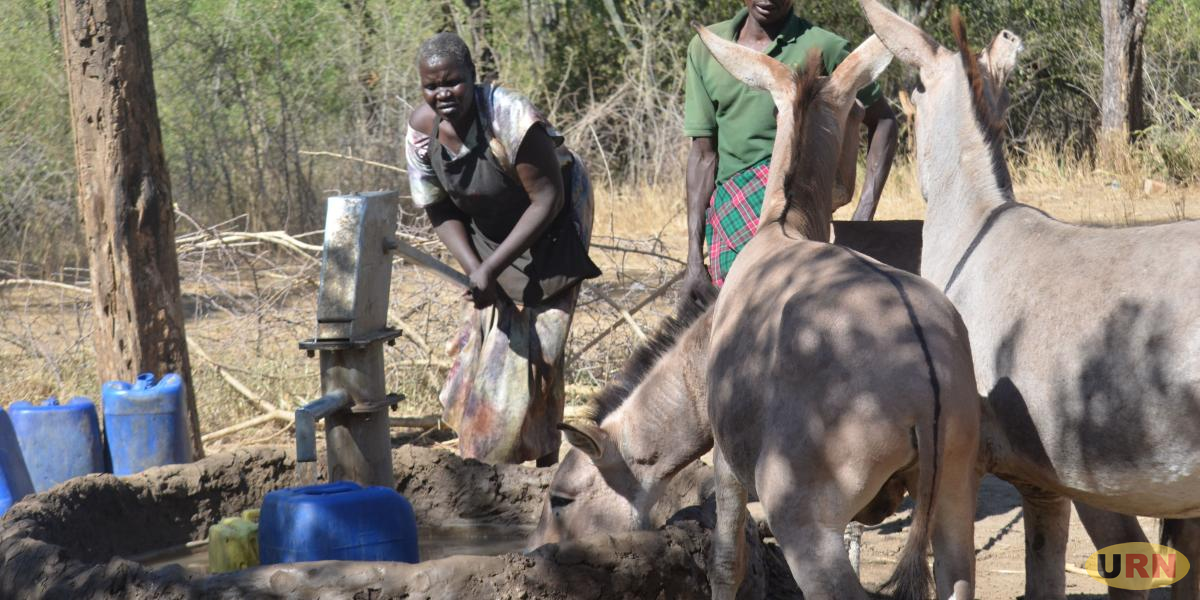
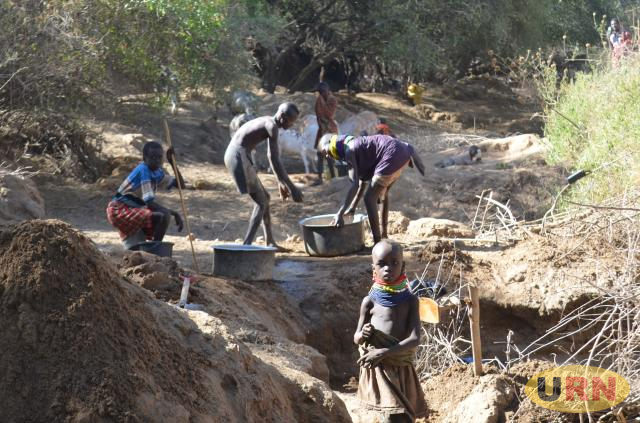
Most boreholes in the affected villages have broken down under pressure, while the few functioning ones are shared by people and animals. Communities living near seasonal rivers have resorted to digging deep wells in the riverbeds.
Residents say it takes about five days for a team of 10 men to dig a well measuring between 15 and 20 metres deep before reaching the water table. The pits are dug with steps to enable women to descend and collect water, while the men move to another location to dig additional wells.
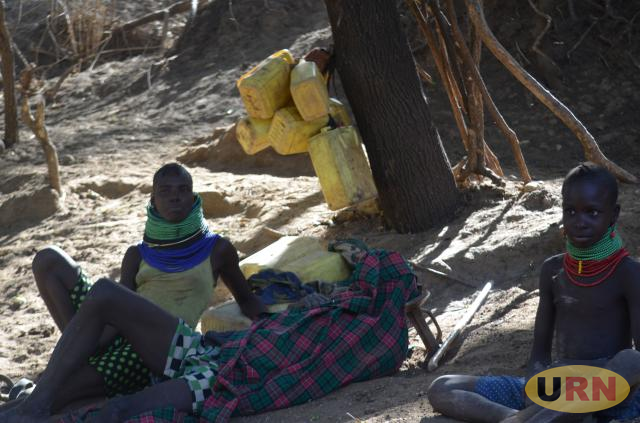
In Nakidongo Village, Lotisan Sub-county, residents have resorted to sleeping beside wells dug in the Apule River to prevent herders from taking the water at night to their cattle.
Veronika Tapar, a resident, said the crisis had disrupted daily life, with communities increasingly dependent on riverbed wells for both domestic use and livestock. She said residents were forced to guard the wells throughout the night because the water quickly runs out when herders use it to water their cattle.
Samuel Patrick Agolor, another resident, said the shortage had become a health concern, with families struggling to find enough water even for basic hygiene. He said some residents had stopped bathing, while women were limiting cooking to supper because of the scarcity.
Agolor said the water available in the riverbed wells was often dirty because people and livestock were using the same sources. He warned that the prolonged dry spell could lead to deaths if the remaining wells also dried up.
Rema Abura, the Vice Chairperson of Nakidongo Village, said the entire village was relying on one borehole whose water level had also significantly dropped. She said residents had dug additional pits around the borehole, where men pump water throughout the night and channel it into the pits for livestock during the day.
Abura said competition for the scarce water had also led to violence, with women being beaten during clashes with men attempting to water their livestock. She added that two people had died within one month after being buried alive while digging the deep wells, some of which reach 20 metres. Abura appealed to the government to deploy water bowsers to supply the affected communities with clean water.
John Robert Adupa, the Chairperson of Lotisan Sub-county, said the situation had been aggravated by the return of large herds of cattle after Kobebe Dam dried up. He said communities had resorted to digging deep pits as an emergency measure, but the practice had become increasingly dangerous.
Adupa said 10 people had been buried alive in well pits across the sub-county in the last four months. He said local leaders had engaged the district authorities to provide water bowsers as a temporary intervention. However, the capacity of the tank provided by some partners, including the Uganda Red Cross, was insufficient to meet demand.
Moroto District is estimated to have about 300,000 cattle, 400,000 goats and sheep, 2,000 donkeys and 1,500 camels. But district authorities say more than 400 cattle have died from lack of water in the past four months.
Adupa said pastoralists had also lost goats, calves and older cattle, while the shortage had forced some families to sell livestock at heavily reduced prices. He said some cattle were being sold for between 300,000 and 600,000 Shillings, while animals that had already died were being sold within communities for as little as 150,000 Shillings.
Anjelo Pulkol, the Chairperson of Moroto District, said the district had struggled with inadequate water for production for years, affecting both livestock and crop production. He urged the government and development partners to pool resources towards establishing a large man-made lake in Karamoja rather than continuing to invest in interventions he described as unsustainable.
Pulkol said addressing the water shortage was critical to tackling poverty in the region because virtually all forms of production depend on reliable water supplies. He also criticised the Ministry of Water and Environment over what he said was a discrepancy between reported and actual work on Kobebe Dam.
In Rupa and parts of Lotisan, development partners, including the Uganda Red Cross, mining companies and the Ministry of Works, have intervened by supplying water using bowsers. Benon Kwikiriza, the Moroto Resident District Commissioner, said the situation had deteriorated to a point where the district had to seek assistance from partners.
He said the district provided a water bowser and driver, while partners met fuel costs and allowances. Kwikiriza said about 10,000 litres of water were supplied to communities each day, while another 12,000 litres were delivered to livestock watering points, although the volumes remained insufficient.
The Ministry of Works has also provided an additional 16,000-litre bowser to supply water to Kobebe and Nakiloro, among the areas most affected by the shortage. Eng. Jimmy Biyomotho, the Manager of Rural Water for Karamoja at the Ministry of Water and Environment, confirmed the crisis but attributed the worsening conditions to climate change and extreme heat-URN. Give us feedback on this story through our email: kamwokyatimes@gmail.com