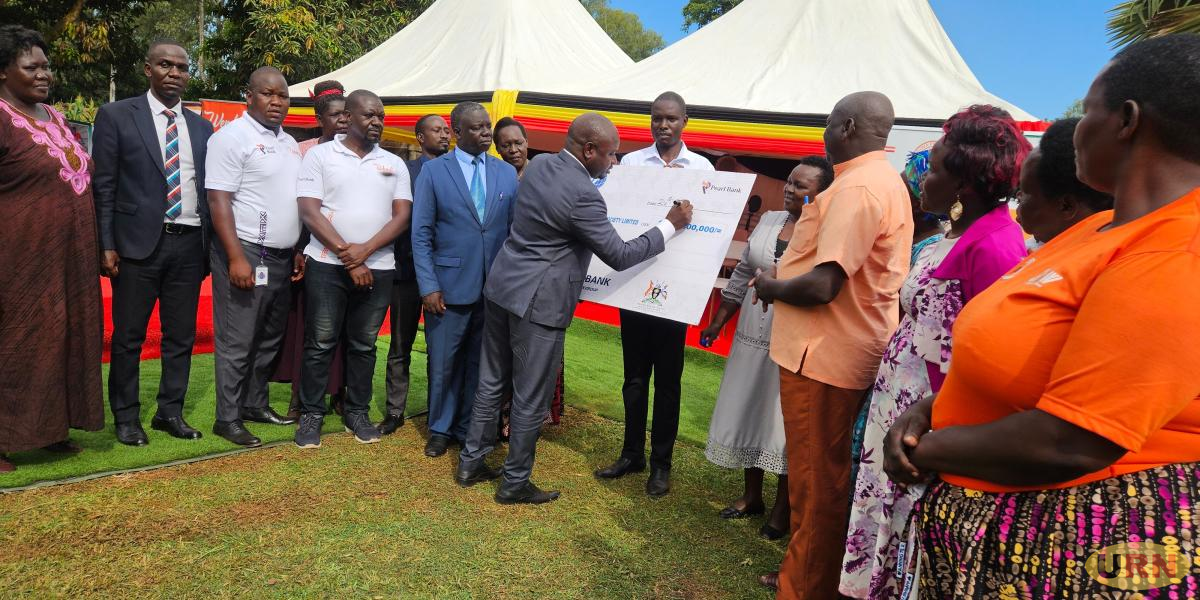
Women entrepreneurs in the Lango Sub-region are calling for longer loan repayment periods, grace periods and continued access to affordable financing under the government’s GROW project. They said the project has helped expand their businesses and improve household incomes.
The GROW project is a government initiative implemented through the Ministry of Finance, Planning and Economic Development and the Ministry of Gender, Labour and Social Development, with the Private Sector Foundation Uganda (PSFU) supporting the flow of funds from the World Bank through financial institutions to women entrepreneurs.
The beneficiaries in the Lango sub-region, who accessed loans through AROVA Producers Cooperative Society, say the financing has enabled them to acquire equipment, increase production and transform small, subsistence enterprises into commercial businesses.

AROVA, which started in 2012 as a women-led Village Savings and Loan Association in Oyam District, has since grown into a registered cooperative with more than 8,000 members, over 60 per cent of whom are women.
More than 80 per cent of its members are farmers, many of whom have transitioned from subsistence to commercial agriculture, while others have ventured into value addition and businesses such as bakeries and hotels. One of the beneficiaries, Owiny Agnes from Dokolo District, received a 20-million-Shilling loan to expand her soap manufacturing business.
She says the funding enabled her to purchase a machine that has significantly increased her production capacity, from between 10 and 12 boxes of soap a day to about 40. AROVA has also supported Owiny with environmental protection guidance and helped her pursue certification from the Uganda National Bureau of Standards (UNBS), which she says previously appeared beyond her reach.
Despite the progress, Owiny says beneficiaries need more opportunities to access financing, longer repayment periods and continued support under the programme. She wants borrowers to be allowed more than two loan cycles and says businesses that require machinery installation or other preparatory work should be given a grace period before repayments begin.
Owiny also called for the project to be extended beyond its planned implementation period, saying some women have not yet benefited from the programme.
Another beneficiary, Mary Akullo from Aduku Town Council in Kwania District, says a 10-million-Shilling loan helped her expand her poultry business by purchasing feeds and retaining birds that she would otherwise have been forced to sell before they reached market age. Akullo says the funding enabled her to rear about 500 chicks to maturity while also purchasing additional batches for her expanding business.
She says her next goal is to acquire a feed-making machine to reduce production costs and improve the efficiency of her poultry enterprise. Akullo also called for a grace period for poultry farmers, saying they need sufficient time to rear and sell their birds before they can generate enough income to repay their loans.
She further urged the programme to provide women with training in value addition so they can earn more from agricultural products instead of selling them in raw form.
Denis Tukahikaho, the GROW Technical and Financial Specialist at PSFU, says the project is designed to help women transform small enterprises into larger businesses capable of creating jobs and increasing household incomes.
The project is valued at 217 million US dollars, with 183 billion Shillings allocated to women’s business development. By June this year, Tukahikaho said, 160 billion Shillings had already been disbursed. He explained that the fund is revolving, meaning money repaid by borrowers can be lent to other women, allowing more entrepreneurs to benefit from the programme.
Tukahikaho says PSFU is also addressing some of the challenges faced by beneficiaries through business advisory services, market linkages, certification support and partnerships with financial institutions.
He said PSFU’s business advisory department will help women access markets, obtain licences and secure UNBS certification. The organisation also plans to link producers, including soap manufacturers, to supermarkets and other buyers in Lango and Kampala.
Women whose businesses require larger loans can also be linked to financial institutions, Tukahikaho said, noting that AROVA currently has a lending limit of 30 million Shillings per woman. He urged beneficiaries to embrace digital repayment systems to avoid the cost and inconvenience of travelling long distances to make loan payments.
Tukahikaho also said women experiencing difficulties in repaying their loans should be supported to address the underlying challenges affecting their businesses rather than being harassed over repayment.
Through AROVA, the GROW project has established a link between government financing and rural women entrepreneurs in Lango. The cooperative, which began as a women-led village savings group in 2012, has expanded to more than 8,000 members, with women accounting for more than 60 per cent of the membership.
With more than 80 per cent of its members engaged in farming, AROVA says its interventions have contributed to the transition from subsistence to commercial agriculture, while enabling some members to venture into value addition, financial literacy, bakery, hotel management and other enterprises-URN. Give us feedback on this story through our email: kamwokyatimes@gmail.com