
The Bank of Uganda has attributed the continued depreciation of the Uganda shilling against the US dollar to the ongoing conflict in the Middle East and fluctuations in global coffee prices.
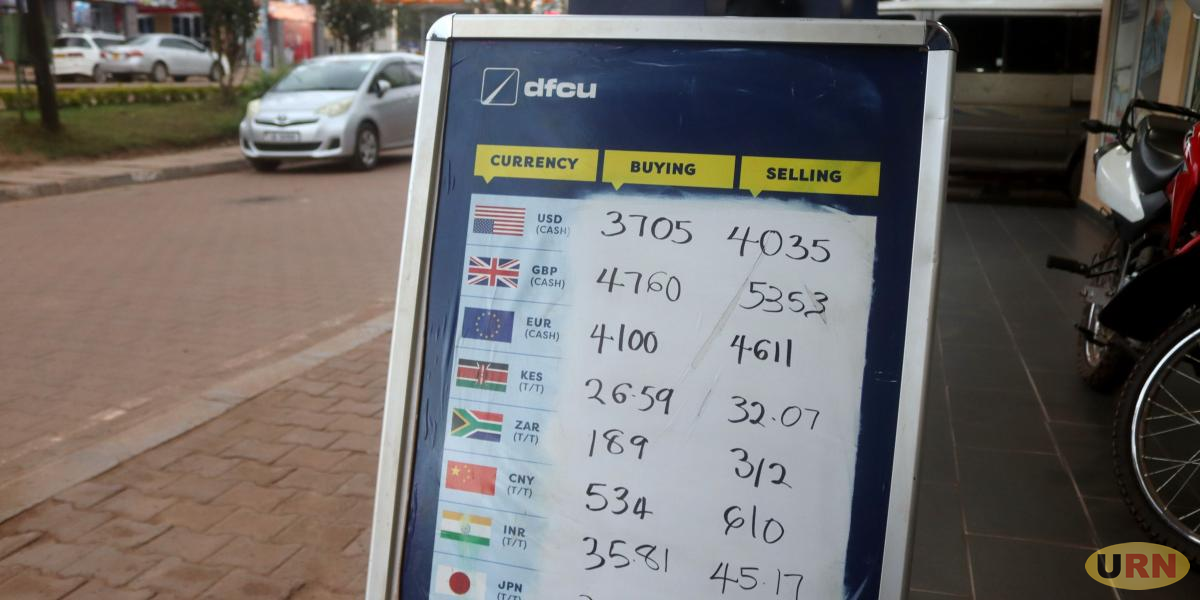
A few months ago, the Uganda shilling was trading at around Shillings 3,740 against one US dollar. However, a survey by our reporter on Thursday (today) found a sharp change. At Pride Bank in Kabale Town, the dollar was buying at 3,840 Shillings and selling at 3,930 Shillings . At DFCU Bank, the dollar was quoted at 3,705 Shillings for buying and 4,035 Shillings selling.
Speaking this afternoon during a town hall meeting held at White Horse Inn Hotel in Kabale District, Deo Sunday, an official from the Monetary Policy Department at the Bank of Uganda, said demand for the US dollar had increased, contributing to the depreciation of the shilling. He explained that the shillings is currently at 3,940 against a dollar compared to previously when it was at 3,740 shillings.

The meeting was aimed at increasing awareness of the economy, financial services, and opportunities for business and agricultural financing in the Kigezi sub-region, as Bank of Uganda marks 60 years.
Sunday said that before the recent depreciation, the Uganda shilling had been among the best-performing currencies in Africa. He called on Ugandans to remain patient as the Bank of Uganda responds to the prevailing economic pressures.
Sunday attributed the increased demand for the US dollar partly to the ongoing war by United States against Iran and the resulting global uncertainty. He said the uncertainty had prompted some investors and individuals to move their savings to countries and currencies they consider safer, with the US dollar benefiting from its position as a major global reserve currency.
Sunday also attributed the depreciation to fluctuations in global coffee prices and adverse weather conditions, which he said had contributed to a decline in coffee production and exports.
Sunday, however, said the Bank of Uganda had maintained credible monetary policy measures to manage liquidity and support the shilling.
He cited the increase in the Cash Reserve Requirement (CRR), which requires commercial banks to hold a portion of their deposits with the central bank, as one of the measures being used to manage liquidity and contain inflationary and exchange-rate pressures. According to Sunday the CRR was increased from 9.5 percent to 11 percent-URN. Give us feedback on this story through our email: kamwokyatimes@gmail.com