More health workers are graduating than the Uganda government and private sector can currently absorb, with a new World Health Organization (WHO) health labour market analysis revealing a 66 percent vacancy rate against approved public service staffing norms.
The analysis also found significant gaps in the composition and distribution of Uganda’s health workforce, with clinical officers and enrolled nurses accounting for the bulk of health workers, while specialists remain few. Johanna Kira Koch, the Cluster Lead for Health Systems and Services at the WHO Uganda office, said the analysis included a job quality index, which found that 42 percent of the health workforce comprises clinical officers, while 43 percent are enrolled nurses.
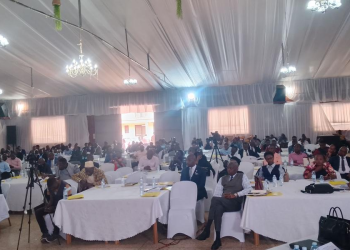
Koch was presenting the findings to officials from the Ministry of Health (MoH) during an ongoing technical review and validation meeting for the Health Workforce Strategy 2026–2030. She said the country’s ability to make informed investments in the health sector is being hampered by gaps in workforce data, making it difficult to accurately determine the number, distribution and employment status of health workers.

Koch said researchers also faced challenges in obtaining accurate data on the number of health workers employed in the private sector. The analysis further found an absenteeism rate of about 40 percent in public health facilities, which Koch said was partly attributed to health workers holding dual employment in private facilities.
In response to the findings, Dr Alfred Driwale, the Commissioner of Health Services, Institutional Capacity Building and Human Resource Development at the Ministry of Health, acknowledged the data gaps. Driwale said it is currently difficult to establish exactly how many health workers remain completely unemployed because the government employs only about 56,000 health workers.
He added that although the ministry does not have comprehensive figures, it has received reports of a 97 percent increase in the number of health workers seeking letters of good standing from their respective professional councils. According to Driwale, the increase could indicate that some health workers are preparing to leave the country or have already migrated in search of employment.
However, Prof Charles Olaro, the Director General of Health Services, cautioned against interpreting applications for certificates of good standing as confirmation that health workers are leaving the country. Olaro said obtaining a certificate of good standing does not necessarily mean that a health worker is preparing to migrate, but may instead reflect the uncertainty among newly trained health workers who are weighing whether to remain in Uganda or seek employment abroad.
He acknowledged that Uganda has a large number of unemployed health workers, while many others are still undergoing training. Olaro said the government cannot employ all the health workers being trained, but neither can it restrict training opportunities. He said the ministry is instead considering incentives and partnerships that could encourage the private sector to absorb more health workers.
Former Director General of Health Services, Prof Francis Omaswa, advised the Ministry of Health to resume quarterly visits to health facilities to better understand workforce challenges and monitor service delivery-URN. Give us feedback on this story through our email: kamwokyatimes@gmail.com