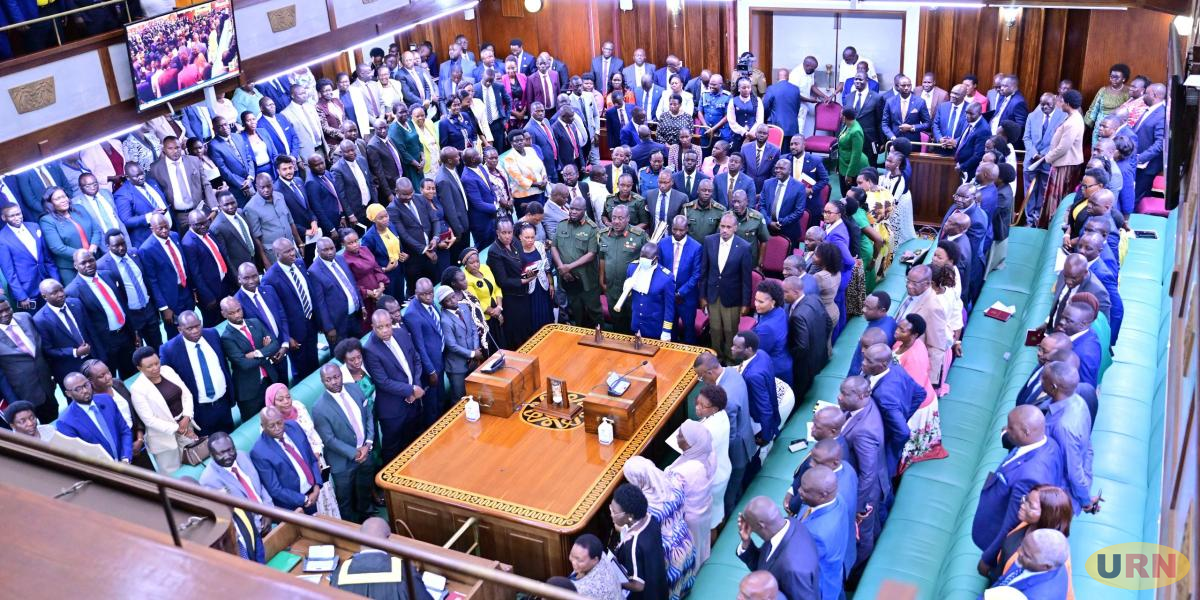
Parliament has reopened debate on its dress code, with a new proposal seeking to allow legislators to wear a wider range of African and culturally recognised formal attire.
The debate comes months after the Rules, Privileges and Discipline Committee of the 11th Parliament had recommended tighter restrictions on what MPs should wear in the chamber.
Katuntu’s committee had recommended that: “A pair of long trousers with a jacket, a kanzu and jacket, a safari suit, and other traditional attire should be omitted from the dress code regulations. The only permissible dress for male MPs should be a suit, shirt, and tie. This will uphold decorum and ensure uniformity in parliamentary attire.”

The latest proposal Kibale East MP and Minister for Agriculture, Animal Industry and Fisheries Frank Tumwebaze seeks to amend Rule 88 of Parliament’s Rules of Procedure.
If the new proposal is adopted, the Parliament’s dress code will change to replace what its proponents describe as a rigid requirement for Western-style business suits.
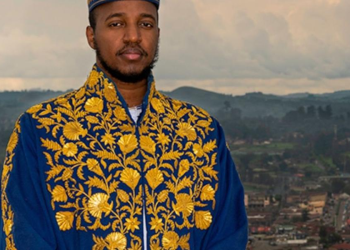
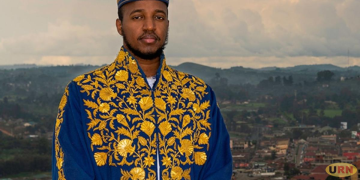
The change could see male MPs having the liberty to appear in a range of formal attire, including business suits with ties, safari suits, Kaunda suits, Madiba shirts, kanzu outfits and military attire for army representatives.
Tumwebaze in the memorandum argues that Parliament should not prescribe one particular form of dressing because it represents people with diverse cultural, spiritual, political and ideological convictions.
Tumwebaze says there is “no one-size-fits-all” approach to parliamentary dress codes and that such rules should evolve with society, taking into account people’s culture, spiritual beliefs and personal comfort.
He defines decent dressing as clean, modest and well-fitted clothing that respects the norms of a particular culture, setting or occasion.
The memorandum argues that Parliament can uphold dignity and decorum without restricting MPs to a single form of formal attire.
“An institution, therefore, like Parliament, which represents diverse cultures, spiritual and ideological convictions shouldn’t be rigid/restrictive by prescribing a singular type of dressing, i.e. a business suit, tie and tucked-in shirt,” the proposal states.
It argues that, as Parliament is a space for pluralistic views and coexistence, its dress code should accommodate different forms of dressing while maintaining standards of decency.
The proposal takes particular issue with the continued dominance of the Western business suit, describing it as a dress standard inherited from the colonial administration.
According to the memorandum, retaining the Western business suit as the dominant parliamentary attire decades after independence could symbolically suggest that other African forms of dress are inferior or less legitimate in spaces of power.
It argues that African parliamentary dress codes have evolved to recognise attire such as the Kaunda suit, safari suit and Madiba shirt, which have established precedents as clothing befitting heads of state and senior officials.
The proponents therefore want Parliament to recognise such attire as equally formal and appropriate for legislators.
The memorandum cites practices in other Commonwealth legislatures to support its argument that parliamentary dress codes vary substantially.
In the United Kingdom Parliament, it says no specific Standing Order sets out a dress code.
Instead, the presiding officer has discretion to deal with members considered to be wearing informal clothing.
In Australia, MPs can wear tailored safari suits without a tie and may wear hats when they are not speaking, although sportswear is prohibited and members are expected to retain their jackets inside the chamber.
The proposal also points to the Caribbean, where the Kariba suit was developed as an alternative to colonial dress codes, while in India, the Nehru-collar shirt is cited as a preferred formal attire for male legislators.
The memorandum further cites examples of legislators challenging conventional parliamentary dress standards in favour of indigenous attire.
In Canada in 2020, Liberal MP Jamie Battiste wore a beaded milkbag medallion instead of a tie. When his neckwear was challenged, the Speaker ruled that it was appropriate.
In New Zealand in 2021, Māori Party co-leader Rawiri Waititi was removed from the chamber for not wearing a tie while dressed in traditional Māori attire. The following day, the Speaker allowed him to speak without a tie.
The memorandum says these examples demonstrate that parliamentary dress codes can adapt to accommodate cultural identity without undermining the dignity of the institution.
The proposal does not seek to abolish standards of decorum. Instead, it argues that the rules should focus on whether clothing is clean, modest, well-fitted, and appropriate to the culture, setting or occasion.
It says perceptions of decent dressing may vary, but certain basic parameters, such as respecting cultural and religious norms and avoiding exposure of the body, can provide a clear standard.
The Kaunda suit, popularised by Zambia’s founding president Kenneth Kaunda, was deliberately designed as an alternative formal dress for African statesmen at official functions. The Madiba shirt, associated with former South African President Nelson Mandela, likewise became a recognised marker of dignified public leadership and was worn at official engagements.
During the committee deliberations, several MPs supported the proposal to amend the dress code for legislators.
Toroma County MP Richard Ongorok said the current dress code in Parliament makes him uncomfortable, while Lira City East MP Dennis Omodi proposed that the amendment should also address the Speaker’s attire, particularly the wig worn on the head.
However, MP for Older Persons Joy Peggy Waako argued that while cultural attire is welcome, Uganda has many tribes, and allowing all MPs to dress according to their respective cultures could make Parliament look “funny.”
Committee Chairperson Fred Ruhindi said the members would continue discussing the matter before it is presented to Parliament for consideration-URN. Give us feedback on this story through our email: kamwokyatimes@gmail.com