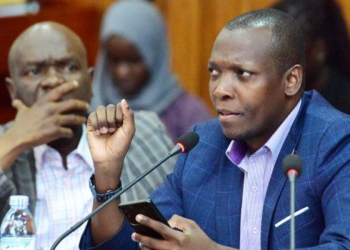
National Unity Platform (NUP) Leader of the Opposition Joel Ssenyonyi has challenged the government to demonstrate that its renewed campaign against corruption is more than political theatre by ensuring that senior and politically connected officials accused of misusing public resources face the same scrutiny and prosecution as junior officers.
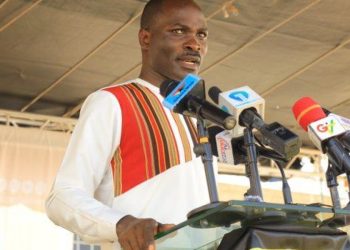
Speaking at the NUP headquarters in Kampala on Thursday, Ssenyonyi said the Opposition had been vindicated after years of warning about corruption, only to be accused of undermining the government, opposing development or advancing foreign interests.
He argued that criticism of government misconduct should not be confused with hostility towards the country. “When we are talking about corruption, it’s not because we hate our country. It’s actually because we love our country,” Ssenyonyi said.

His remarks come amid renewed public attention on investigations into alleged financial and administrative irregularities at Uganda Airlines, the state-owned national carrier. The airline has faced repeated scrutiny over procurement, financial management and operational decisions, while investigators examine allegations including abuse of office, embezzlement and false accounting.
However, Ssenyonyi warned that the arrest of a handful of officials would not, by itself, persuade the public that Uganda’s anti-corruption campaign had entered a new era.
The real test, he said, would be whether investigators and prosecutors are prepared to follow evidence wherever it leads, including to senior political and administrative figures.
“If this fight is genuine, it cannot stop with the small fish. Ugandans want to see whether the big shots, the powerful and well-connected, will also be held accountable,” he said.
Ssenyonyi called for a non-selective approach to fighting corruption, arguing that the credibility of the campaign would be measured by whether enforcement is applied consistently rather than according to political status, proximity to power or institutional rank.
His challenge goes to the heart of Uganda’s constitutional anti-corruption framework.
Article 225 of the Constitution requires the Inspectorate of Government to promote the rule of law, eliminate corruption and abuse of authority, and promote fair, efficient and good governance. Article 230 gives the Inspectorate powers to investigate, arrest, prosecute or cause prosecution in corruption and abuse-of-office cases.
The Constitution also requires a Leadership Code aimed at protecting honesty, integrity and public resources, including through declarations of income, assets and liabilities by specified leaders and sanctions for conduct that compromises integrity or promotes corruption.
Uganda’s wider legal framework, including the Anti-Corruption Act, the Leadership Code Act and the Anti-Money Laundering Act, provides investigators and prosecutors with mechanisms to pursue corruption, recover proceeds and enforce accountability.
But critics have repeatedly argued that the effectiveness of those laws ultimately depends not only on the strength of the statutes, but on whether they are enforced impartially.
“The fight against corruption must not be about who is weak enough to arrest. It must be about who is responsible. If the evidence points to powerful people, then the law must also reach powerful people,” he said.
Acting NUP party president John Baptist Nambeshe also questioned whether the government’s renewed anti-corruption drive could be sustained, particularly where individual ministers rather than permanent institutions appear to take the lead.
He urged anti-corruption agencies to make greater use of accountability reports produced by Parliament, arguing that the House’s committees regularly uncover evidence and warning signs relating to financial mismanagement, abuse of office and weaknesses in public institutions.
Uganda’s parliamentary accountability committees, including the Public Accounts Committee and the Committee on Commissions, Statutory Authorities and State Enterprises, routinely scrutinise reports of the Auditor General and summon accounting officers to explain expenditure and management decisions.
The Constitution gives the Auditor General a central role in auditing and reporting on public accounts, while Parliament exercises oversight over the use of public funds. That system is intended to create an accountability chain linking audits, parliamentary scrutiny, investigations and, where warranted, prosecution.
But Nambeshe suggested that too often the chain breaks before accountability is achieved. “Parliamentary reports should not simply become documents that are tabled, debated and forgotten. Where public money has been misused, the institutions responsible for investigations must act,” he said.
His remarks reflect a broader concern about the gap between identifying irregularities and securing final accountability.
The Auditor General may identify weaknesses or questionable expenditure; parliamentary committees may demand explanations and recommend action; but criminal responsibility can only be determined through investigations and the legal process.
That distinction remains important in politically charged cases. An audit query, parliamentary finding or allegation does not in itself establish criminal guilt, and any accused person is entitled to due process and the presumption of innocence.
The renewed political debate comes as Uganda Airlines faces fresh scrutiny over allegations of financial and administrative misconduct.
Ssenyonyi said the government must allow investigations to proceed independently and comprehensively, warning against limiting accountability to lower-ranking officials while shielding those who may have exercised greater authority over key decisions.
The challenge is particularly significant because Uganda Airlines is a major public investment and a symbol of the government’s efforts to restore a national carrier after the collapse of the former Uganda Airlines.
The state has invested heavily in rebuilding the airline, making questions of procurement, fleet acquisition, management and financial sustainability matters of considerable public interest.
For the Opposition, the investigations now provide a test case for whether Uganda’s anti-corruption institutions can demonstrate independence and consistency.
The government, for its part, will be judged not simply by the number of arrests made, but by whether investigations are thorough, evidence-based and capable of withstanding judicial scrutiny.
In a separate development, NUP announced its support for Ambassador Olara Otunnu’s candidature for the position of Secretary-General of the United Nations, signalling a rare point of convergence between the Opposition and the Ugandan government on an international campaign.
Nambeshe said Otunnu’s candidature offered Ugandans an opportunity to rally behind a national figure seeking one of the world’s most important diplomatic positions.
The endorsement follows public backing by NUP president Robert Kyagulanyi Ssentamu, popularly known as Bobi Wine.
In a statement posted on X on Thursday, Kyagulanyi described Otunnu’s candidacy as a source of national pride, citing the veteran diplomat’s record of international service, advocacy for vulnerable communities and commitment to justice.
“As a Ugandan, it fills me with pride to see an illustrious son of our nation carry a lifetime of global service, a fierce commitment to the vulnerable, and a deep passion for justice to the world stage,” Kyagulanyi said.
Kyagulanyi also endorsed Otunnu’s emphasis on peace, integrity and reform of international institutions, describing him as a candidate with the experience and vision to contribute to a more accountable global order.
Uganda formally nominated Otunnu for the position of United Nations Secretary-General on July 24, 2026. The United Nations has listed him among the candidates seeking to succeed António Guterres, whose second five-year term ends on December 31, 2026.
Otunnu, a former United Nations Under-Secretary-General and Special Representative of the Secretary-General for Children and Armed Conflict, took part in the UN’s formal interactive dialogue with member states on August 19.
The process for selecting the next Secretary-General is governed principally by Article 97 of the UN Charter, under which the Secretary-General is appointed by the General Assembly upon the recommendation of the Security Council.
The modern selection process has become more transparent, with member states formally nominating candidates, candidates presenting vision statements and participating in public dialogues before the Security Council begins its consideration.
President Yoweri Museveni has also publicly reaffirmed Uganda’s support for Otunnu and has been mobilising diplomatic backing for the Ugandan candidate, including engagements with representatives of Security Council members.
The NUP endorsement therefore creates an unusual moment of domestic political unity around a national diplomatic ambition, even as the government and Opposition remain sharply divided over governance, accountability and corruption at home.
For Ssenyonyi, however, the two issues are linked by a broader question of national credibility.
A country seeking to project influence and moral authority internationally, he argues, must also demonstrate that public power is exercised transparently and that the fight against corruption does not depend on who is being investigated.
The Opposition’s message was therefore twofold: Uganda should unite behind one of its own on the global stage, but at home, the government must prove that justice can reach the powerful as readily as it reaches the powerless.
“Loving your country is not keeping quiet when things go wrong,” Ssenyonyi said. “It is demanding that those entrusted with public resources account for every shilling.”-Parliament Watch.