The National Planning Authority (NPA) has urged the Ministry of Education and Sports to urgently resolve the overlapping regulatory framework governing higher education in the country. It warns that the current multiplicity of agencies is creating confusion, undermining institutional autonomy and disrupting the sector.
The NPA recommends the establishment of a single coordinating committee comprising representatives from all major regulatory bodies. It also suggests the need for clear legal definitions distinguishing the roles of the National Council for Higher Education (NCHE) and sector-specific councils.
The need for the development of joint accreditation guidelines to minimize duplication is key among the suggestions. The country’s top planning think Tank is also suggesting harmonized criteria for programme approval and accreditation across agencies with a unified national database for regulated programmes.

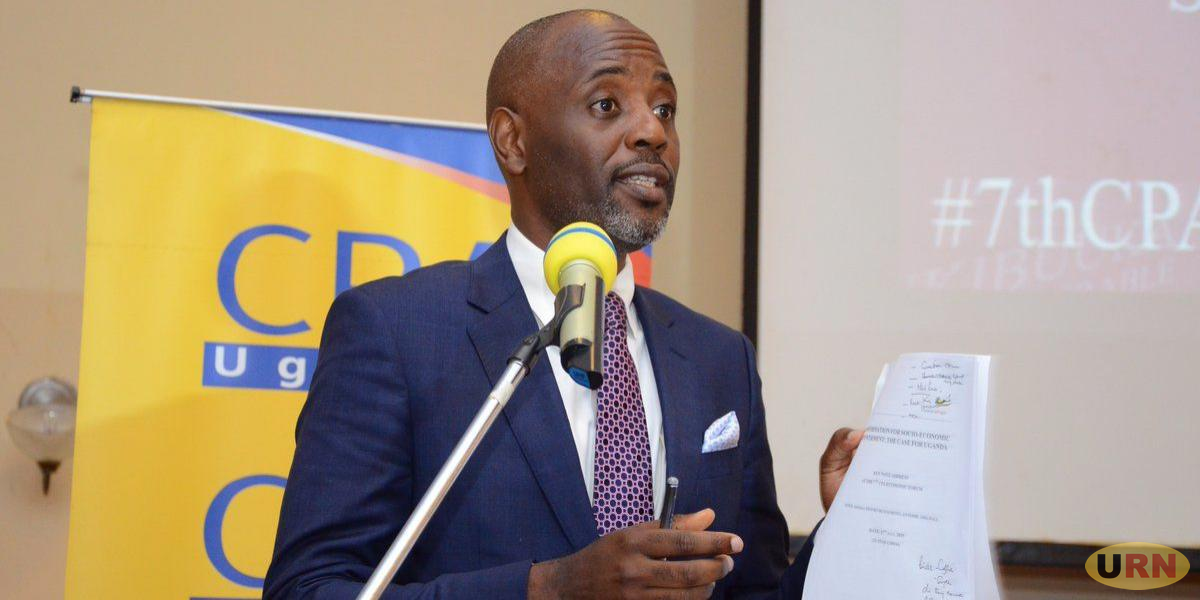
NPA Executive Director Dr Joseph Muvawala asked the Ministry of Education to settle the mess in higher education regulation. He stressed the need to harmonise the system by answering critical questions, including what constitutes Technical and Vocational Education and Training (TVET) versus the higher education system, and which body should accredit particular programmes.
He noted that the National Planning Authority (NPA) will soon issue an advisory note to the minister, providing technical guidance on the matter and proposing measures to address duplication and regulatory confusion in the higher education sector.
Over the past year, the higher education space has fallen into disarray following the creation of new bodies that have begun regulating universities alongside the National Council for Higher Education (NCHE), the agency given the primary mandate under the Universities and Other Tertiary Institutions Act.
A key flashpoint has been the establishment of the TVET Council under the TVET Act, 2025. Universities are now required to seek accreditation from the TVET Council for their diploma and certificate programmes and to register students for national examinations administered by the Uganda Vocational and Technical Assessment Board (UVTAB) and related bodies.
This has sparked a significant clash between the Technical Vocational Education and Training (TVET) Council and the National Council for Higher Education (NHCE), which is mandated to regulate and guide the establishment and management of higher education institutions.
Last year, Prof Joy Kwesiga, NCHE Chairperson, warned that overlapping mandates between the TVET Act and the NCHE Act could create regulatory conflicts, inefficiencies and confusion for institutions and students.
Section 5(1) of the TVET Act mandates the TVET Council to accredit TVET programmes, while Section 4(d) of the Universities and Other Tertiary Institutions Act gives NCHE similar accreditation responsibilities. The then Attorney General, Kiryowa Kiwanuka, in December 2025 advised that there was no conflict or overlap between the two systems.
“My opinion is that there is no conflict or overlap between the TVET system and the higher education regulatory system. My view is that the TVET system and higher education regulatory system operate independently of each other,” he stated. He said section 125 of the TVET Act was clear evidence of Parliament’s intention for the systems to function separately. He insisted that model was consistent with global best practice.
Ronald Mbago, the Academic Registrar of Seeta University, noted that institutions are being “tossed about” by different players and that harmonising the regulatory space would remove the prevailing confusion. Dr. Pradeep Kumar, Deputy Vice-Chancellor of ISBAT University, called for a streamlined regulatory framework that safeguards university autonomy while maintaining consistent standards.
He argued the sector risks regulatory inefficiencies, diminished institutional autonomy and weaker quality assurance. Makerere University Vice Chancellor Prof Barnabas Nawangwe revealed that other professional bodies have entered the academic regulation space.
Nawangwe said those adding yet another layer of accreditation on top of NCHE. Bodies in medicine, law, engineering and other fields have been involved in accrediting university programmes. Nawangwe suggested that where necessary, they should collaborate with NCHE to develop standards and then focus on regulating graduates once they enter the workplaces.
The situation has been further complicated by the recent creation of a Teachers Council, which is set to oversee teacher education and thereby introduce additional regulation in that area of higher education. The overlapping mandates have left universities navigating multiple accreditation processes, examination requirements and quality assurance demands-URN. Give us feedback on this story through our email: kamwokyatimes@gmail.com