The Bishop of Ankole Diocese, Rt Rev Fred Sheldon Mwesigwa, has called for a return to revival evangelism, saying it could help address what he describes as declining moral standards and rising HIV infections in the region.
Bishop Mwesigwa said the revival movement that once strongly influenced communities in Ankole has weakened due to the emergence of new religious groups and changes in the focus of some churches.
He said some Anglican churches have increasingly emphasised miracles, deliverance, healing and prosperity at the expense of preaching about sin and the Word of God.

Bishop Mwesigwa said the decline in emphasis on Christian morals is contributing to challenges such as sexual immorality, which he linked to the spread of HIV/AIDS.
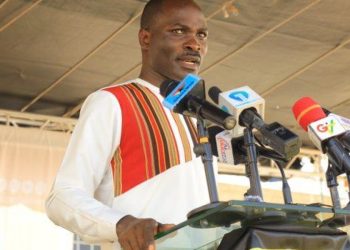
He made the remarks on Wednesday while addressing journalists at St James Cathedral Ruharo in Mbarara City during the opening of celebrations to mark 90 years of the East African Revival Mission in Ankole.
The Bishop’s concerns come against a backdrop of relatively high HIV prevalence in Ankole. According to the Uganda AIDS Commission, HIV prevalence stands at 11 percent in Kiruhura, 10 percent in Mbarara City, eight percent in Bushenyi and Mbarara District, and seven percent in Sheema and Rwampara. Ibanda, Rubirizi and Ntungamo each have prevalence rates of about six percent. The national HIV prevalence is estimated at 4.9 percent.
The Uganda AIDS Commission (UAC) figures reported in 2026 put HIV prevalence in Ankole well above the national average in several districts. UAC officials cited a 4.9% national prevalence, compared with 11% in Kiruhura, 10% in Mbarara City, 8% in Bushenyi, 8% in Mbarara District, 7% in Sheema, 7% in Rwampara, 6% in Ibanda, 6% in Rubirizi and 6% in Ntungamo. Mitooma, Buhweju, Kazo and Isingiro were reported at about 5%, 4%, 4% and 4%, respectively.
However, the available statistics do not by themselves establish a causal link between the decline in revival evangelism and HIV prevalence.
The Bishop said a return to revival evangelism, combined with government interventions against HIV, could help Uganda achieve its target of ending AIDS as a public health threat by 2030. Sin is the greatest enemy of man. It has caused poverty, increased murders and marriage breakups,” Bishop Mwesigwa said.
Bishop Mwesigwa argued that these challenges threaten the values promoted by the revival movement.
He said the revival had previously contributed to social transformation in Ankole, with communities that embraced the movement experiencing what he described as longer lives, improved livelihoods, better education for children and stronger families.
“The fruits of the revival are evident; we have about 10 people who have made 100 years plus; others are celebrating over 100 years of age. Those are testimonies, because he chose the foolish to shame the wise and the weak to shame the strong, so we need the revival in Ankole,” he said.
The East African Revival was introduced in Ankole on September 2, 1935, through Kigezi from Gahini in Rwanda. Bishop Mwesigwa said the movement had a profound influence on the lives of people in the region and called on the current generation to reclaim its emphasis on moral transformation.
Rt Rev Johnson Twinomujuni, Bishop of West Ankole Diocese, said the 90th anniversary celebrations are a call to a new generation to preserve the legacy of Christians who walked long distances to preach the gospel and build the church. He said the greatest evidence of the revival was not found in church buildings, institutions or historical records, but in the transformed lives of Christians.
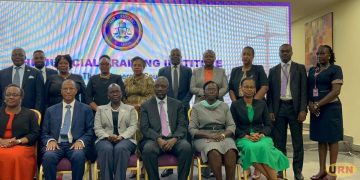
The celebrations have brought together the bishops of the five dioceses that make up Ankole: Bishop Mwesigwa of Ankole Diocese, Bishop Nathan Ahimbisibwe of South Ankole, Bishop Amos Magezi of North West Ankole, Bishop Johnson Twinomujuni of West Ankole and Bishop Alfred Muhoozi of North Ankole.
Meanwhile, hundreds of Christians from across Ankole and East Africa are converging at the seat of Ankole Diocese, St James Cathedral, for the 90th East Africa Revival Mission.
The event commemorates 90 years since the East African Revival reached Ankole in 1935 after spreading from Gahini in Rwanda through Kigezi in southwestern Uganda, later spreading to Kenya, Tanzania, Burundi, Boga Zaire and South Sudan, becoming one of Africa’s most enduring Christian renewal movements.
The five dioceses, which include Ankole, South Ankole, West Ankole, North Ankole and North West Ankole, will jointly host the celebrations from August 26 to 30 this year at the Ankole Diocese cathedral grounds in Ruharo, Mbarara City.
The event commemorates 90 years since the East African Revival reached Ankole in 1935 after spreading from Gahini in Rwanda through Kigezi in southwestern Uganda, later spreading to Kenya, Tanzania, Burundi, Boga Zaire and South Sudan, becoming one of Africa’s most enduring Christian renewal movements.
The five-day mission runs from August 26 to 30, 2026. The Archbishop of the Church of Uganda, Most Rev Dr Samuel Kazimba Mugalu, is expected to attend, while President Yoweri Museveni is scheduled to preside over the closing ceremony.
Other preachers expected at the celebrations include former Archbishop of the Church of Uganda, Rev Luke Orombi, Emeritus Bishop John Am Guernsey, and Rev Canon Justus Miwanda-URN. Give us feedback on this story through our email: kamwokyatimes@gmail.com