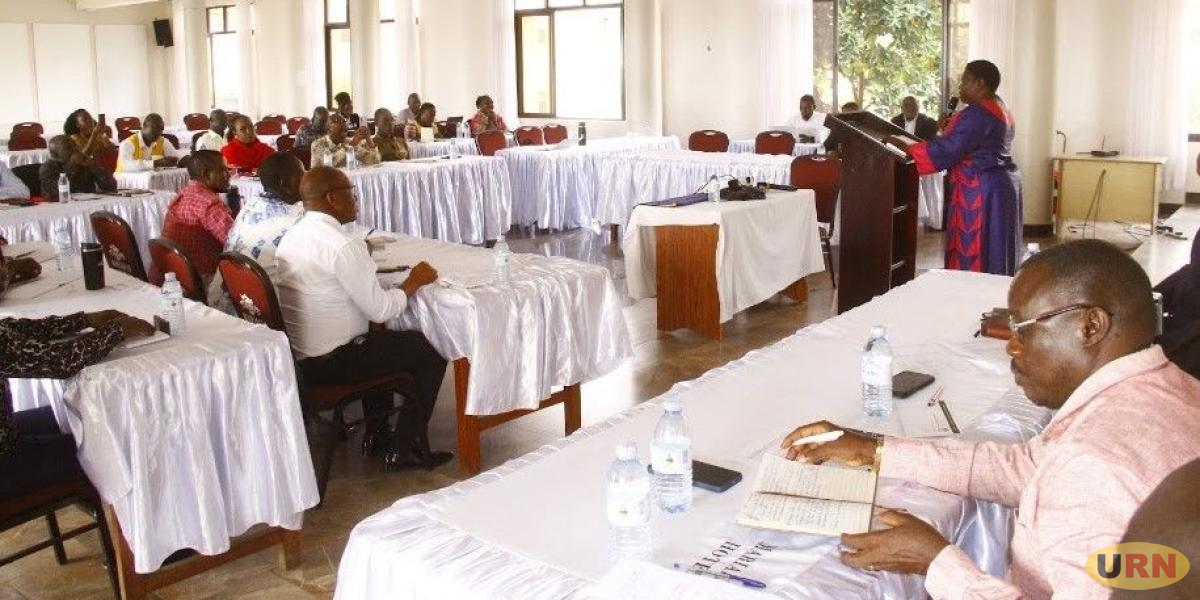
The National Organisation of Trade Unions (NOTU) and the Central Organization of Free Trade Unions (COFTU) are engaging the government on the need for a financial empowerment scheme through which low-paid workers can access financial support to improve their livelihoods.
Arinaitwe Rwakajara, one of the workers’ representatives in Parliament, says the proposal is among the ideas generated from their broader discussions on improving the welfare of workers and enhancing their financial inclusion. He said that, given the current circumstances, when the government is still hesitant to ratify the minimum wage policy, the scheme could close the existing income inequality in Uganda.
Rwakajara says workers in the informal sector struggle to meet basic needs such as modest healthcare and education for their children because of low or irregular incomes. He suggests that the proposed scheme should provide low-paid workers with affordable credit to establish income-generating projects that can supplement their wages.

For years, the government has implemented several wealth and job creation programs, including Emyooga, the Youth Livelihood Program (YLP), Uganda Women Entrepreneurship Program (UWEP), Operation Wealth Creation (OWC) and the Parish Development Model (PDM), to help communities transition from subsistence to the money economy.
However, Rwakajara says low-paid workers have largely been excluded from these programs because they are regarded as economically active by virtue of being employed, yet many of them remain financially vulnerable.
Meanwhile, Richard Bigirwa, the NOTU Secretary General, says the workers’ movement also resolved to develop a proposed draft on policy and regulations for migrant workers, to introduce clauses for mandatory insurance cover for Ugandans seeking employment abroad.
He says the proposal is intended to protect migrant workers from exploitation by labour export companies, brokers and foreign employers.
Bigirwa says their assessments have established that many Ugandan migrant workers endure unfair treatment and salary discrimination because of weaknesses in the existing policy framework, unlike some workers from Asian countries who, he says, enjoy better protection and insurance coverage.
The workers’ leaders have accordingly handed their proposals to Rose Namayanja Nsereko, the National Resistance Movement (NRM) Deputy Secretary General, seeking her support to advance the issues through government high-level decision-making platforms.
However, Namayanja challenged the workers’ movement to utilize its representation on various government bodies to push for policies that address workers’ concerns.
She said the workers’ unions should ensure their issues remain part of government decision-making at all levels, as well as inventing practical ideas to attract government support-URN. Give us feedback on this story through our email: kamwokyatimes@gmail.com