The official revival of the Apiriti Animal Market in Madi Opei Sub County, Lamwo District, has been met with urgent calls to address persistent cross-border taxation friction, insecurity, poor telecom network connectivity, and power shortages that previously crippled its operations.
The market, located along the Apiriti-Tseretenya-Ikotos road in Madi Opei Sub-county, was constructed at a cost of 30 million shillings in 2014 by the Ministry of Agriculture, Animal Industry and Fisheries (MAAIF) to facilitate livestock trade between Uganda and South Sudan. However, it has remained nonfunctional for several reasons such as insecurity and poor mobilization.
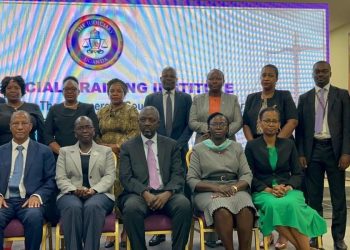
This month, Lawmo district councilors resolved to reopen the market to increase revenue, household incomes and facilitate the ongoing cattle restocking.

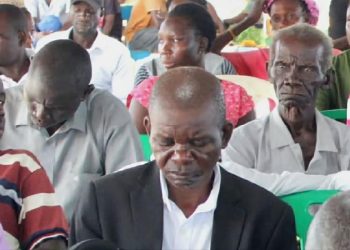
Speaking on Thursday during a meeting ahead of the animal market reopening next month, Felix Nyero Lawii, the LCIII Chairperson for Madi Opei Sub County, highlighted critical historical challenges that frustrated past cross-border trade with neighbouring South Sudan, particularly rigid taxation protocols on imported livestock.
Under Ugandan regulations, foreign traders are required to clear taxes upon entry. However, Lawii noted that South Sudan traders suffer financial losses when livestock cleared at the border isn’t sold due to poor physical condition and is returned across the border without tax relief. He urged URA and local stakeholders to enact administrative adjustments to incentivize traders as the market reopens.
In addition to trade barriers, Lawii outlined three major operational hurdles threatening the sustainability of the cross-border market, as heightened security risks along the border region which pose a threat to traders and community members during market days, a lack of telecommunications network coverage, which forced traders to leave mobile devices in specific localized spots to catch signal, severely hindering real-time business transactions.
Lawii also cited lack of access to the national grid which affects the market and confirmed that his administration has formally written to the Uganda Electricity Distribution Company Limited (UEDCL) requesting an eight-kilometer grid extension to supply the sub-county and market facilities, appealing to Lamwo District authorities for administrative backing to expedite the process.
Everest Apire, a businessman at Apiriti Border blamed government leaders at the area for the collapse of the market, saying they stopped trucks from passing through that area, frustrating many traders.
“This market had started well but the government leaders stopped the truck drivers from passing here to South Sudan and instead ordered them to drive back and enter through Elegu, leaving many traders frustrated and the point became idle,” Apire aid.
Alex Powell Kadugu, the Lamwo District Commercial Officer, said the revival of the market is timely as it will help cattle traders facing challenges along as they go to buy animals from other districts.
Kadugu however called for a committee comprising members of the business community, market vendors, security, community development department and veterinary officers; to oversee the operations of the market and identify the challenges it will meet and provide holistic solutions.
According to Kadugu, the market initially had a committee whose members didn’t even reside near the market nor owned businesses there and hence didn’t know the dynamics of animal trade. District Production Officer Wilfred Ochora, called upon leaders and the community to sensitise business owners to embrace the market, so that it grows to the level of Elegu Border Market in Amuru district.
“Everyone is important for the growth of this market,” Ochora said. “If the animal market is performing well, other businesses such as restaurants, accommodation will also perform well.”
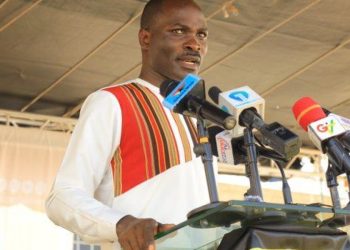
Sisto Ocen Oyet, the chairperson of Lamwo district, urged the community to start suing the market, to attract traders from other districts, and also appealed to the security to deploy both at the Uganda side and the side of South Sudan during market days, to guarantee the safety of the traders and build their confidence in the market.
“NITA-U has already brought internet to Kitgum,” Oyet said. “Our recommendation will be for them to bring internet in Lamwo. If the market grows, it will be motivating for other sefvices like phone networks and electricity. I will write to UCC to ensure that there is network here to help on issues of security.”
According to Oyet, the market also has the potential to facilitate the growth of other government programs such a Parish Development Model and GROW.
Lamwo RDC William Komakech assured traders of tight security upon reopening and pledged to negotiate with URA to grant a two-month tax grace period for merchants to help establish trade flow-URN. Give us feedback on this story through our email: kamwokyatimes@gmail.com