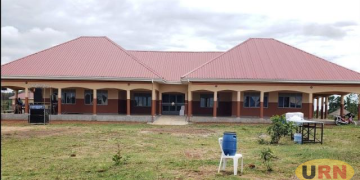
The government has commenced a validation exercise for residents who will be compensated ahead of the construction of the multi-billion-shilling Unyama Irrigation Scheme, a project expected to transform agricultural production in Gulu and Amuru districts.
The exercise, being conducted by the Ministry of Water and Environment under the Farm Income Enhancement and Forest Conservation Programme Phase Three (FIEFOC-3), seeks to verify the details of project-affected persons (PAPs) whose land and property will be required for the establishment of the irrigation infrastructure.
The Unyama Irrigation Scheme will be established along River Unyama in Angany Village, Pawel Parish, Patiko Sub-county in Gulu District. The scheme will cover about 700 hectares of land and include a reservoir with a storage capacity of 12 million cubic metres of water.

Speaking to Uganda Radio Network, John Magezi Ndamira, the National Project Coordinator for FIEFOC-3, said the validation exercise is aimed at confirming the particulars of all affected persons before compensation is undertaken. According to Magezi, about 105 project-affected persons have so far been identified, and their details are being verified to ensure compensation is paid to the rightful beneficiaries.
Magezi explained that compensation will cover land required for the construction of key irrigation infrastructure, including the main, secondary and tertiary canals, the reservoir area, warehouses and access roads. He noted that the construction contract has already been awarded to Ambitious Construction Company, which is expected to undertake the civil works over two years.
However, Magezi said the project site has not yet been handed over to the contractor because compensation must first be completed in line with the project’s environmental and social safeguards.
Magezi said the irrigation scheme is expected to boost agricultural production by providing farmers with a reliable water supply throughout the year, particularly during prolonged dry spells that have increasingly affected crop production in northern Uganda.
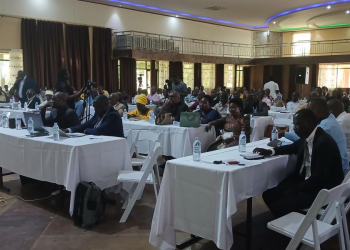
Addressing residents during a community sensitisation meeting in Angany Village, Alfred Okot Okidi, the Permanent Secretary in the Ministry of Water and Environment, said the project is intended to advance the government’s agenda of commercialising agriculture in northern Uganda.
Okidi said the multipurpose water storage facility will irrigate approximately 1,000 acres of farmland shared between Gulu and Amuru districts, enabling farmers to grow crops throughout the year instead of relying solely on rainfall. He said the scheme will increase cropping cycles, allowing farmers to harvest vegetables such as cabbages up to four times a year, while also creating opportunities to cultivate high-value perennial crops including coffee and cocoa.
On concerns over land acquisition, Okidi said the ministry had completed the valuation of all project-affected properties and had begun publicly displaying the compensation lists at sub-county headquarters, markets and through traditional leaders to ensure transparency. “We want to ensure that the people being compensated are the rightful owners. Once that process is completed, we shall process their payments,” he said.
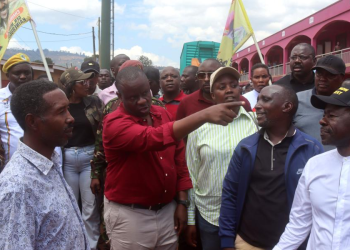
However, some project-affected persons accused the government of carrying out land mapping for the irrigation scheme without adequately informing or consulting them.
Margaret Abalo, who owns 14 acres of land within the project area, told Uganda Radio Network that she only learnt of the project after survey teams had already begun marking the land.
Abalo said the land has been her family’s main source of livelihood, enabling her to pay her children’s school fees through farming. She fears that even if she receives compensation, she may not be able to acquire land of similar quality for agriculture.
Charles Job Latim, another affected landowner, said the government has not clearly communicated the compensation rates for land that will be acquired under the project. He expressed concern that the compensation may be insufficient to enable him to buy alternative land and continue farming.
Balington P’Ongwech, the Gulu District Secretary for Production, Works and Technical Services, described the Unyama Irrigation Scheme as a transformative investment that the district fully supports because of its potential to improve agricultural productivity and household incomes.
However, P’Ongwech acknowledged that inadequate community engagement had fuelled uncertainty among affected residents. He said many landowners felt they had not been sufficiently consulted before project activities commenced, while others remained uncertain about how compensation would be assessed and paid.
P’Ongwech urged the Ministry of Water and Environment to strengthen community sensitisation and ensure transparency throughout the compensation process to build public confidence and minimise grievances. The Unyama Irrigation Scheme is one of three large-scale irrigation projects being implemented under the FIEFOC-3 programme, alongside similar schemes in Nakapiripirit and Bulambuli districts, at a combined cost of 125 million US dollars.
The Islamic Development Bank is financing 86 million dollars of the project, while the Arab Bank for Economic Development in Africa (BADEA) has contributed 15 million dollars. The Government of Uganda is providing approximately 19.7 million dollars as counterpart funding-URN. Give us feedback on this story through our email: kamwokyatimes@gmail.com