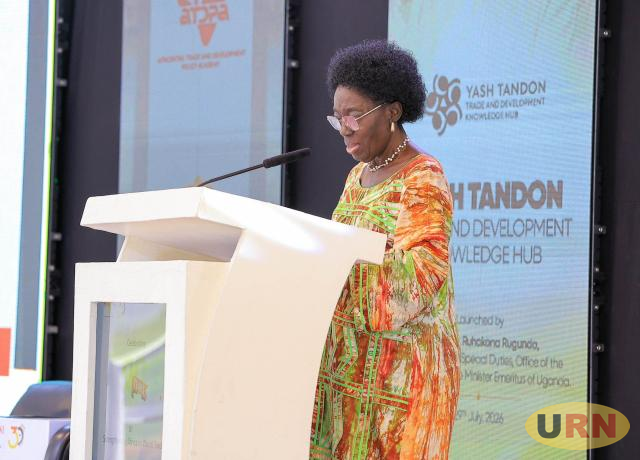
Uganda has entered into debt, trade and investment agreements that have disadvantaged the country because of poor decisions by technocrats and policymakers involved in the negotiations, First Deputy Prime Minister Rebecca Kadaga has said.
Kadaga says some deals signed for the country reflect either a lack of knowledge on the issue or that the negotiators sign without reading through what they are committing the country to. This, according to her, has cost the country many opportunities, as well as securing costly loans. She called on economic and trade think-tanks like SEATINI Uganda to help the government to build a pool of capable negotiators.
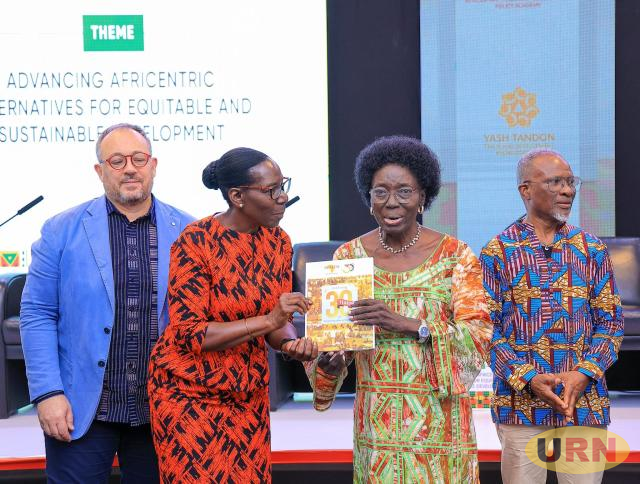
Kadaga was speaking at the event to mark 30 years of SEATINI in Uganda, and the commemoration of economist Yash Tandon’s contribution to national, regional and global economic equity efforts. The events are under the theme: Advancing Africentric Alternatives for Equitable and Sustainable Development. It is aimed at advancing the continent’s move for independence from the Western-backed decisions that influence the global financial architecture.

Kadaga, also Uganda’s Minister for East African Community Affairs, also called for support for her view on a regional currency. She wants this expedited, but says the pace is being affected by the bureaucratic processes of the East African Community.
Among the considerations is the harmonisation of monetary policies across all the eight member states and the convergence criteria. The primary targets under the convergence criteria are the 8 percent inflation target, fiscal deficit within 3 percent, a gross public debt cap at 50 percent of the GDP, and a foreign reserve cover of not less than 4.5 months of import cover.
There are also several secondary targets, and Kadaga says it might take forever for all the countries to simultaneously meet these targets. She prefers the European Union model where the euro was launched, and countries played catch-up as they continued using their currencies alongside the EU currency.
At their last meeting in Uganda last week, the EAC monetary affairs committee agreed on 2031 as the new deadline for a single currency. The single currency is aimed at facilitating cross-border trade, which Kadaga says is difficult under the current conditions and even expensive due to currency conversions. She also called for faster abolition of trade barriers across the borders.
In his view, Dr Ezra Suruma, presidential advisor and former Finance Minister, said the problem with regional integration is the love for sovereignty, where each country wants to cling to its interests like currency. According to him, this is not only in the EAC or Africa, but that all regional economic blocs encounter it as a challenge. This makes it difficult for one country to influence things at the regional level.
But Suruma, who was among the negotiators for the revival of the EAC, advises that Uganda should continue making policies that cater for its interests, while also taking into consideration the need to enhance regional integration.
On debt and capital availability, Suruma says this will continue to be a challenge for as long as capital is still controlled by the West, which itself is capitalistic by nature. And this, he says, does not only affect state borrowing but also the local private sector, which wants to borrow from the domestic market.
Suruma explained how he was sacked by the government as Chairman/Managing Director at the then Uganda Commercial Bank for opposing its privatisation against the Western (IMF and World Bank) backed government position of privatising all state parastatals. He says that the only solution to capital is having a strong local financial industry independent of Western capitalist influence.
He says Africa must have the knowledge, capacity, and confidence to define and pursue its own development pathway. Suruma commended SEATINI’s 30-year contribution to strengthening Africa’s voice in global economic governance. He emphasized that lasting economic transformation depends on building productive economies, creating jobs for young people, and ensuring Africa shapes, not merely responds to, the global trade agenda.
SEATINI Uganda Executive Director Jane Nalunga reaffirms the organisation’s commitment to advancing Africentric alternatives for equitable and sustainable development through research, policy influence and strategic partnerships. This, she says, is more important today as the countries of the world are becoming more inward-looking, with each one seeking to influence the world order to their own benefit.
According to her, collaboration amongst all African regional economic blocs will be vital to strengthen the negotiation capacity of the continent as it seeks African solutions to its own needs.
David Luke, Director, Firoz Lalji Institute for African at the London School of Economics and Political Science, says the multiple crises and volatility facing countries today mean poorer regions like Africa must rethink their economic and political strategies.
“The consensus era that followed the Second World War — with its norms of multilateralism, non-discrimination, and special treatment for developing countries including development aid — is giving way to a world shaped by contestation, fragmentation, and strategic rivalry,” he says, adding that emerging tensions related to national economic security considerations are reshaping the rules-based global order, including the multilateral trading system itself.
“The role of the WTO has diminished as a forum for the negotiation of trade agreements. Its dispute settlement system is no longer effective.” The commemoration also featured the launch of the Yash Tandon Trade and Development Knowledge Hub, a continental platform for Africentric policy research, knowledge exchange and policy engagement. Also launched were the Africentric Trade and Development Policy Academy, aimed at strengthening Africa’s capacity in trade, fiscal and investment policy leadership while nurturing “a new generation of progressive thinkers and practitioners”-URN. Give us feedback on this story through our email: kamwokyatimes@gmail.com