The Works and Transport Ministry has unveiled plans to introduce an electronic monitoring system for bus drivers and make pre-loading inspections mandatory for all public service buses, in a fresh attempt to tackle road crashes blamed on driver fatigue, poor compliance and weak enforcement.
The proposals signal a shift in the government’s road safety strategy from relying mainly on roadside enforcement to preventing non-compliant buses from leaving terminals in the first place. The new measures come after a series of fatal crashes in July renewed concerns over the safety of the passenger transport sector. At least 15 people died in a bus crash in Omoro District, while 24 pupils of King David Junior School were killed when their school bus overturned in Kapchorwa.
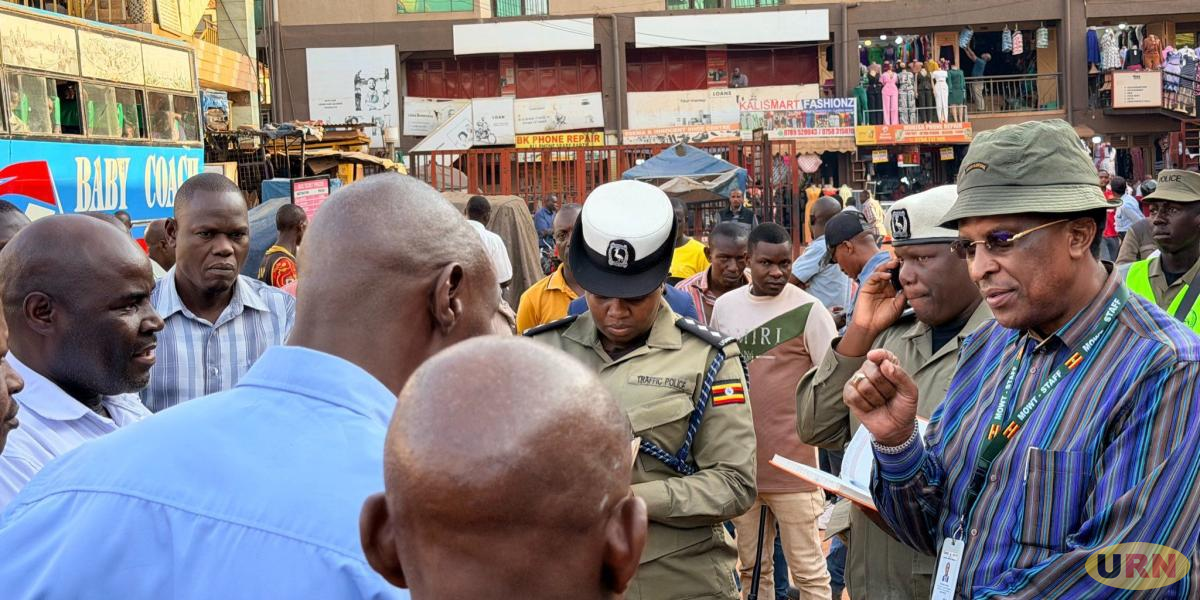
In another incident, a passenger died after a bus collided with a train in Mukono District. Speaking after leading a multi-agency impromptu compliance operation at Kisenyi Bus Terminal on Thursday, the Commissioner for Transport Regulation and Safety, Winston Katushabe, said investigations into the recent crashes revealed widespread violations, including unlicensed buses, unqualified drivers, mechanical defects and weak enforcement at departure points.

“We want to solve the problem from the core, and everything starts with the bus terminals,” Katushabe said. “We need to ensure that before the bus is loaded with passengers, it has all the statutory requirements. The driver must have a valid badge, the vehicle must be roadworthy, and all licences must be in place.”
The ministry now wants every bus to undergo inspection before passengers board, with terminal managers and police jointly verifying the driver’s credentials, the vehicle’s roadworthiness and the operator’s compliance before authorising departure.
During Thursday’s inspection, officials intercepted more than three buses belonging to Baby Coach, Ibabu and Abapakasi that had already boarded passengers despite failing to meet statutory requirements. One driver fled after inspectors discovered he had no driving licence, while two other buses lacked valid route charts and Public Service Vehicle licences.
Katushabe ordered passengers to disembark and board compliant buses before continuing with their journeys. Despite the disturbances, passengers welcomed the proposal despite the delays caused by Thursday’s inspections. Annet Mutsei, who had boarded a bus to Ibanda before it was stopped, said passengers often have no way of knowing whether a bus meets legal requirements. “They disturbed us after we had already boarded, but this is a good thing. As passengers, we cannot tell which bus has fulfilled all the requirements. If they inspect them before loading, it is better,” she said.
Another traveller, Damali Nakku, said buses are frequently stopped midway through journeys because of compliance failures, disrupting passengers’ travel plans.”If this is done before departure, it is much better. The challenge is whether they will enforce it consistently,” she said. Saturday Muhwezi, the manager of Kisenyi Bus Terminal, also backed the initiative, saying they were ready to work with the ministry and police to institutionalise self-regulated pre-loading inspections.
The ministry’s second proposal is an electronic driver monitoring system designed to track drivers throughout their journeys. Katushabe said that under the proposed system, drivers will log into a digital platform before departing from bus terminals and again at designated police checkpoints along their routes. He added that the platform will record driving hours, rest periods and journey histories, enabling authorities to identify fatigued drivers and those operating multiple long-distance routes without sufficient rest.
“Other than the medical tests, we want to look at fatigue as one of the challenges. The system will tell us how many hours a driver has rested within 24 hours,” Katushabe said. He said both terminal managers and traffic police will access the system to monitor compliance in real time.
The ministry also plans to strengthen digital verification systems to identify unlicensed vehicles and unauthorised drivers while continuing road safety audits to improve dangerous road sections through better signage, road markings and engineering interventions.
The latest proposals revive a debate that has followed the road safety sector for years. Government has previously rolled out mandatory vehicle inspections, digital driving licences, speed governors for public service vehicles, roadside enforcement campaigns and periodic operations targeting reckless driving.
Despite those interventions, compliance has remained weak. Police annual crime reports consistently attribute more than 80 percent of road crashes to human error, including speeding, dangerous overtaking, driver fatigue and careless driving. Mechanical defects and poor vehicle maintenance continue to contribute to fatal crashes, particularly among commercial passenger vehicles.
Meanwhile, bus operators urged the government to review the cost of meeting statutory licensing requirements, arguing that the fees have become too expensive for many transport companies. Sam Muhoozi, the owner of Savannah Coaches, said operators are required to pay about Shs3 million per bus at once to obtain a Public Service Vehicle (PSV) licence, a cost he described as burdensome.
“That is a lot of money. The government should review these charges. The high cost is one of the reasons some operators fail to comply with the statutory requirements,” Muhoozi said. Katushabe acknowledged operators’ concerns over the high cost of obtaining Public Service Vehicle (PSV) licences, saying the matter has already been raised with the Ministry of Finance, Planning and Economic Development.
He said the government is considering possible reforms through the appropriate policy and legislative processes. “We have already engaged the Ministry of Finance on this matter. It will be handled through the appropriate channels, including the necessary legislative amendments,” Katushabe said.
Despite his concerns over the licensing fees, Muhoozi backed the ministry’s proposal for joint pre-loading inspections involving bus owners, terminal management and police, saying self-enforcement within the industry is both practical and necessary. He cited his own fleet as an example, noting that some of his buses are currently grounded because they do not have roadworthy tyres. “We would rather keep them off the road until they meet the required standards than risk passengers’ lives,” he said.
The operation also exposed other challenges at bus terminals, particularly the activities of brokers who allegedly overcharge passengers and issue fake travel tickets. Ministry officials said they will soon return to the terminals together with Kampala Capital City Authority (KCCA) to crack down on illegal brokers, improve the organisation of bus parks and enforce the requirement that public service vehicles operate only from gazetted terminals-URN. Give us feedback on this story through our email: kamwokyatimes@gmail.com