A six-week investigation by the State House Health Monitoring Unit has uncovered widespread financial irregularities, severe understaffing and governance weaknesses at Mbarara Regional Referral Hospital. Over four billion shillings in expenditure has been placed under audit query, and several officials have been named in questionable expenditure.
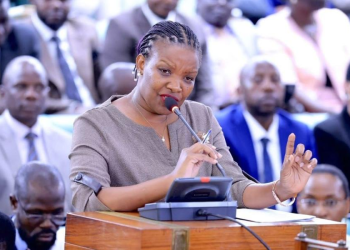
Presenting the 12-page report during a public accountability baraza in Mbarara City on Wednesday, the Unit’s Director, Dr. Warren Namara, described the findings as alarming and said they require urgent government intervention.
Namara said the report will be shared with the Office of the Director of Public Prosecutions (DPP), the Inspectorate of Government (IGG), the State House Anti-Corruption Unit, Mbarara City Council and the Ministry of Health to facilitate investigations and corrective action while avoiding duplication of work.

The investigation reviewed hospital operations and expenditure for the 2023/24, 2024/25 and 2025/26 financial years, covering more than 57 billion shillings in public funds. According to the report, over 4 billion shillings is under audit query, including more than Shs549 million in fuel expenditure that investigators say could not be properly accounted for.
Investigators allege that some hospital officials processed unusually large fuel requests far beyond the fuel tank capacities of hospital vehicles. The report cites Senior Hospital Administrator Patrick Semata, who allegedly received more than 133 million shillings in fuel allocations, and Justus Aryeija, who allegedly received 127 million shillings.
It further states that fuel payments worth 327 million shillings were processed through United Bank for Africa involving Semata, Aryeija, Alex Byaruhanga and Edgar Mugizi.
The report also questions fuel requisitions ranging between 300 and 470 litres issued at a time, saying they exceeded reasonable operational requirements for hospital vehicles. Another 967 million shillings paid as refunds to Mbarara Delegated Funds remains under investigation after auditors reportedly failed to find sufficient supporting documentation.
Investigators are also examining more than 2 billion shillings paid out as water bills without supporting receipts, raising concerns over possible financial leakages. The report further alleges that impress payments exceeding Shs436 million were deposited into personal staff accounts before being withdrawn in cash. Beyond financial management, the report paints a picture of a hospital struggling with leadership and staffing challenges.
It notes that substantive Executive Director Dr. Celestine Barigye has remained on full-salary sick leave since March 2023, well beyond the 180 days allowed under public service regulations.
Namara urged the Ministry of Health and the Medical Review Board to urgently determine whether Dr. Barigye should resume duty or retire on medical grounds, warning that the current arrangement has resulted in both Dr. Barigye and Acting Director Dr. Deus Twesigye receiving director-level salaries.
According to the report, the two have collectively earned about 163.8 million shillings over the past six months for a single approved position. The report also questions why Dr. Twesigye has continued serving in an acting capacity beyond the 12-month limit prescribed in public service guidelines. Staff shortages were identified as another major challenge.
The hospital has filled only 331 of its approved 1,266 positions, representing just 26.1 percent of the required workforce. Investigators also cited governance failures, including the absence of a substantive Senior Executive Consultant for more than three years, weak supervision by management, an ineffective Hospital Board, and poor planning that has affected service delivery.
The report says heads of departments have largely been excluded from planning and resource allocation, resulting in inefficient use of resources and weak teamwork. Responding to the findings, Acting Hospital Director Dr. Deus Twesigye acknowledged the staffing crisis, saying it has made effective management difficult.
He appealed to government to upgrade Mbarara Regional Referral Hospital to national referral status, arguing that this would improve staffing, funding and service delivery. Residents who attended the baraza also raised concerns about the quality of services at the hospital.
Justine Asiimwe, a resident of Mbarara City South Division, called on government to recruit more health workers and provide additional hospital beds to ease congestion.
Another resident, Dan Mugume, complained of widespread extortion, alleging that cleaners demand money from patients before assisting them to casualty wards. Residents also cited poor hygiene and overcrowding as persistent challenges affecting patient care.
The State House Health Monitoring Unit conducts routine inspections of public health facilities to assess service delivery, accountability and utilization of government resources.
Its findings are often shared with oversight and investigative agencies to facilitate administrative, disciplinary or criminal action where necessary. Mbarara Regional Referral Hospital is one of Uganda’s largest referral facilities, serving patients from western Uganda and neighbouring countries.
In recent years, however, the hospital has faced persistent challenges, including staffing shortages, infrastructure constraints and increasing patient numbers that have strained service delivery-URN. Give us feedback on this story through our email: kamwokyatimes@gmail.com