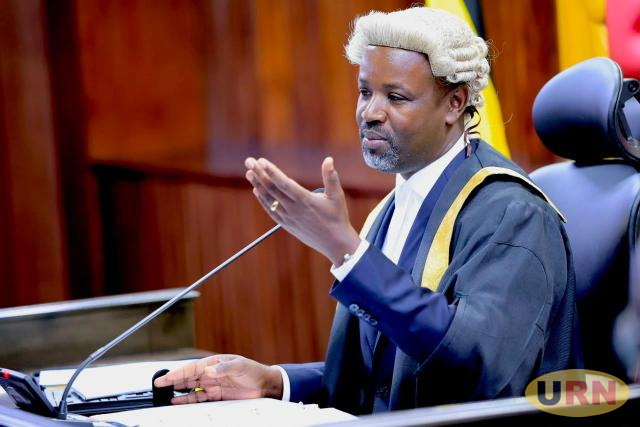
Parliament’s Business Committee has scheduled special sittings to allow each of the country’s 527 Members of Parliament to deliver a three-minute maiden speech. The exercise will begin on Tuesday, July 14, 2026, with every legislator given uninterrupted time to make their first formal contribution on the floor of the 12th Parliament.
Deputy Speaker Thomas Tayebwa announced the arrangement during plenary, saying House leadership had agreed to give every MP an equal opportunity to address Parliament without interruption. He said members are expected to use the occasion to comment on President Yoweri Museveni’s State of the Nation Address and the Alternative State of the Nation Address presented by Leader of the Opposition Joel Ssenyonyi on July 8.
However, Tayebwa said MPs are also free to use the time to raise constituency concerns, outline legislative priorities or make introductory remarks. “If you want to use the time for greeting your constituents, that will be entirely on you,” Tayebwa said.

In practice, the exercise is expected to take considerably longer once time is allowed for the Speaker’s guidance, procedural announcements, transitions between speakers, points of order and adjournments. Assuming Parliament sits for an average of six hours a day, the maiden speeches could occupy at least four to five sitting days.
Beyond the maiden speeches, Tayebwa said the Business Committee had also resolved to revive business that lapsed with the dissolution of the 11th Parliament ahead of the 2026 general elections. “Next week, one of the commissioners will move a motion to have this business reinstated. We shall also have the legacy report of the 11th Parliament presented,” he said.
Among the unfinished business is consideration of Auditor General reports. Tayebwa noted that only about 100 of the more than 500 reports had been processed before the previous Parliament was dissolved. Once reinstated, the House will resume consideration of pending bills, committee reports and other unresolved business from the 11th Parliament.
Maiden speeches are a long-standing tradition in Uganda and many Commonwealth legislatures, providing newly elected and returning MPs with an opportunity to formally introduce themselves, thank their voters and outline the priorities they intend to pursue during their five-year term.
First-time legislators often use the occasion to recount their journey to Parliament and highlight development challenges in their constituencies, while more experienced MPs typically focus on national policy priorities and legislative reforms.
Similar sessions were held at the start of the 10th and 11th Parliaments following the election of the Speaker and Deputy Speaker, the swearing-in of members and the President’s State of the Nation Address.
The debates traditionally mark Parliament’s first broad policy discussion, allowing members from across the political divide to respond to the government’s agenda before committee work and legislative business gather momentum.
They also provide parliamentary leadership with an early indication of the priorities emerging from different regions of the country, as MPs raise concerns ranging from infrastructure, healthcare and education to agriculture, security and governance-URN. Give us feedback on this story through our email: kamwokyatimes@gmail.com