The West Nile Livestock Traders Association has launched a mandatory registration exercise for all individuals and businesses involved in the livestock trade in a move aimed at streamlining the sector and curbing illegal cross-border trade. Association leaders say the exercise is intended to promote orderly livestock trade between West Nile and the neighbouring Democratic Republic of Congo (DRC), improve compliance with animal movement regulations and strengthen disease control measures.
Trade in cattle, goats, sheep and pigs has expanded rapidly in recent years, driven largely by strong demand from eastern DRC, where livestock prices can reach as high as two million shillings, compared to purchase prices ranging between 800,000 and 1000,000 million shillings in Uganda’s Teso and Lango sub-regions.
The lucrative business has attracted many new traders who buy livestock from Soroti, Katakwi, Kaberamaido, Lango and parts of Acholi before transporting the animals to West Nile for sale to Congolese buyers. However, according to the association, the growing trade has also been accompanied by widespread non-compliance with regulations.

Some traders have allegedly been transporting livestock into the DRC in violation of Ebola prevention measures, while others keep animals roaming along the Uganda-DRC border as they wait for buyers.
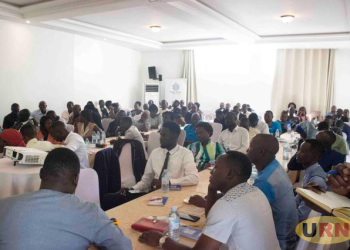
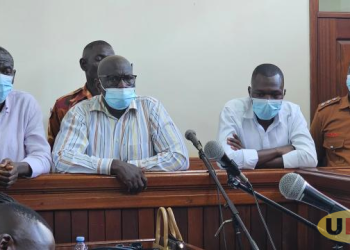
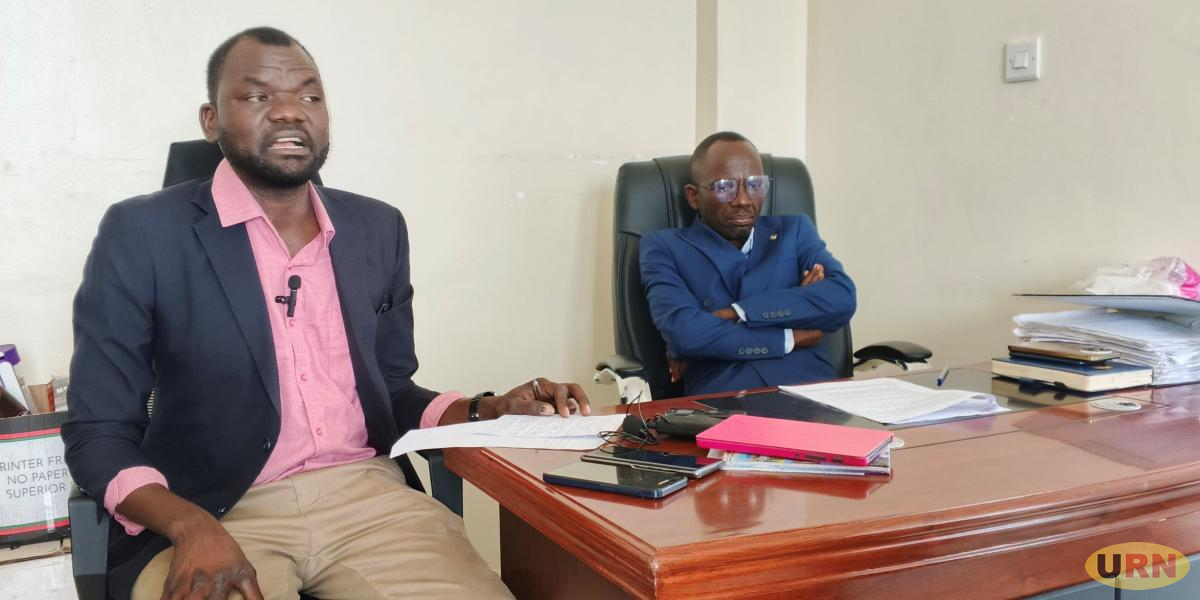
Speaking during a press briefing in Arua on Wednesday, the Chairperson of the West Nile Livestock Traders Association, Patrick Okiror Rosea, said the registration exercise will help identify legitimate traders, reduce livestock theft and promote lawful trade.
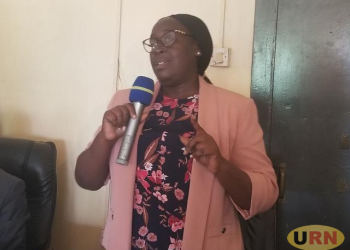
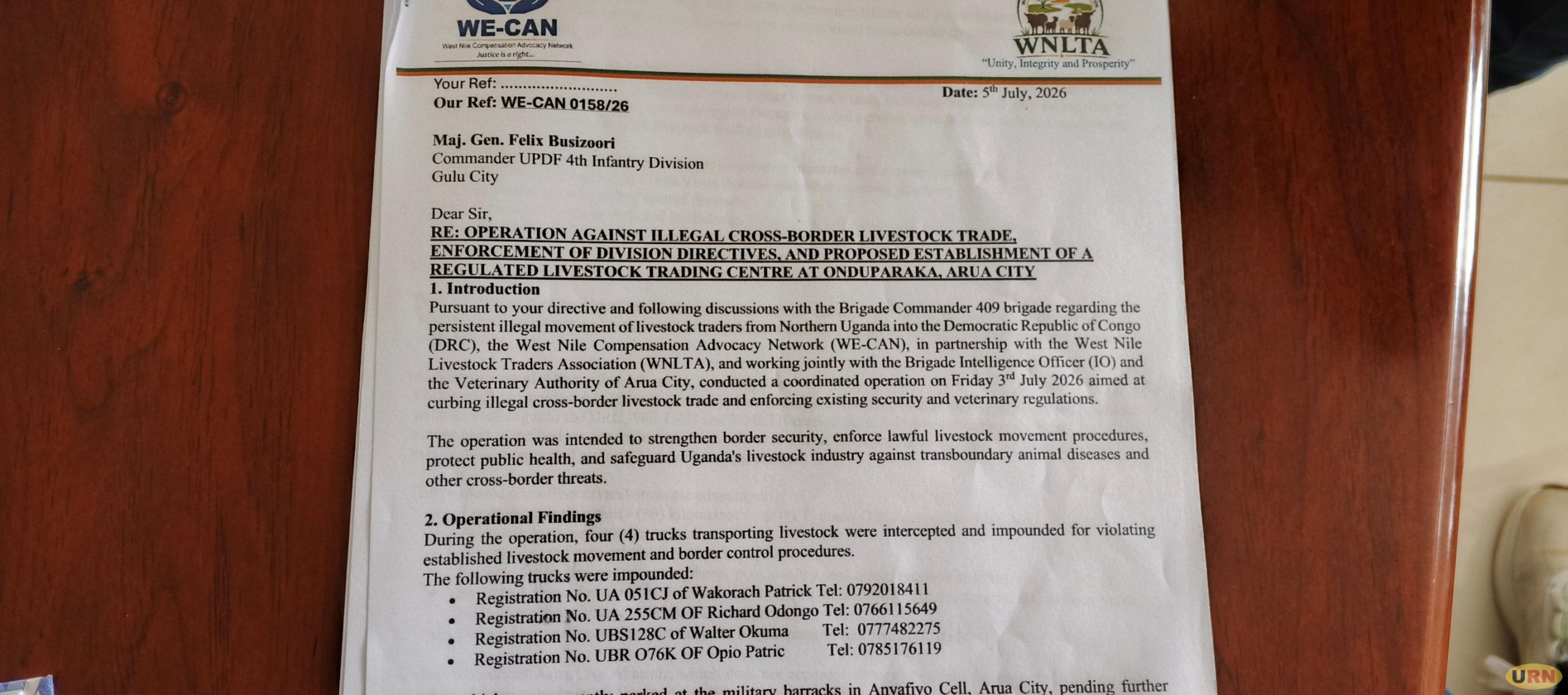
Richard Andama Criss, the Executive Director of the West Nile Compensation Advocacy Network (WE-CAN), an organisation that advises livestock traders in the region, said four trucks carrying livestock from eastern Uganda had recently been impounded after allegedly attempting to enter the DRC through illegal routes.
The trucks were reportedly intercepted following intelligence provided by the Uganda People’s Defence Forces (UPDF). According to Andama, stakeholders have since agreed on several measures to improve regulation of the sector.
These include mandatory registration of all livestock dealers, establishment of a comprehensive livestock database, creation of a modern livestock market at Kova Cell in Onduparaka capable of accommodating more than 3,000 animals at a time and strengthening security and monitoring along the Uganda-DRC border.
As part of the enforcement strategy, authorities have established major livestock inspection checkpoints at Pakwach and Bondo in Arua District before animals proceed to Arua City, where they are sold to buyers from the DRC and local markets.
According to the West Nile Livestock Traders Association, between five and 15 trucks loaded with livestock arrive in Arua every day, translating into more than 8,000 animals traded each month. The association estimates that more than 200 livestock businesses are currently operating in West Nile.
However, officials expect that number to exceed 500 as more traders register under the new regulatory framework. The registration exercise comes amid heightened government efforts to regulate livestock movement following recurring outbreaks of transboundary animal diseases and public health concerns, including Ebola.
Authorities have also intensified efforts to curb livestock theft, illegal exports and tax evasion associated with the growing cross-border trade between Uganda and the Democratic Republic of Congo. The establishment of a formal livestock database and designated trading centre is expected to improve traceability, disease surveillance and revenue collection while providing traders with a more organised marketplace-URN. Give us feedback on this story through our email: kamwokyatimes@gmail.com