The Uganda Law Society (ULS) has described the fatal Bobi Trading Centre crash on the Kampala-Gulu Highway as a consequence of longstanding government failures in road safety rather than an isolated accident. In a statement issued from exile, ULS President Isaac Ssemakadde called for sweeping reforms, saying the country must move beyond condolence payments and address the structural causes of rising road fatalities.
The Uganda Law Society (ULS) has blamed the deadly road crash at Bobi Trading Centre along the Kampala-Gulu Highway on what it describes as decades of government neglect of road safety, calling for urgent reforms to prevent similar tragedies.
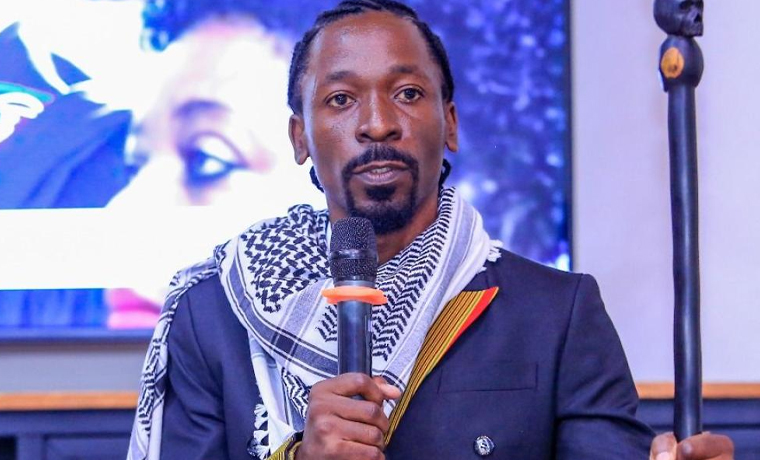
In a statement issued on Wednesday, Uganda Law Society President Isaac Ssemakadde said the collision involving an Opit Travellers bus and a lorry should not be viewed as an isolated accident but as evidence of systemic failures in road safety management. “This is not bad luck. This is policy failure,” Ssemakadde said.

The statement comes days after the head-on collision at Bobi Trading Centre in Omoro District left several people dead and others injured, prompting renewed concern over the safety of one of Uganda’s busiest highways. The ULS extended condolences to the families of those who died and wished a speedy recovery to the injured, but argued that expressions of sympathy alone were no longer sufficient.
According to the society, Uganda continues to witness rising road deaths despite repeated public outcry. Figures released by the Uganda Police Traffic Directorate earlier this year, the ULS noted that 5,383 people were killed in road crashes in 2025, equivalent to an average of about 15 deaths every day, up from 5,144 fatalities in 2024, 4,806 in 2023, and 4,534 in 2022.
Ssemakadde attributed the increasing death toll to weak enforcement of traffic laws, corruption, deteriorating road infrastructure, and inadequate emergency response systems. He criticized what he described as the government’s reliance on presidential donations to accident victims instead of investing in lasting road safety measures. “Families are destroyed, communities impoverished, and futures stolen while the state responds with condolences and hand-outs instead of prevention,” he said.
The Uganda Law Society also faulted the government for failing to establish a Road Accident Fund or a compensation framework for victims, saying countries such as Kenya and South Africa have adopted such mechanisms to support families affected by road crashes.
Beyond criticizing government policy, the society announced that it would provide legal aid to victims and bereaved families through its legal aid clinics in Gulu and Masindi and its toll-free legal aid service. It also pledged to establish a national pro bono scheme for road accident victims as part of activities marking its 70th anniversary.
The statement further called on Parliament to increase investment in road maintenance, strengthen enforcement of traffic laws, improve ambulance and trauma care services, and audit public spending on road infrastructure to eliminate waste and corruption.
Ssemakadde also criticized proposals for greater military involvement in civilian infrastructure projects, arguing that transparent civilian institutions, not the military, should be responsible for public works and road management. The Kampala-Gulu Highway is one of Uganda’s busiest transport corridors, linking Kampala to northern Uganda and neighboring South Sudan.
The route has frequently recorded fatal crashes involving passenger buses and heavy commercial vehicles, with road safety experts repeatedly attributing the accidents to speeding, dangerous overtaking, poor vehicle condition and inadequate enforcement of traffic regulations. The Uganda Law Society said the Bobi tragedy should serve as a turning point for comprehensive reforms aimed at reducing Uganda’s persistently high road traffic death toll-URN. Give us feedback on this story through our email: kamwokyatimes@gmail.com