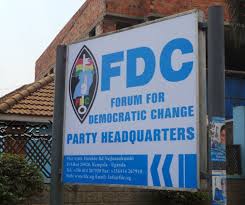
The Forum for Democratic Change (FDC) has criticised President Yoweri Museveni’s State of the Nation Address, describing it as a personal narrative rather than a constitutional report to Parliament. Speaking during a media briefing at the party headquarters in Najjanankumbi on Monday, FDC leaders said the address did not meet the requirements of Article 101(1) of the Constitution, which obliges the President to report on the state of the nation at the start of each parliamentary session.
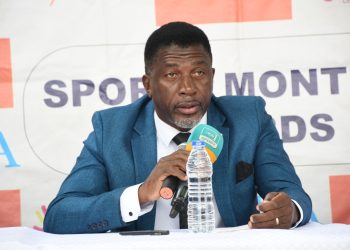
Article 101(1) requires the President to inform Parliament about governance, the economy, social services, infrastructure, and policy direction for the coming year. The party said Ugandans expected an assessment of government performance since the last address, but instead received what it termed a historical account stretching back several decades. Centenary Robert Franco, the FDC Vice Chairperson, said the President’s speech resembled a memoir. “This is what Ugandans expected. Instead, he delivered a personal memoir beginning in 1959 when he visited a stock farm as a Primary Seven pupil,” he said.
He added that while development indicators were cited, the comparison window was misleading. “GDP rising from 3.9 billion US dollars to 69.3 billion, infant mortality declining from 122 to 36 per 1,000, and life expectancy increasing from 43 to 68 years are all presented against a 40-year gap designed to demonstrate transformation,” he said. Robert Franco argued that the relevant benchmark should be progress since the last State of the Nation Address, not across multiple decades.

“A president beginning his seventh term owes Ugandans a term-by-term account, not a four-decade comparison,” he said. The party also criticised the President’s remarks discouraging Ugandans from seeking employment abroad, saying the message was not backed by a concrete jobs plan. The President had pointed to opportunities in agriculture, manufacturing, services, and ICT, citing examples such as real estate investments and milk coolers in Nyabushozi as evidence of local opportunities. Robert Franco dismissed this argument, saying it did not reflect the reality faced by many young people. “Telling Ugandans not to go abroad while offering no concrete plan to create opportunities at home is not a solution,” he said.
The FDC further faulted the Parish Development Model, describing it as a revolving fund of one million shillings per household, which it said could not substitute a functioning labour market. The party argued that poverty reduction requires structural economic transformation rather than small-scale handouts. Robert Franco said the address also failed to address key governance concerns, including unemployment, public debt, and the rising cost of living. “No accountability for previous commitments, no measurable targets for the next year, no mention of debt trajectory, and no acknowledgment of the cost-of-living crisis,” he said.
He further said corruption remained unaddressed in a meaningful way, adding that it continues to drain resources meant for public services. “Corruption continues to drain resources that should improve the lives of citizens. Fighting it must move from slogan to measurable national priority,” he said. The party proposed several policy priorities, including increased investment in agro-processing to create jobs, lowering the cost of doing business for small and medium enterprises, expanding vocational and technical education aligned to labour market needs, and establishing transparent youth enterprise financing mechanisms free from political interference. It also called for stronger support for innovation, digital entrepreneurship, and graduate enterprise funding. The statement concluded with a call for inclusive development under the slogan “One Uganda, One People.”
In a separate address, Ibrahim Kasozi Biribawa, Deputy Secretary for Publicity, Brand Quality Control and Marketing, welcomed the ongoing recruitment into the Uganda People’s Defence Forces. Citing Article 208 of the Constitution, Biribawa said the UPDF is a non-partisan, professional, and disciplined force and urged that recruitment should remain transparent and lawful. He noted that the current exercise targets 10,000 recruits aged between 18 and 28, running from June 10 to June 24, 2026.
Biribawa encouraged eligible youths to consider applying, describing military service as both a career opportunity and a form of national service. “Military and security service remains one of the highest expressions of patriotism and national duty,” he said. He added that participation should be voluntary and informed, urging young people to ensure they access accurate information before applying. The FDC also called on its district and sub-county structures to mobilise eligible youth to participate in the recruitment exercise, saying national institutions should reflect the diversity and commitment of Ugandans-URN. Give us feedback on this story through our email: kamwokyatimes@gmail.com