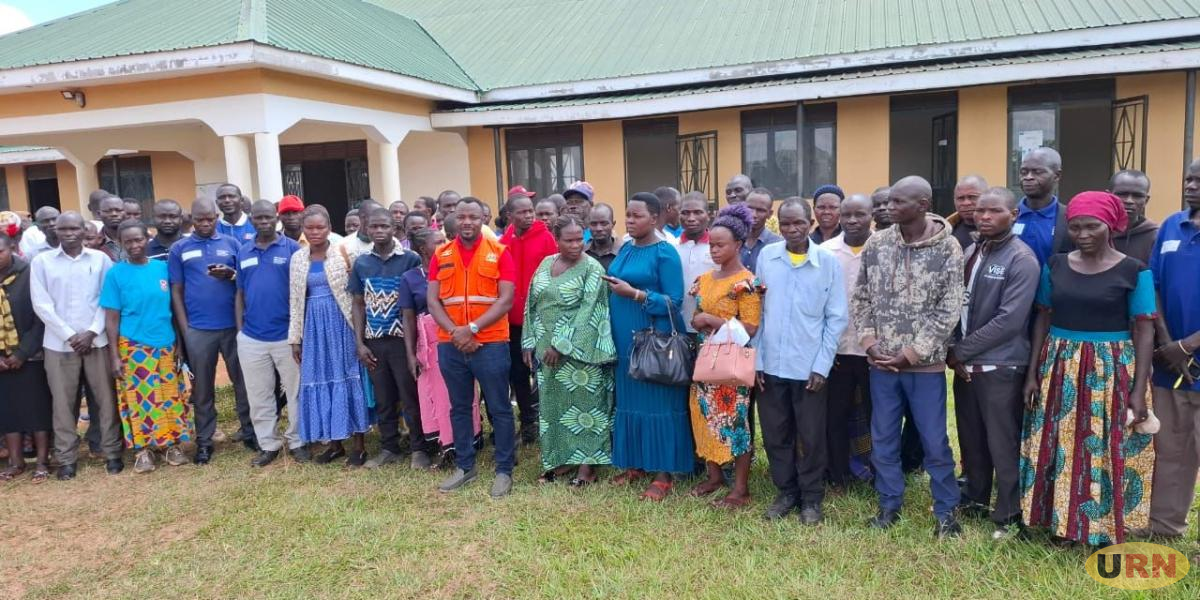
As Uganda intensifies efforts to contain the ongoing Ebola outbreak, the Ministry of Health, with support from the International Organization for Migration (IOM), has trained 100 Village Health Team (VHT) members in Zombo District on Ebola surveillance, reporting, and risk communication.
The three-day training, held in Zombo Town Council, is aimed at strengthening early detection and rapid response to Ebola cases, particularly in border communities considered to be at high risk. Uganda reactivated its national Ebola Taskforce on May 15, 2026, following the confirmation of a fatal Ebola case. By the time of filing this story, the country had recorded a cumulative 15 Ebola cases, prompting heightened surveillance and response measures, especially along the border with the Democratic Republic of Congo (DRC).
During the training, participants were equipped with knowledge on Ebola transmission, signs and symptoms, surveillance procedures, prevention measures, coordination mechanisms, and reporting protocols. Dr. Brian Odaga, the Community-Based Surveillance Technical Lead at the Ministry of Health, urged the VHT members to reject myths surrounding Ebola, educate communities, and promptly report any suspected cases to health authorities.

He emphasized the critical role of VHTs in community mobilization and risk communication. Dr. Odaga also encouraged them to sensitize residents on Ebola prevention and the importance of regulating mass gatherings during the outbreak. Zombo District, which borders Mahagi Territory in Ituri Province of the DRC, is classified among Uganda’s high-risk districts due to frequent cross-border movement.
Authorities believe the area is linked to the origin of the Ebola-related death that triggered the current outbreak, while Bunia, the provincial capital of Ituri, is considered the epicenter. Zombo District Surveillance Officer Agnes Monu urged VHTs and Local Council One chairpersons to extend Ebola prevention messages and Standard Operating Procedures to households across the district. She emphasized the importance of reporting any Ebola-related rumors or suspected cases to health authorities for immediate follow-up.
Zombo District Health Educator Harriet Thumitho called on VHTs operating in sub-counties and town councils bordering the DRC to remain vigilant and closely monitor the movement of people through porous border points. She highlighted preventive measures, including regular handwashing, use of sanitizers, temperature screening, avoiding physical contact such as handshakes and hugging, and immediate isolation of suspected cases.
Authorities have also introduced strict preventive measures for public gatherings, markets, transport systems, religious services, and burial ceremonies as part of efforts to curb the spread of the disease. Angala Aron Ayikanying, a VHT member from Thurimbi Village in Omoyo Parish, Zeu Sub-county, appealed to residents to fully comply with the preventive measures put in place.
Alex Matunga, a VHT member from Ugengu Cell in Padea Town Council, called for stronger collaboration among LC1 chairpersons, health workers, truck drivers, and border communities in both Uganda and the DRC to ensure adherence to Ebola control measures. Mourine Canwegu, a VHT member from Jobe Village in Gamba Parish, Alangi Sub-county, urged school-going children who cross between Uganda and the DRC to avoid using unauthorized border crossing points.
During a district Ebola Taskforce meeting held on May 19, 2026, District Health Officer Dr. Mark Bramali Bonny revealed that screening services had been reactivated at the Padea One Stop Border Point. While acknowledging the challenge of controlling cross-border movement, Dr. Bramali said authorities are prioritizing strict screening and monitoring at all official entry points.
Zombo Resident District Commissioner Festus Ayikubua, who also chairs the district Ebola Taskforce, urged local leaders to intensify community sensitization efforts. He noted that interaction between communities on both sides of the border remains high due to shared markets, social ties, and access to services, making community awareness and vigilance critical in preventing the spread of Ebola-URN. Give us feedback on this story through our email: kamwokyatimes@gmail.com