Kamwokya Times
Advertisement
  • Home
  • News
  • Business
  • Health
  • Education
  • Entertainment
  • Politics
  • Opinion
  • Sports
  • Contact
No Result
View All Result
  • Home
  • News
  • Business
  • Health
  • Education
  • Entertainment
  • Politics
  • Opinion
  • Sports
  • Contact
No Result
View All Result
Kamwokya Times
No Result
View All Result
Home News

Youth Leaders and Scholars Chart Africa’s Leadership Future at the 2026 Nyerere Lecture

Kamwokya Times by Kamwokya Times
April 21, 2026
in News
0 0
0
Youth Leaders and Scholars Chart Africa’s Leadership Future at the 2026 Nyerere Lecture
Share on FacebookShare on X

By KT Reporter

At a time when Africa stands at the intersection of demographic opportunity and governance uncertainty, a powerful question is emerging across the continent: what kind of leadership will define Africa’s future?

This question took centre stage at the 2026 Julius Nyerere Leadership Lecture and Youth Conversations, held on April 13, 2026, at Makerere University. Convened by the Julius Nyerere Leadership Centre in partnership with the Council for the Development of Social Science Research in Africa (CODESRIA), the event brought together policymakers, scholars, diplomats, and youth leaders from across East Africa under the theme: “Africa’s Next Generation: Youth Agency and the Leadership Africa Needs.”

Held on the birth anniversary of Mwalimu Julius Kambarage Nyerere, the gathering was not merely commemorative. It was deliberately forward-looking—an effort to reinterpret Nyerere’s legacy in light of contemporary realities and to position young people as central actors in shaping Africa’s political, economic, and social trajectory.
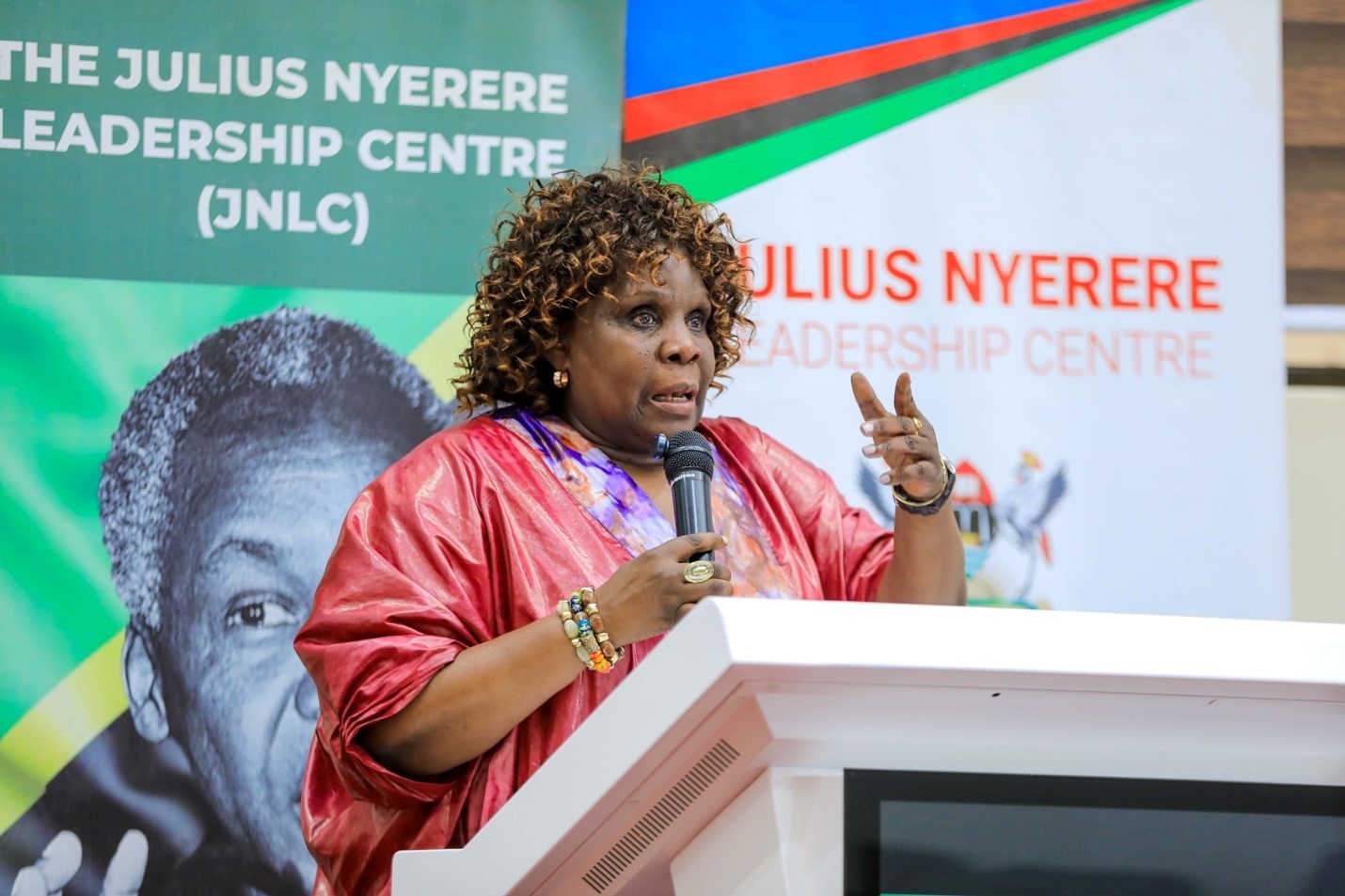
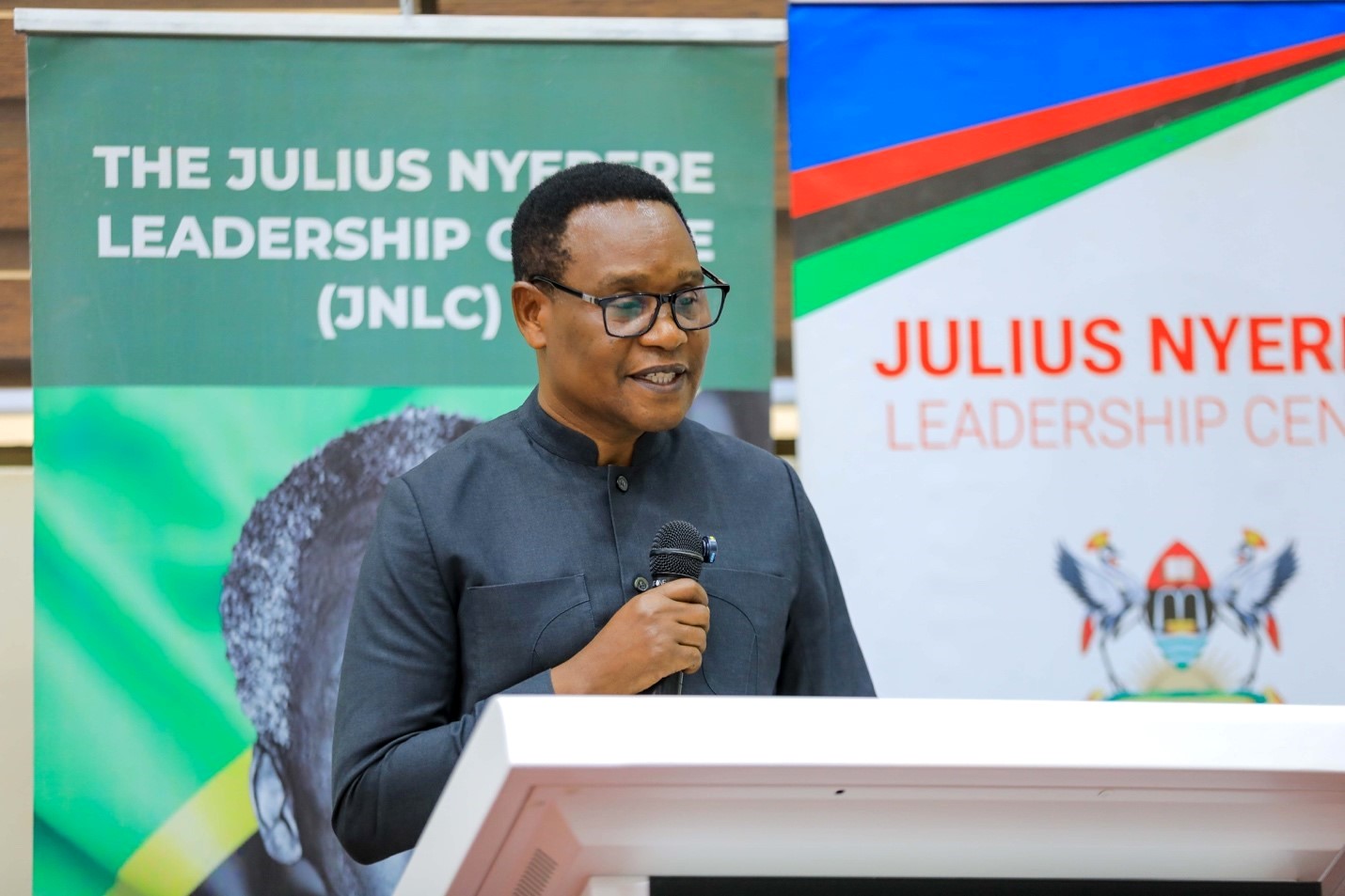
Dr. Nansozi K. Muwanga, Executive Director of the Julius Nyerere Leadership Centre giving her opening remarks. 2026 Julius Nyerere Leadership Lecture and Youth Conversations at Makerere University. Convened by the Julius Nyerere Leadership Centre (JNLC) in partnership with the Council for the Development of Social Science Research in Africa (CODESRIA), April 13, 2026, Kampala Uganda, East Africa.
Dr. Nansozi K. Muwanga, Executive Director of the Julius Nyerere Leadership Centre giving her opening remarks.

A Defining Moment for Leadership in Africa

Opening the event, Dr. Nansozi K. Muwanga, Executive Director of the Julius Nyerere Leadership Centre, framed the conversation within a broader continental context marked by a rapidly expanding youth population, rising political awareness, and increasing demand for accountability.

“Africa is not short of potential,” she noted. “What is at stake is whether that potential is matched by the kind of leadership required to transform it into sustainable development and inclusive progress.”

Her remarks underscored a critical shift: young Africans are no longer passive participants in governance processes. Across communities, institutions, and political spaces, they are organizing, contesting, innovating, and demanding accountability. The challenge, she argued, is to ensure that this energy is channelled into ethical, competent, and service-oriented leadership capable of transforming institutions and delivering long-term change.
Other InterestingArticles

Bank of Uganda starts buying locally mined gold to boost reserves

Tanzanian Defence College Delegation in Uganda for Strategic Training Exercise

President Museveni’s Fish Farming Drive Praised as Bold Solution to Poverty and Wetland Degradation in Pallisa

Police raise alarm over rising student violence in schools

Apple names John Ternus next CEO as Tim Cook moves to chairman role

Government Enforces Mandatory Inspection of Passenger Buses

Health Committee to submit missing list of upgraded health centres

Applications for Admission to Undergraduate Programmes 2026/27

Major General Paul Kisesa Simuli, High Commissioner of the United Republic of Tanzania to Uganda delivering his opening remarks. 2026 Julius Nyerere Leadership Lecture and Youth Conversations at Makerere University. Convened by the Julius Nyerere Leadership Centre (JNLC) in partnership with the Council for the Development of Social Science Research in Africa (CODESRIA), April 13, 2026, Kampala Uganda, East Africa.
Major General Paul Kisesa Simuli, High Commissioner of the United Republic of Tanzania to Uganda delivering his opening remarks.


Reclaiming Unity as a Strategic Imperative

The importance of unity—long championed by Mwalimu Nyerere—featured prominently throughout the discussions. Representing Tanzania, Major General Paul Kisesa Simuli emphasized that Pan-Africanism must evolve from a historical ideal into a practical framework for cooperation and development.

“Africa’s unity is not optional,” he observed. “It is a necessity for survival in an increasingly competitive and interconnected world.”

He pointed to education, language, and shared values as critical foundations for building a cohesive regional identity, highlighting the need for deliberate investment in systems that strengthen cross-border collaboration. His intervention reinforced a central theme of the lecture: that regional integration and collective action are indispensable to Africa’s long-term stability and prosperity.
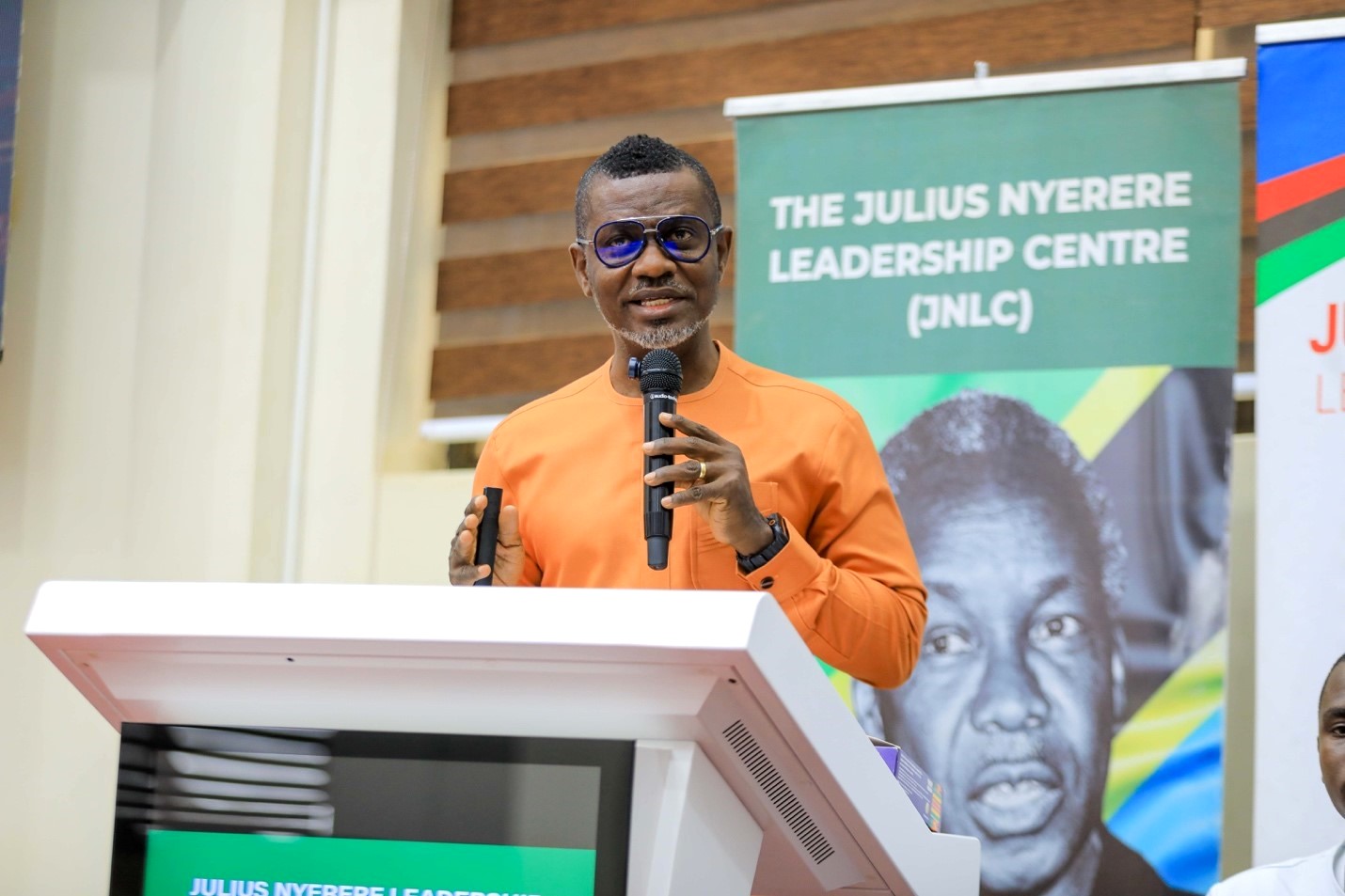
Keynote Speaker, Mr. Israel Laryea - Executive head, Influencer Africa. 2026 Julius Nyerere Leadership Lecture and Youth Conversations at Makerere University. Convened by the Julius Nyerere Leadership Centre (JNLC) in partnership with the Council for the Development of Social Science Research in Africa (CODESRIA), April 13, 2026, Kampala Uganda, East Africa.
Keynote Speaker, Mr. Israel Laryea – Executive head, Influencer Africa.


Leadership in Transition: From Authority to Influence

The keynote address by Israel Laryea provided a compelling reflection on how leadership itself is evolving. Drawing from Africa’s political history, he argued that the continent has moved through distinct phases—from liberation-era “builders,” to “controllers,” and now to a generation navigating democratic transitions that remain incomplete.

Yet, despite these transitions, a fundamental gap persists.

“Africa has never lacked leaders,” he remarked. “The real question is the kind of leadership each generation chooses to tolerate.”

In today’s context, he argued, leadership is increasingly shaped not only by formal authority but by influence, credibility, and the ability to mobilize and organize. Digital platforms have expanded access to information and participation, but they have also introduced new complexities—where visibility does not necessarily translate into power.

For young Africans, this presents both an opportunity and a challenge. While they are more connected and engaged than ever before, their influence in formal decision-making spaces remains limited. Bridging this gap requires a shift from digital engagement to structured political and institutional participation.
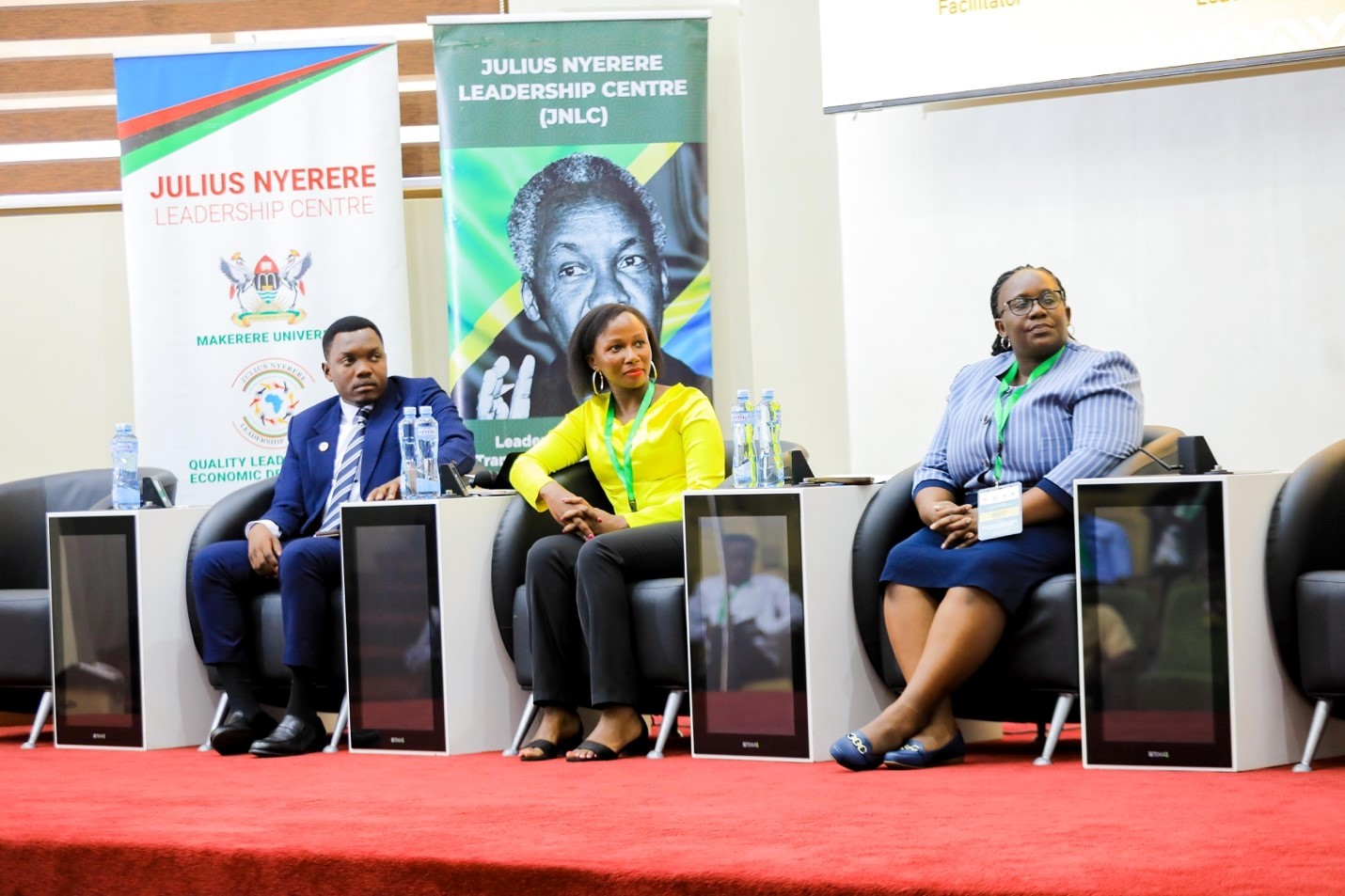
“Youth Voices Roundtable: Youth, Leadership, and the Future of a Sustainable Africa” featured Mr. Alionzi Lawrence, Mayor of Arua City; Ms. Shadia Tushemerirwe; and Ms. Anna Nabulya, Programme Manager at UYDEL. 2026 Julius Nyerere Leadership Lecture and Youth Conversations at Makerere University. Convened by the Julius Nyerere Leadership Centre (JNLC) in partnership with the Council for the Development of Social Science Research in Africa (CODESRIA), April 13, 2026, Kampala Uganda, East Africa.
“Youth Voices Roundtable: Youth, Leadership, and the Future of a Sustainable Africa” featured Mr. Alionzi Lawrence, Mayor of Arua City; Ms. Shadia Tushemerirwe; and Ms. Anna Nabulya, Programme Manager at UYDEL.


The Knowledge Question: Leadership and Intellectual Responsibility

A recurring theme across the lecture was the centrality of knowledge in shaping effective leadership. Scholars warned against the risks of historical distortion, shallow engagement with complex issues, and leadership divorced from intellectual grounding.

Discussions emphasized that Africa’s development challenges are not simply technical—they are deeply political and ideological. Addressing them requires leaders who are not only well-intentioned but also analytically grounded, historically informed, and ethically driven.

The idea that “ignorance remains one of the greatest obstacles to progress” resonated strongly, reinforcing the need for continuous learning, humility, and critical reflection as essential components of leadership.
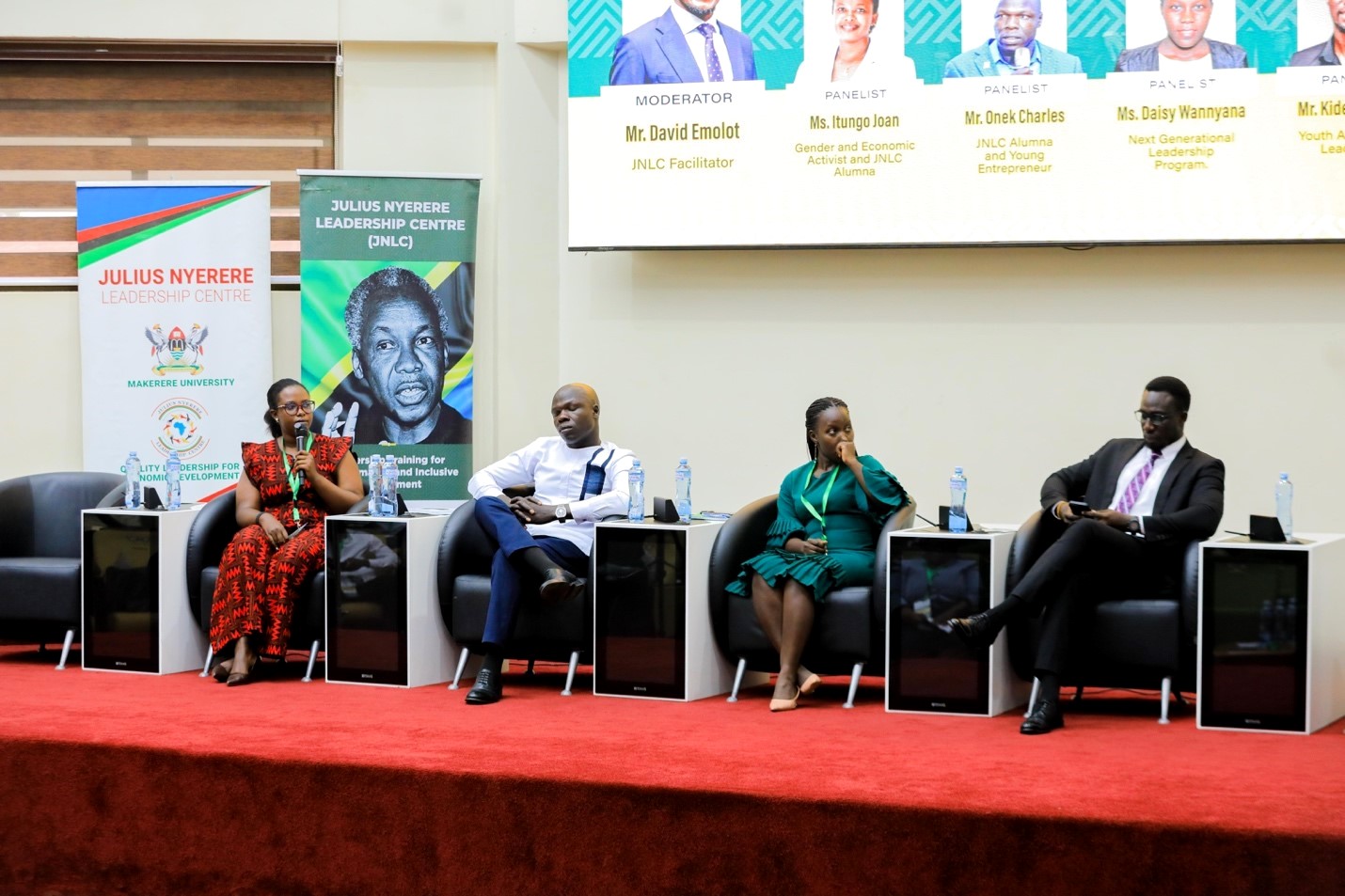
Bringing together diverse perspectives, the #PanelConversation on “Innovating for Impact: #Youth and Mid-Career Leadership in Governance and Development” featured two alumni of the Julius Nyerere Leadership Centre, Ms. Joan Itungo and Mr. Onek Charles, both young entrepreneurs, alongside Ms. Daisy Wannyana from the Next Generation Leadership Programme, and Mr. Kidega Moses, a lawyer and youth leadership advocate. 2026 Julius Nyerere Leadership Lecture and Youth Conversations at Makerere University. Convened by the Julius Nyerere Leadership Centre (JNLC) in partnership with the Council for the Development of Social Science Research in Africa (CODESRIA), April 13, 2026, Kampala Uganda, East Africa.
Bringing together diverse perspectives, the #PanelConversation on “Innovating for Impact: #Youth and Mid-Career Leadership in Governance and Development” featured two alumni of the Julius Nyerere Leadership Centre, Ms. Joan Itungo and Mr. Onek Charles, both young entrepreneurs, alongside Ms. Daisy Wannyana from the Next Generation Leadership Programme, and Mr. Kidega Moses, a lawyer and youth leadership advocate.


Youth Leadership in Practice: From Ideas to Implementation

Beyond theory, the lecture provided a platform for young leaders to demonstrate how leadership is already being exercised in practical and impactful ways.

Across panel discussions, participants shared experiences in governance, entrepreneurship, and community development. These contributions highlighted a growing shift toward solution-oriented leadership, where young people are not waiting for opportunities but actively creating them.

Key insights emerging from these engagements included:

  • The importance of policy reforms that enable youth participation, particularly in economic and governance spaces
  • The role of innovation and technology in addressing local challenges and expanding opportunities
  • The need for community-centred approaches that prioritize inclusion and social impact

What became evident is that Africa’s youth are not merely a demographic category—they are an active force shaping new pathways for development and leadership.
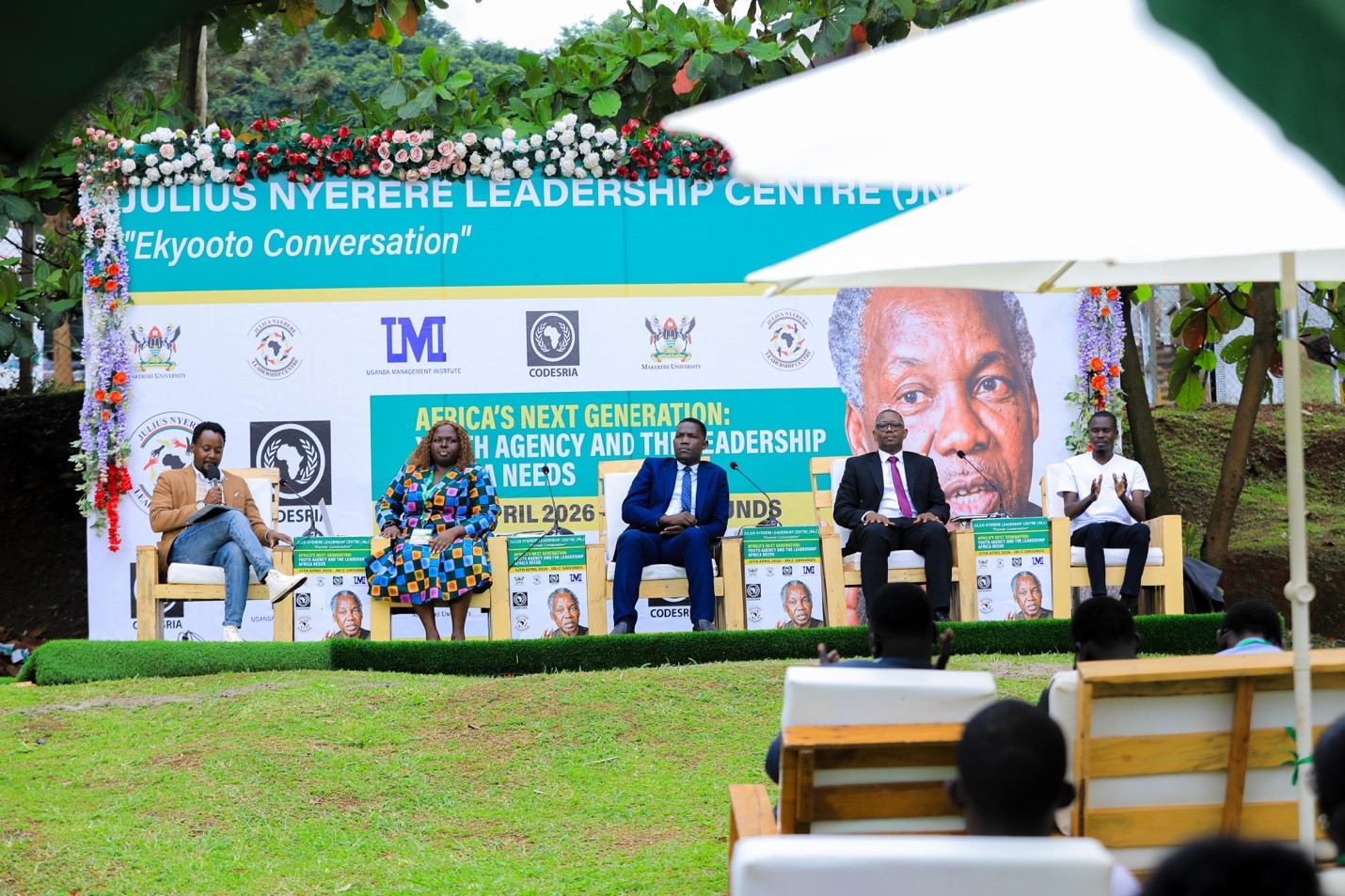
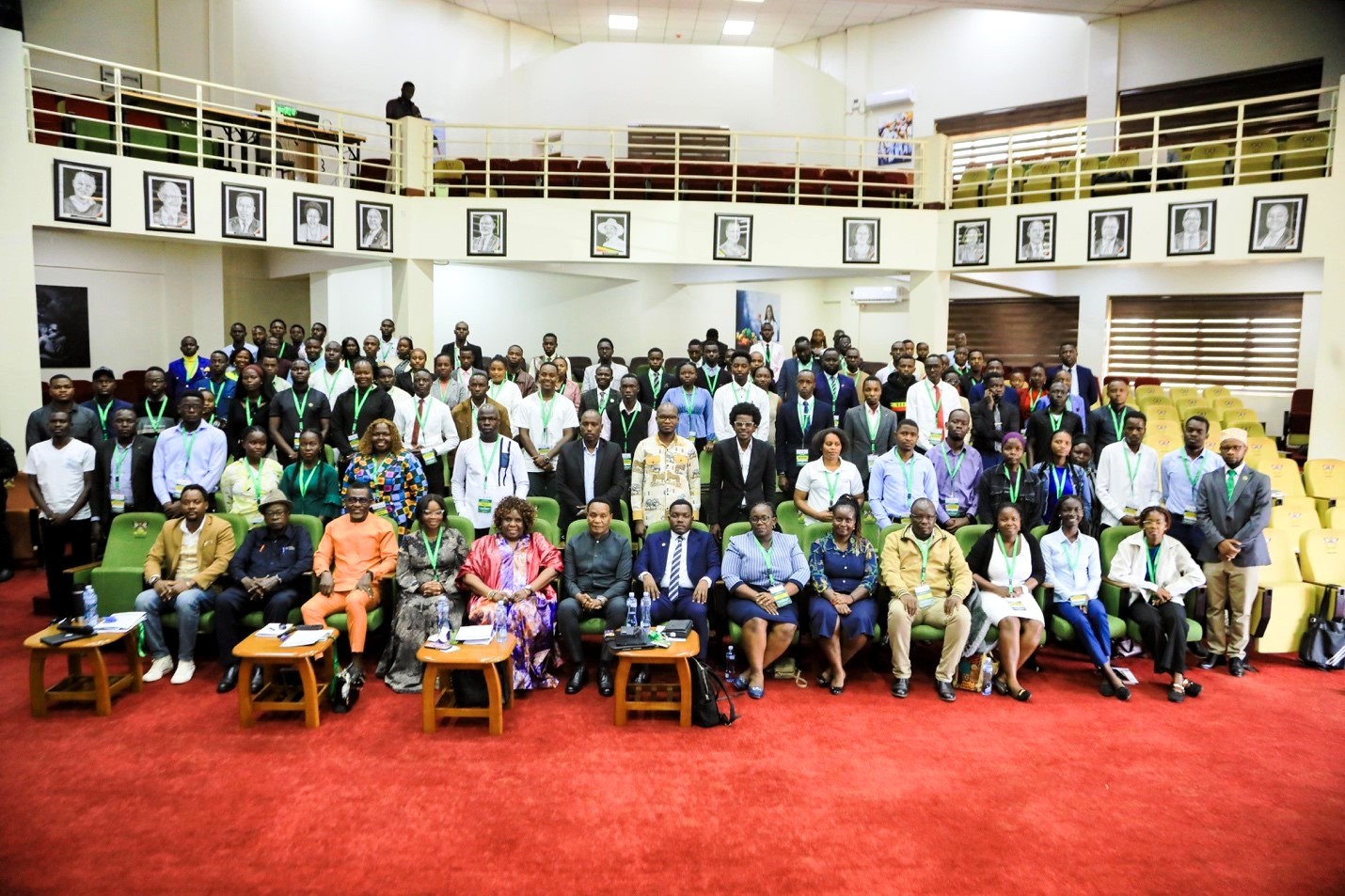
Group photo after the (Ekyooto) Cross-Generational Fireside Conversation on “Pan-Africanism: A Pathway to Africa’s Transformation?” with panelists. 2026 Julius Nyerere Leadership Lecture and Youth Conversations at Makerere University. Convened by the Julius Nyerere Leadership Centre (JNLC) in partnership with the Council for the Development of Social Science Research in Africa (CODESRIA), April 13, 2026, Kampala Uganda, East Africa.
Group photo after the (Ekyooto) Cross-Generational Fireside Conversation on “Pan-Africanism: A Pathway to Africa’s Transformation?” with panelists.


Intergenerational Dialogue: Bridging Legacy and Aspiration

The Ekyooto fireside conversations provided one of the most reflective moments of the event, bringing together seasoned leaders and emerging voices in an open and candid dialogue.

These conversations explored the deeper questions of identity, purpose, and responsibility. Participants emphasized that the future of Africa will depend on a generation that understands not only the challenges it faces but also the values and principles required to address them.

Lena Nyerere, representing the Nyerere family, highlighted the enduring relevance of Pan-Africanism as a vision rooted in unity, dignity, and collective progress. Her presence served as a symbolic bridge between legacy and the future—reminding participants that leadership is both inherited and redefined across generations.
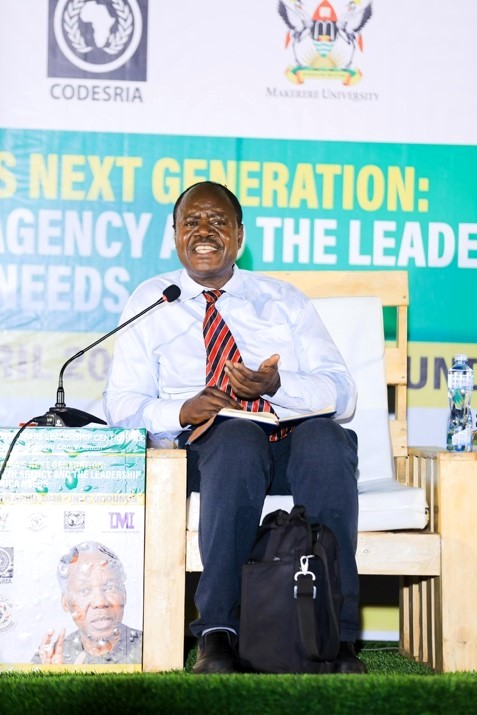
Professor Julius Kiiza. 2026 Julius Nyerere Leadership Lecture and Youth Conversations at Makerere University. Convened by the Julius Nyerere Leadership Centre (JNLC) in partnership with the Council for the Development of Social Science Research in Africa (CODESRIA), April 13, 2026, Kampala Uganda, East Africa.
Professor Julius Kiiza.
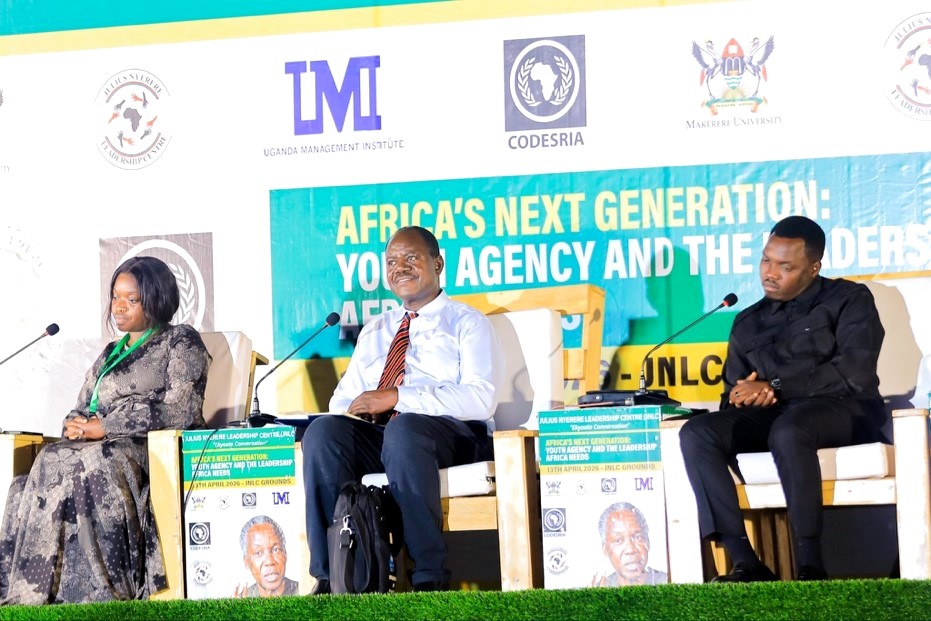
Panel Session: Reflections on the Meaning and Relevance of Mwalimu Nyerere to Today’s Youth Featuring Ms. Lena Nyerere, Professor Julius Kiiza, and Hon. Lawrence Alionzi. 2026 Julius Nyerere Leadership Lecture and Youth Conversations at Makerere University. Convened by the Julius Nyerere Leadership Centre (JNLC) in partnership with the Council for the Development of Social Science Research in Africa (CODESRIA), April 13, 2026, Kampala Uganda, East Africa.
Panel Session: Reflections on the Meaning and Relevance of Mwalimu Nyerere to Today’s Youth Featuring Ms. Lena Nyerere, Professor Julius Kiiza, and Hon. Lawrence Alionzi.


From Reflection to Action

As the day concluded, a clear consensus emerged: Africa’s transformation will depend on the ability of its young people to move beyond participation toward active leadership and institutional influence.

This transition requires:

  • Strengthening leadership development pathways
  • Investing in education and critical thinking
  • Expanding opportunities for meaningful participation in governance and policy processes
  • Building a shared sense of Pan-African identity and purpose

Equally important is the need to move beyond episodic conversations toward sustained programmes, structured mentorship, and institutional support systems that enable young leaders to grow, collaborate, and lead effectively.

Looking Ahead: Reimagining Leadership for Africa’s Future

The 2026 Julius Nyerere Leadership Lecture and Youth Conversations ultimately served as more than a platform for dialogue—it was a strategic intervention in shaping Africa’s leadership trajectory.

As the Julius Nyerere Leadership Centre continues to expand its work in youth leadership training, regional engagement, and policy dialogue, the challenge ahead is clear: to translate ideas into action, and action into lasting institutional change.

Africa’s future will not be determined by its challenges alone, but by the quality of leadership that emerges to confront them. In this regard, the legacy of Mwalimu Julius Nyerere is not a static memory—it is a living framework for leadership grounded in service, unity, and responsibility. The task for this generation is to reimagine that legacy in practical terms, and to carry it forward with clarity, courage, and purpose.

-MAK NEWS. Give us feedback on this story through our email: kamwokyatimes@gmail.com

Post Views: 130

Read RelatedArticles

Bank of Uganda starts buying locally mined gold to boost reserves
News

Bank of Uganda starts buying locally mined gold to boost reserves

April 21, 2026
7
Tanzanian Defence College Delegation in Uganda for Strategic Training Exercise
News

Tanzanian Defence College Delegation in Uganda for Strategic Training Exercise

April 21, 2026
6
President Museveni’s Fish Farming Drive Praised as Bold Solution to Poverty and Wetland Degradation in Pallisa
News

President Museveni’s Fish Farming Drive Praised as Bold Solution to Poverty and Wetland Degradation in Pallisa

April 21, 2026
4
Police raise alarm over rising student violence in schools
News

Police raise alarm over rising student violence in schools

April 21, 2026
7
Apple names John Ternus next CEO as Tim Cook moves to chairman role
News

Apple names John Ternus next CEO as Tim Cook moves to chairman role

April 21, 2026
6
Government Enforces Mandatory Inspection of Passenger Buses
News

Government Enforces Mandatory Inspection of Passenger Buses

April 21, 2026
6

Top Stories

Bank of Uganda starts buying locally mined gold to boost reserves
News

Bank of Uganda starts buying locally mined gold to boost reserves

by Kamwokya Times
April 21, 2026
0
7

Read more

Tanzanian Defence College Delegation in Uganda for Strategic Training Exercise

President Museveni’s Fish Farming Drive Praised as Bold Solution to Poverty and Wetland Degradation in Pallisa

Police raise alarm over rising student violence in schools

Featured News

Bank of Uganda starts buying locally mined gold to boost reserves
News

Bank of Uganda starts buying locally mined gold to boost reserves

by Kamwokya Times
April 21, 2026
0
7

Read more

Tanzanian Defence College Delegation in Uganda for Strategic Training Exercise

President Museveni’s Fish Farming Drive Praised as Bold Solution to Poverty and Wetland Degradation in Pallisa

Police raise alarm over rising student violence in schools

Kamwokya Times

Copyrights © 2024 All Rigts Reserved

  • Home
  • News
  • Business
  • Health
  • Education
  • Entertainment
  • Politics
  • Opinion
  • Sports
  • Contact

No Result
View All Result
  • Home
  • News
  • Business
  • Health
  • Education
  • Entertainment
  • Politics
  • Opinion
  • Sports
  • Contact

Copyrights © 2024 All Rigts Reserved

Welcome Back!

Login to your account below

Forgotten Password?

Retrieve your password

Please enter your username or email address to reset your password.

Log In

Add New Playlist

Are you sure want to unlock this post?
Unlock left : 0
Are you sure want to cancel subscription?