

The World Health Organization (WHO) on Wednesday maintained that the ongoing Ebola outbreak in Uganda and the Democratic Republic of Congo (DRC )remains a Public Health Emergency of International Concern (PHEIC).
The affirmation comes even as Uganda continues to reassure the public that the situation in the country is under control.
Speaking at a press conference, WHO Director-General Tedros Adhanom Ghebreyesus said he had declared the outbreak an international emergency on Sunday due to the extraordinary nature of the epidemic, pending review by an emergency committee.

He said the committee of experts convened on Tuesday and subsequently agreed that the outbreak met the criteria for a Public Health Emergency of International Concern.
A Public Health Emergency of International Concern (PHEIC) is WHO’s highest formal alert for an extraordinary public health event that poses a risk to multiple countries and requires a coordinated international response.
In making such a declaration, WHO experts assess factors including the severity of the outbreak, its unusual nature, and the risk of international spread.
Tedros explained that while a pandemic refers to a disease spreading across countries or continents, the current Ebola outbreak involving the Bundibugyo strain is classified as an epidemic with international public health implications.
In the DRC, 51 cases had been confirmed by Wednesday morning, while Uganda had recorded two confirmed cases, including one death. Tedros warned that more cases could still emerge because of delays in detecting the outbreak and because transmission has occurred in urban areas where population movement is high.
However, despite the WHO’s assessment, Ugandan authorities maintained that the situation in the country remains under control.
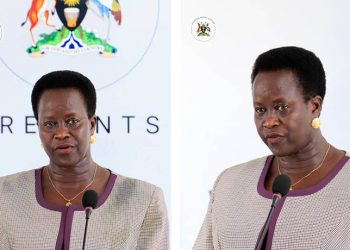
Uganda Media Centre Executive Director Allan Kasujja, who is serving as the official spokesperson on outbreak updates, said in a recorded video posted by the Uganda Media Centre that Uganda has developed expertise in quickly containing such outbreaks.
Kasujja said the confirmed Ebola cases recorded in Uganda were linked to cross-border transmission and urged the public not to panic.
Meanwhile, the United States on Tuesday updated its travel advisory, urging Americans not to travel to the DRC, South Sudan, or Uganda for any reason, and to reconsider travel to Rwanda due to the Ebola Bundibugyo virus disease outbreak in the region.“
The Department’s Travel Advisories for DRC, South Sudan, and Uganda are now Level 4 – Do Not Travel, and the Travel Advisory for Rwanda is Level 3 – Reconsider Travel,” the notice on the U.S. Embassy website stated. One American who had travelled to the DRC tested positive for Ebola and was later evacuated to Germany for treatment.
The current outbreak involving the Bundibugyo strain is the second such outbreak to be recorded in both Uganda and the DRC. Both countries have also previously experienced multiple outbreaks involving the Zaire strain of Ebola.
Health experts say the Bundibugyo strain remains a serious public health threat, particularly because there are currently no approved vaccines or specific therapeutics for it, with treatment largely focused on supportive care-URN. Give us feedback on this story through our email: kamwokyatimes@gmail.com