

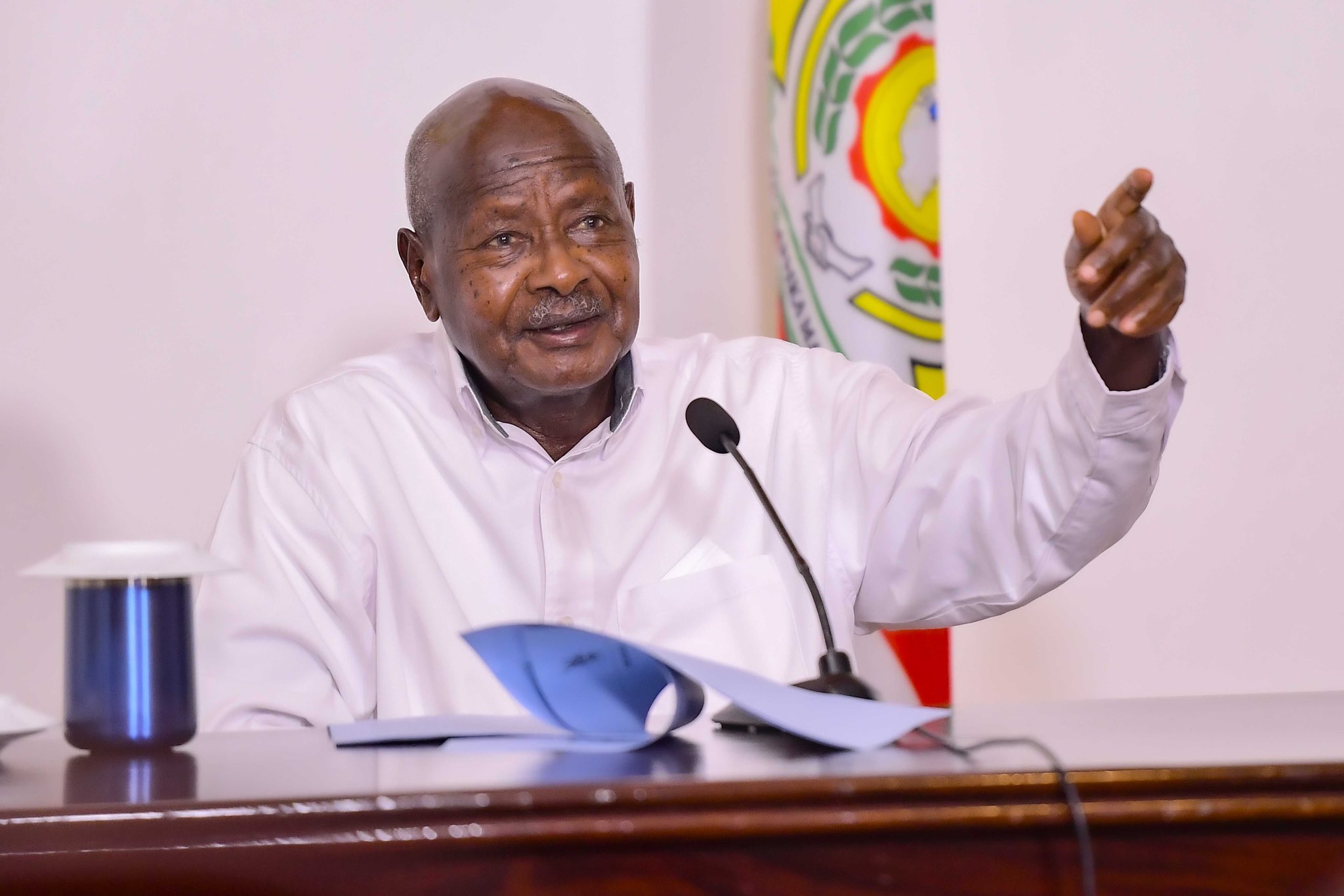
 President Yoweri Museveni is expected to meet URA officials
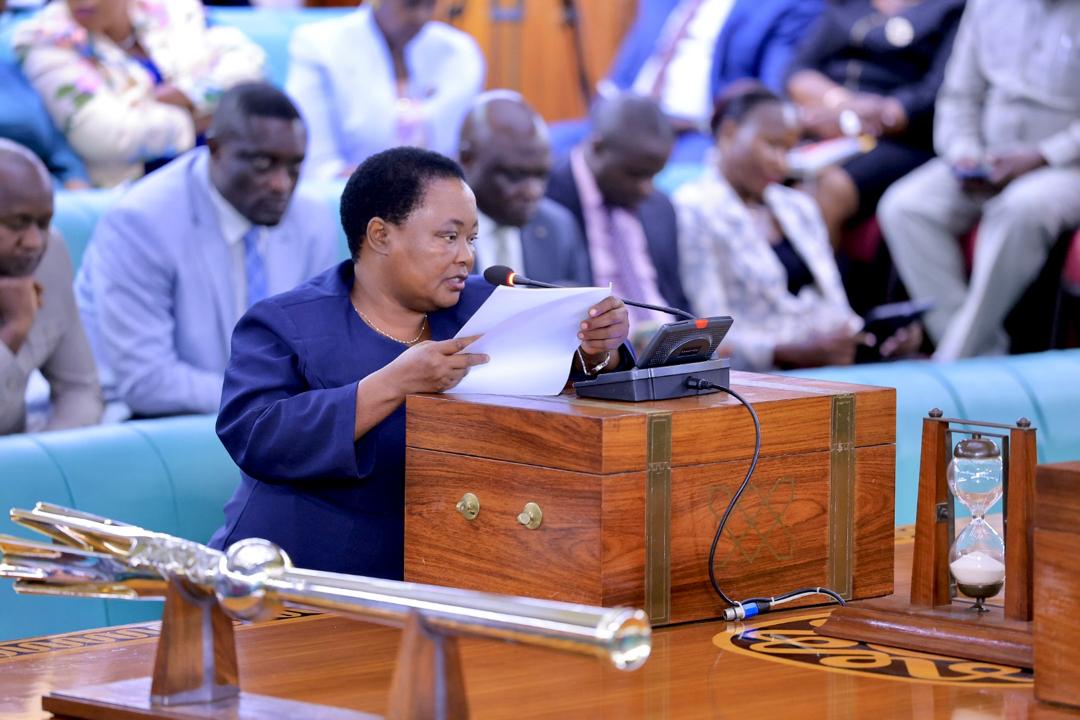
Traders in Uganda are facing a costly cycle of customs inspections, with consignments cleared by one Uganda Revenue Authority (URA) enforcement team reportedly being intercepted by another team at subsequent roadblocks, Prime Minister Robinah Nabbanja has told Parliament.
Nabbanja said she had directed URA to review the deployment and coordination of its enforcement teams to eliminate unnecessary duplication and expedite the release of goods belonging to compliant traders.

The directive follows protests by Kampala traders who closed their businesses on November 17, 2026, over what they described as excessive taxes on imported textiles and garments, prolonged customs clearance procedures and aggressive enforcement practices.
Addressing Parliament on Thursday, November 19, Nabbanja acknowledged that overlapping enforcement operations had compounded frustrations among traders already grappling with the cost and complexity of importing merchandise.
She said the Government was concerned that businesses could be subjected to repeated checks despite having completed the required customs clearance procedures.
The Prime Minister attributed the proliferation of enforcement operations partly to attempts by some traders to evade taxes by importing goods through neighbouring countries, particularly Kenya, before transporting them into Uganda in smaller consignments.
Some traders, she said, pay taxes in Kenya and subsequently move merchandise into Uganda using buses, where the goods are carried as luggage, as well as boda bodas and three-wheeled tuk-tuks.
“Uganda was losing tax revenue on those consignments,” Nabbanja told MPs, explaining that the practice had prompted URA to intensify surveillance and enforcement along transport routes.
However, she said the resulting enforcement arrangements needed to be reviewed to ensure that legitimate businesses were not inconvenienced by repeated inspections or conflicting actions by different teams.
President Yoweri Museveni is expected to meet URA officials and other enforcement agencies on Monday, November 23, to discuss the enforcement challenges and the broader concerns surrounding the traders’ dispute.
The meeting is expected to examine the coordination of tax enforcement operations and measures to address revenue losses arising from the movement of goods through informal channels.
The traders’ protest has exposed wider disagreements over Uganda’s taxation of imported textiles and garments, with businesspeople arguing that the prevailing tax regime makes formal importation expensive and undermines their competitiveness against traders operating through neighbouring countries.
Government has acknowledged that taxation of textiles and garments is a central issue in the dispute and has initiated a review aimed at aligning Uganda’s tax framework with those of other East African Community partner states.
Nabbanja told Parliament that the President had asked traders to suspend their strike as Government prepares to consider the matter through Cabinet.
The proposed review is expected to examine the tax policy on imported garments and textiles, alongside customs clearance procedures and enforcement practices affecting the trading community.
The Government has also moved to establish an inter-agency mechanism to address concerns involving traders, URA and other relevant institutions, with the intention of improving engagement and preventing future disputes from escalating into business shutdowns.
The dispute comes against the backdrop of Uganda’s regional customs obligations under the East African Community Customs Union and the Single Customs Territory framework, which seek to facilitate trade by reducing unnecessary procedural barriers, improving coordination and minimising delays in the movement of goods.
Under the Single Customs Territory, goods can be cleared at the first point of entry, with destination-country taxes paid while the cargo is still at the entry point, before being transported under a regional bond and electronic cargo-tracking arrangements.
The framework is designed to reduce the cost of doing business, shorten cargo turnaround times and strengthen coordination among customs administrations.
Repeated or poorly coordinated inspections risk undermining these objectives, particularly where businesses have already fulfilled their documentation and tax obligations.
URA maintains that customs verification is necessary to detect under-declaration, concealment of goods and other forms of non-compliance that undermine government revenue and distort competition.
The East African Community Customs Management Act, 2004, provides for customs verification, including physical examination of goods. Under Section 41, customs officials may conduct verification, while Section 210 provides for forfeiture of uncustomed goods in specified circumstances.
URA has also said it uses risk-based verification, non-intrusive inspection technology and other measures to facilitate compliant importers while targeting consignments suspected of irregularities.
The challenge, however, is ensuring that enforcement measures are proportionate, coordinated and transparent, particularly where traders have already received clearance or paid the applicable taxes.
For businesses, repeated inspections can translate into additional transport costs, delays, storage charges, demurrage and uncertainty over when merchandise will reach the market.
Such disruptions are especially consequential for small and medium-sized traders whose cash flow depends on the rapid turnover of imported stock.
Traders have also argued that differences in tax treatment and customs procedures between Uganda and neighbouring markets make alternative import routes more attractive, potentially encouraging informal trade and reducing domestic revenue collection.
Government, on the other hand, has maintained that tax compliance is necessary to finance public services, protect local producers and support industrialisation under the Buy Uganda, Build Uganda (BUBU) policy.
The policy seeks to promote domestic production and consumption of locally manufactured goods, while Uganda’s tax and trade measures are also intended to support investment in manufacturing and reduce dependence on imports.
Deputy Speaker Thomas Tayebwa asked Nabbanja to return to Parliament with an update following Cabinet deliberations and further engagement with traders.
The Government is now under pressure to resolve the dispute through a combination of tax policy review, improved customs coordination and more effective communication between URA and the business community.
The immediate challenge will be to ensure that measures aimed at curbing tax evasion do not inadvertently punish compliant traders or create incentives for goods to enter the country through less transparent channels.
The outcome of the planned engagements with traders, URA and other enforcement agencies could determine whether the current dispute is resolved through substantive policy reforms or merely a temporary reopening of businesses.
The episode highlights a broader policy dilemma facing Uganda: how to protect public revenue and domestic industry while maintaining an efficient, predictable and competitive trading environment under regional integration commitments-Parliament Watch Ug. Give us feedback on this story through our email: kamwokyatimes@gmail.com