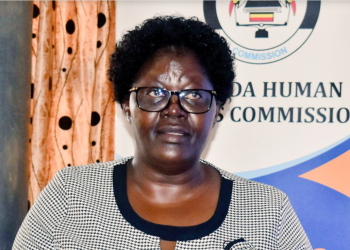
Uganda Human Rights Commission (UHRC) commissioners have accused their chairperson, Mariam Wangadya, of sidelining them, failing to convene Commission meetings, hampering human rights tribunals and presiding over financial mismanagement and institutional dysfunction.
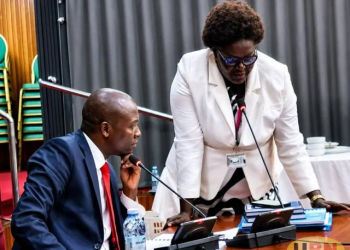
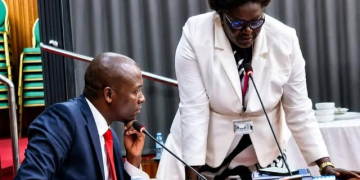
The allegations were made before Parliament’s Committee on Commissions, Statutory Authorities and State Enterprises (COSASE), on Tuesday as MPs sought to establish why the UHRC tribunals have not been sitting.
The COSASE committee, chaired by Muwada Nkunyingi, questioned the commissioners over what it described as conflicting submissions made during their earlier appearance on July 27 concerning the failure of the tribunals to sit. Muwada reminded the commissioners that their submissions before Parliament form part of the official record and must therefore be truthful and consistent.

The committee particularly questioned the commissioners over submissions that appeared to place responsibility for the failure of the tribunals on Wangadya.
Commissioner Shifrah Lukwago maintained that she had not changed her position, insisting that the authority to convene the tribunals rests with the chairperson. “My answer was, I have no powers to convene the tribunals. And I said the powers are vested in the chair only to convene the tribunals. And I still stand by what I said on that day,” Lukwago said.
She said she remained ready to participate in tribunal proceedings once the chairperson issued an invitation and cause list.
Commissioner Simeo Muwanga Nsubuga defended his earlier submission, explaining that individual commissioners do not have the authority to constitute themselves into tribunals. He said a tribunal is constituted by the chairperson and three commissioners selected by the chairperson.
Nsubuga added that commissioners could not proceed with tribunal hearings without the necessary administrative and logistical facilitation from the Commission Secretary and the formal constitution of the tribunal. According to Nsubuga, the Commission had not held a full meeting since March, a situation he said had effectively brought the institution to a standstill.
He linked the breakdown to a wider management crisis at the Commission, saying the concerns had been brought to the attention of several authorities.
Commissioner Crispin Kaheru similarly told the committee that he has consistently attended tribunal sittings whenever they are properly constituted and a cause list is issued. He said individual commissioners do not have the legal authority to unilaterally convene or constitute tribunals.
The dispute over the tribunals, however, exposed deeper divisions within the Commission, with several commissioners accusing the leadership of institutional dysfunction and poor financial management.
Commissioner Lamex Apitta Omara told the committee that he and other commissioners had raised their concerns with President Yoweri Museveni, the appointing authority. He said they submitted a dossier to the President on February 12, 2026, detailing what they described as problems at the Commission.
Omara said the commissioners later met officials from the Inspectorate of Government (IGG) on March 4 and submitted the same concerns. He said the IGG subsequently opened an investigation file and, on March 26, wrote to the UHRC Secretary regarding allegations of maladministration, corruption and abuse of office.
Omara also alleged that about 1.4 billion Shillings provided to the Commission through a supplementary budget had been mismanaged.
Commissioner Jacklet Atuhaire accused the Commission’s leadership of diverting resources from its core mandate, particularly the human rights tribunal and instead spending resources on foreign travel. Atuhaire also accused Wangadya of failing to promote teamwork among commissioners and alleged that some officials and commissioners had been favoured in travel and other engagements.
Atuhaire said the commissioners had become whistleblowers within their own institution in an effort to bring the alleged problems to light. She told the committee that they had also submitted a whistleblower dossier to Parliament’s Committee on Legal and Parliamentary Affairs.
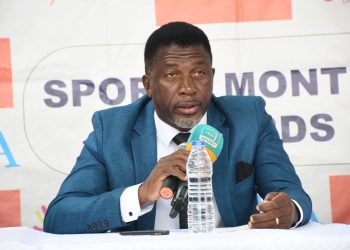
Wangadya, however, rejected allegations that she had deliberately sidelined the other commissioners or sought to run the Commission single-handedly. She dismissed some of the allegations against her as part of a smear campaign.
Wangadya was also questioned about a meeting she held with leaders of opposition political parties without the participation of other commissioners. She explained that she attended the meeting with Commission staff and did not involve the commissioners because of what she described as the difficult working environment within the institution.
Asked whether they were willing to find a way through the disagreements, several commissioners expressed willingness to reconcile and improve their working relationship. COSASE has scheduled Monday, August 17, to continue scrutinising documents referred to by the commissioners, including the dossier submitted to the President, correspondence with the IGG, documents relating to the Commission’s financial management and the Auditor General’s report-URN. Give us feedback on this story through our email: kamwokyatimes@gmail.com