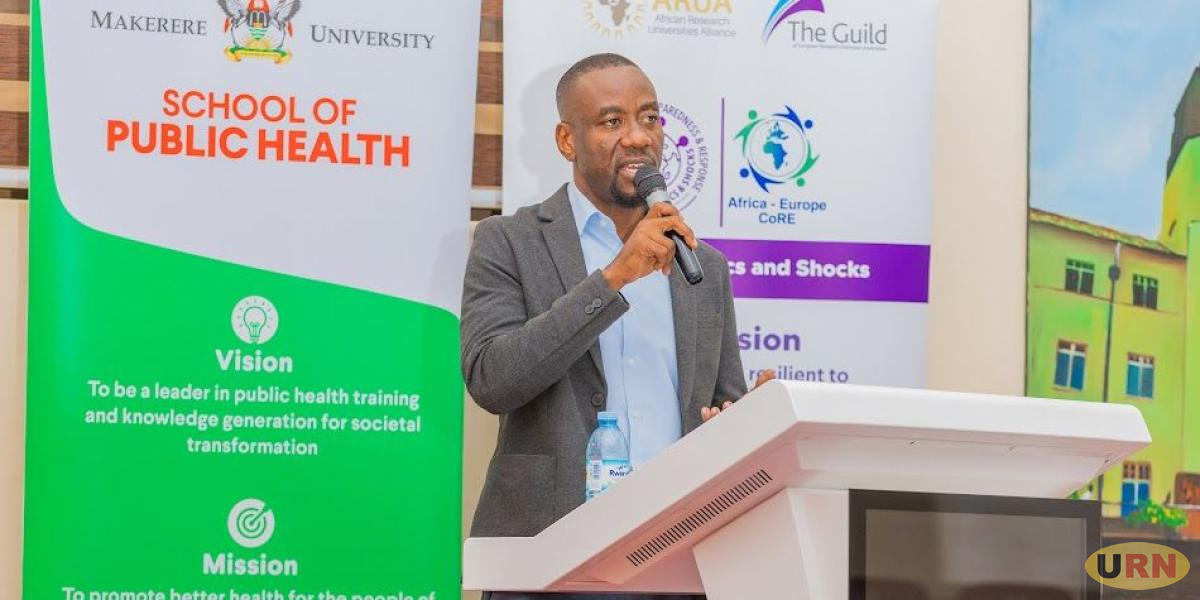
An analysis conducted by Makerere University School of Public Health finds that though Uganda has earned credit internationally for its swiftness to address public health emergencies, the country’s efforts are still derailed by the fact that they cannot fully fund response themselves.
Steven Kabwama, an epidemiologist and Research Associate at the school who was the principal investigator on the study told URN that they focused on Marburg and Ebola outbreaks recorded in the country from 2017 to 2026 and found that the efforts have been largely funded by donors.
Uganda has declared one outbreak of Marburg since 2017 and four outbreaks of Ebola of which two of the outbreaks in 2019 and 2026 were imported from neighboring Democratic Republic of Congo.

Kabwama says the analysis was done to synthesize the learnings from these previous outbreaks by examining how the country has been responding to these emergencies and found that each outbreak was stopped faster than the other as the country has a quick deployment approach with a quick sample transport system which takes only about twelve to twenty-four hours to mount a full response when an outbreak is confirmed.
To conduct this research which was then validated by health workers and healthcare managers within districts affected by the outbreaks, scientists reviewed published literature including after action review reports compiled by both the Ministry of Health, the World Health Organization and other responders during the outbreak.
Prof Rhoda Wanyenze, the School Dean, says that while this study found impressive capacity being built right from the community level in terms of detection and care with the use of Village Health Teams and Community Extension Workers, the fact that there is no emergency fund still affects quick deployment and yet the country is prone to such emergencies with potential of quick transmission.
She adds that for the country to be on the safe side, they need to set up an emergency fund that will quickly release money in case of emergencies without having to go through the bureaucracies associated with accessing aid from external partners.
This fund alone she says can go a long way in helping the country contain outbreaks before they escalate to become costly when they spread before control interventions are put in place.
In previous outbreaks however, there were concerns raised by authorities in Uganda over health workers deployment and unfulfilled pledges when donors opted to fund NGOs and international agencies to implement the Ebola response in Mubende and Kassanda district in 2022.
The researchers say such issues would not arise if there was a locally managed public health emergency fund only to be supplemented by donors-URN. Give us feedback on this story through our email: kamwokyatimes@gmail.com