By KT Reporter
Frank Tumwebaze, Minister of Agriculture, Animal Industry, and Fisheries, challenged extension workers to break free from complacency and drive real change in farmers’ productivity.
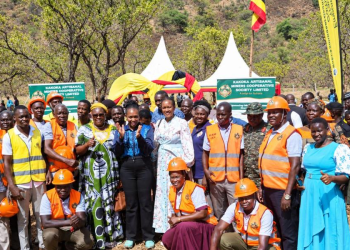
At the national World Food Day celebration at the National Research Organization in Rwengaju Subcounty, Kabarole District, Tumwebaze said extension officers are key to turning government agricultural policies into real results for farmers.

These remarks came in response to growing concerns over Uganda’s persistent food insecurity, highlighted by reports indicating that millions of Ugandans face hunger despite numerous government programs such as Operation Wealth Creation and the Parish Development Model.
For example, the Food and Agriculture Organization (FAO) reports that 1.7 million people in Uganda still face acute food insecurity, 29% of children are stunted, and women and children suffer from anemia.
Tumwebaze said these numbers show a gap between the policies in place and their implementation. He noted that some of the gaps are due to weak extension systems that do not give farmers the practical knowledge and new ideas they need.
Tumwebaze urged district agricultural officers and field extension workers to take personal responsibility for results in their areas. He said the government had invested heavily in training, research institutions like NARO, and tools for extension work, but the impact remains minimal in some districts.
The minister also revealed that the government plans to strengthen supervision and performance monitoring for extension staff to ensure that resources are effectively utilized.
Uganda aspires to transform its subsistence economy into an industrial middle-income country by 2030. This transformation is hinged on the agriculture sector, given its dominance as a source of livelihood.
Dr. Willington Bessong from the Food and Agriculture Organization (FAO) stressed that tackling food insecurity requires collaboration across sectors, but agreed that effective extension services are vital to improving production and resilience.
Dr. Bessong highlighted that nearly 40% of Uganda’s arable land is degraded, and post-harvest losses remain high, further limiting food availability and incomes.
Kabarole District Chairperson Richard Rwabuhinga supported the call for accountability, saying farmers need more practical, consistent engagement from extension officers rather than one-off workshops.
Rwabuhinga also urged the establishment of an industrial park in Kabarole to promote value addition and strengthen market access for farmers.
John Bagonza, a farmer from Kabarole, complains that extension workers have not helped them.
” The extension workers remain in their offices and wait for us to go to them. I thought they were the ones who would be visiting us on our farm and giving us advice,” he noted.
Brenda Nkwanzi, a farmer, says that as youth who want to contribute to the food production chain face a challenge of a lack of land for agriculture, artificial seedlings don’t yield well, and fake pesticides are on the market.
Doreen Kansiime, another farmer, revealed that most farmers are faced with the challenge of drought. She asked the government to extend irrigation services to farmers so that they can produce food throughout the year.
This year’s World Food Day was celebrated under the theme, “Hand in Hand for Better Foods and Better Future.”
-URN. Give us feedback on this story through our email: kamwokyatimes@gmail.com