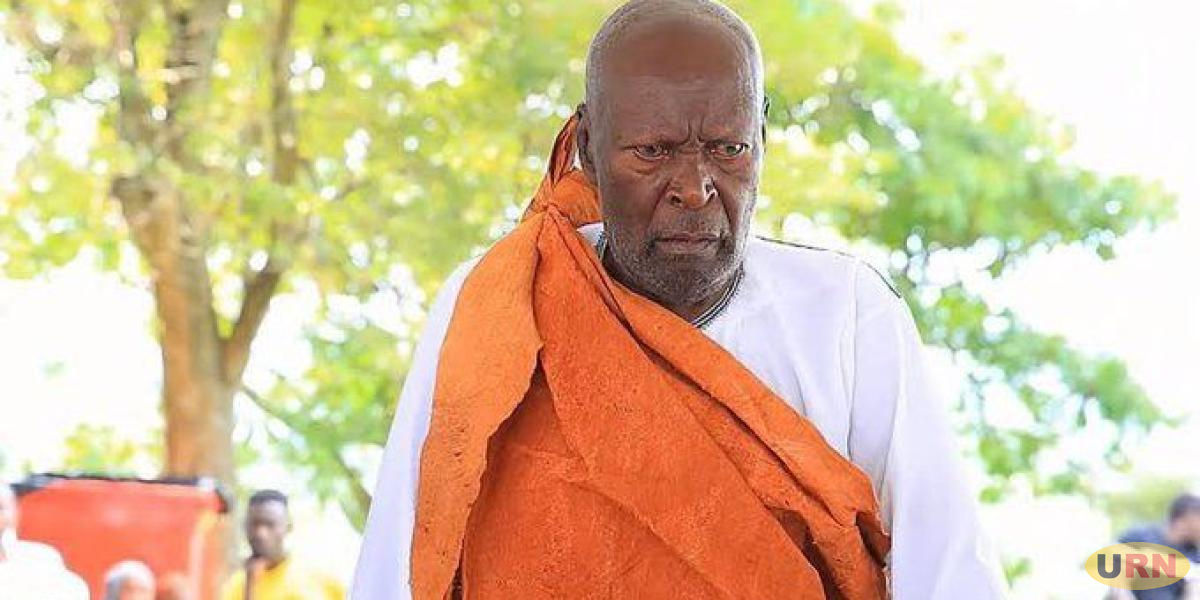
When a new king takes the throne, much of the attention naturally turns to the man at the centre of the ceremony. But in Tooro, one prince has become a quiet link between three generations of the kingdom’s monarchy. Prince Charles Kayondo Kamurasi Akiiki, the Omujwera Musuuga and head of the Babiito royal clan, has been retained by the newly crowned Omukama Edward Rukidi Nyabongo I.
The decision means Kamurasi will continue serving as Musuuga under his third Tooro king. His journey began in 1993, when Uganda’s traditional institutions were restored. He was appointed Musuuga during the reign of Omukama Patrick David Matthew Rwamuhokya Kaboyo Olimi III. When Kaboyo died in 1995, Kamurasi remained in the position under his successor, Omukama Oyo Nyimba Kabamba Iguru Rukidi IV.
He stayed through Oyo’s entire reign, becoming a familiar figure around the Tooro palace and during some of the kingdom’s most important moments. Now, following Oyo’s death in August 2026 and the coronation of Edward Rukidi Nyabongo I, Kamurasi is still there. For historian, journalist and media trainer Wilson Akiiki Kaija, that makes the prince unusual in the modern history of Tooro.

“He is a unique man in a way. No other Musuuga has served three kings,” Kaija said. Kamurasi served Kaboyo from 1993 to 1995, Oyo from 1995 to 2026, and has now entered Nyabongo’s reign. “The fact that he handed over and installed the new king already means he has served three kings,” Kaija said.
It is a distinction that puts Kamurasi’s personal story alongside the longer history of the Musuuga institution itself. The Musuuga is traditionally regarded as the chief prince, senior adviser to the Omukama and head of the Babiito royal clan. The office has historically been closely tied to the royal family, with princes often serving as the king’s trusted link to the wider royal clan.
One of the earliest documented holders was Prince Zekereya Kalema, who served during the reign of Omukama Daudi Kasagama Kyebambe IV. Kalema served from December 1891 to December 1928 — 37 years. He was the elder brother of Kasagama, both sons of Omukama Nyaika Kasunga Kyebambe I.
When George Kamurasi Rukidi III became king in December 1928, he appointed his younger brother, Prince Keesi Kagoro Bahindi, as Musuuga. Keesi also served for 37 years, remaining in the position until Rukidi III died in December 1965. When Kaboyo Olimi III became king in March 1966, his elder brother, Christopher Paul Kiijanangoma, took over as Musuuga.
The pattern shows just how closely the office has been connected to Tooro’s royal family. But the story is not complete. For all the records that exist about the Tooro monarchy, the early history of the Basuuga remains difficult to piece together. Kaija says the kingdom’s early years were turbulent, making it difficult to establish a complete record of the people who occupied the position.
Historians, he says, are still working to reconstruct that part of the kingdom’s history. That means names such as Kalema, Keesi, Kiijanangoma and Kamurasi form part of a record that may not yet tell the entire story. But what is clear is that the Musuuga has remained an important institution in Tooro’s traditional leadership for generations. And Kamurasi’s own story has an additional connection to the new king.
Before Kamurasi became Musuuga, the position was held by the father of Omukama Edward Rukidi Nyabongo. Kaija says Nyabongo’s father served as Musuuga when Kaboyo Olimi III became king in 1966. The story was interrupted a year later when Uganda’s traditional institutions were abolished.
Nyabongo’s father died of cancer in 1987, while the kingdoms remained outside the official state structure. When traditional institutions were restored in 1993, the Babiito needed a new Musuuga. Kamurasi was appointed. Three decades later, he is still in the same position — and now serves the son of the man he succeeded. It is a connection that gives his long tenure a personal as well as historical dimension.
The death of Oyo and the arrival of a new king naturally raised questions about whether Kamurasi would remain Musuuga. The answer came with Nyabongo’s appointments. The new Omukama retained Kamurasi as Omujwera Musuuga and head of the Babiito royal clan, while Prince Bernard Kato Rwakatale Abbooki was appointed his deputy.
According to Kaija, a new king does not necessarily have to replace the Musuuga. The decision depends on the wishes of the reigning Omukama and the Babiito clan. If the clan believes the holder has completed his responsibilities, it can ask him to step aside and appoint another member of the royal family. If the king still wants his services, he can remain.
Nyabongo has chosen the latter. For Kamurasi, it means another chapter in a royal career that has already crossed three reigns. Kamurasi is not the only familiar face remaining in the new administration. Calvin Armstrong Rwomiire Akiiki was also reappointed Prime Minister of the Tooro Kingdom, although on an interim six-month basis.
Rwomiire served as Prime Minister from February 2025 until Oyo’s death in August. His immediate task is to help guide the kingdom through the transition as Nyabongo establishes his administration. The King has also appointed an 11-member Interim Advisory Committee drawn from business, politics, law, religion, corporate leadership and public service.
The committee includes businessman and tea industrialist Erisa Kakyomya, Afro-Kai Managing Director Chris Kaijuka, former State Minister for Gender and Culture Peace Mutuzo, aviation executive Binta Kasoojo, Uganda Airlines Southern Africa Country Manager Monica Rubombora, former Attorney General William Byaruhanga, State Minister for Finance for Privatisation Aston Kajara, Monsignor Isaiah Mayombo, former Kyegegwa Woman MP Flavia Kabahenda, businessman and farmer Abdallah Mangalija and former Tooro Prime Minister Bernard Tungwako.
The appointments are intended to give the kingdom continuity while the new administration takes shape. For Rwomiire, the work ahead is practical. He says the administration wants to clear salary arrears owed to kingdom employees in Muchwa, strengthen administrative systems and complete incubation hubs established under the Tooro Youth Empowerment Project.
The kingdom also plans to organise Nyabongo’s visits to all nine counties of Tooro, maintain a focus on agriculture and complete the Masaza tournament, which had reached the semi-final stage when Oyo died. Rwomiire has also pledged to develop a strategic plan for the kingdom and strengthen accountability in the management of its resources. For Kamurasi, however, the new reign represents more than another administrative transition.
He has seen Tooro move through different generations of leadership. He served Kaboyo, who became king in the 1960s and returned to the throne after the restoration of traditional institutions. He then served Oyo, who became one of the youngest reigning monarchs in the world and remained on the Tooro throne for more than three decades.
Now he is serving Oyo’s successor. Along the way, Kamurasi has also remained connected to an institution whose roots stretch far deeper than his own tenure. Before him came princes such as Zekereya Kalema, who served for 37 years, Keesi Kagoro Bahindi, who also served for 37 years, and Christopher Paul Kiijanangoma.
The earliest history of the office may still contain names that have been lost or remain undocumented. But Kamurasi’s place in the modern record is becoming increasingly clear. He is not simply a prince who retained a palace position after the death of a king. He is a royal figure who has stayed through the departure of two monarchs and the arrival of a third.
And as Edward Rukidi Nyabongo I begins his reign, Kamurasi remains at his side — carrying with him more than three decades of experience and a direct link to the generations of Tooro’s royal history. For a kingdom beginning another chapter, the man beside the new king is, remarkably, someone who was already there when the previous chapter began-URN. Give us feedback on this story through our email: kamwokyatimes@gmail.com