By KT Reporter
Leaders in the Teso sub-region have expressed concern over the limited scope of locations considered in the case against Joseph Kony, the fugitive leader of the Lord’s Resistance Army (LRA), who is facing charges of war crimes and crimes against humanity before the International Criminal Court (ICC).
The concerns were raised during a stakeholders’ meeting organized by the ICC in Soroti City on Wednesday, aimed at updating communities and stakeholders on the progress of Kony’s case. Kony, who founded the LRA, led a bloody rebellion in Northern Uganda that, according to United Nations reports, displaced an estimated 1.5 million people, left hundreds of thousands dead, and resulted in the abduction and conscription of thousands into rebel ranks.

He is the only surviving top LRA commander among the five indicted by the ICC in 2005. Dominic Ongwen, a former Sinia Brigade Commander, is currently serving a 25-year sentence in Norway following conviction by the ICC. Arrest warrants for Raska Lukwiya, Okot Odhiambo, and Vincent Otti were withdrawn after confirmation of their deaths. More than 50,000 victims may qualify for reparations under Ongwen’s case.
Kony is charged with 39 counts of war crimes and crimes against humanity, allegedly committed between July 1, 2002, and December 31, 2005. The ICC cannot investigate crimes committed before July 1, 2002, when the Rome Statute came into force. The ICC announced that the confirmation of charges hearing in Kony’s case will begin on September 9, 2025. Kony will be represented in absentia by British Counsel Peter Haynes and his legal team.
During the Soroti meeting, ICC officials said the charges against Kony stem from incidents in eight locations in Northern Uganda, including Lwala Girls Secondary School on June 24, 2003, and Internally Displaced Persons (IDP) camps at Abok, Abia, Lukodi, Pajule, Odek, Barlonyo, and Pagak.
However, community members, media practitioners, religious leaders, cultural figures, and civil society organizations expressed disappointment that only these eight sites are included, excluding places like Obalanga sub-county in Kapelebyong District, which served as the LRA’s entry point into Teso.
Elizabeth Adongo, an intermediary and victim, whose husband was allegedly killed by the LRA in Obalanga in 2003, said over 300 people were killed and many others tortured or abducted during the June 15, 2003, attack. She lamented their exclusion from the reparation framework in case Kony is arrested and prosecuted. David Enyaku, a senior journalist with Vision Group, said many Iteso regard the massacre in Obalanga as more significant than the abductions at Lwala Girls School.
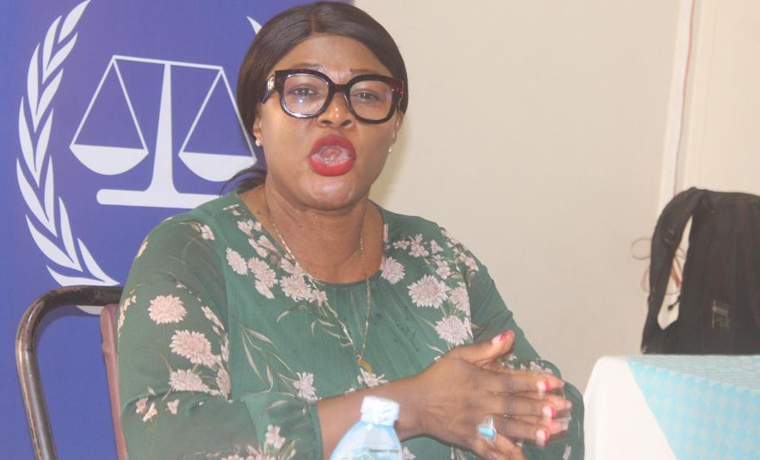
Maria Kamara Mabinty, the ICC Outreach Officer for Uganda, acknowledged the concerns but emphasized that the charges against Kony focus on thematic crimes widely documented across Northern Uganda.
These include the abduction, enslavement, and forced recruitment of women and children, along with sexual slavery, rape, forced pregnancies, persecution, torture, and looting.
“I can’t delve into the evidence the Prosecutor had or who initiated attacks on Obalanga and other locations beyond the eight discussed. What if it was the deceased commanders? Are you going to hold Ongwen responsible for actions taken by Raska and the others?” she asked.
The ICC team also visited Lwala Girls SS in Kalaki District, where over 100 girls were abducted. Kamara explained that although Kony has not been arrested or surrendered, the confirmation of charges can proceed in his absence. “We are here as part of the registry, outreach, and public information efforts to educate victims about their rights and inform communities, religious and cultural leaders, the media, and civil society about the upcoming hearing,” she said.
Some leaders questioned the long delay in capturing Kony. Daniel Eigu, representing the Forum for Democratic Change (FDC) in Soroti District, urged the Ugandan government to intensify efforts to apprehend him so that justice and possible reparations can be delivered. Bishop Emeritus Justine Edweu of the Uganda Victims Foundation suggested the use of military satellite technology to track Kony’s whereabouts and questioned whether countries harboring him might be benefiting from his presence.
In response, Kamara said the ICC does not have its enforcement arm and relies on the cooperation of state parties and the international community for arrests. She clarified that the upcoming hearing is not a trial but a preliminary step to determine whether sufficient grounds exist to confirm the charges. Jimmy Otim, the ICC Field Assistant for Uganda, said preparations are underway to ensure communities are informed throughout the confirmation process.
“Leading up to the hearing, stakeholders, including victims and media, will be kept informed. On the day of the hearing, there will be live radio broadcasts or screenings in locations like Lwala,” Otim said. He added that after the 60-day session, the court’s decision will be communicated through media releases, community events, and dialogue sessions. According to ICC records, Joseph Kony, born in September 1961, is a member of the Acholi ethnic group and has led the LRA since 1987-URN. Give us feedback on this story through our email: kamwokyatimes@gmail.com