By KT Reporter
The Government has told Parliament that 92 percent of Uganda’s paved national roads are now in fair to good condition, exceeding its performance target of 90 percent, as it unveiled progress on major road infrastructure projects while acknowledging that inadequate maintenance funding remains one of the sector’s biggest challenges.
Presenting a ministerial statement to Parliament on Tuesday, the Minister of Works and Transport, Fred Byamukama, said Uganda’s road network continues to underpin economic growth, carrying more than 90 percent of the country’s passenger and freight traffic and serving as the backbone of trade, regional integration and socio-economic transformation.

“Road transport is the dominant mode of transport, accounting for over 90 percent of cargo freight and passenger movement in the country,” Byamukama told Parliament.
The statement fulfilled a commitment made during the Prime Minister’s presentation of government business on 16 July 2026, when the Ministry undertook to provide Parliament with a comprehensive update on the state of the country’s road infrastructure.
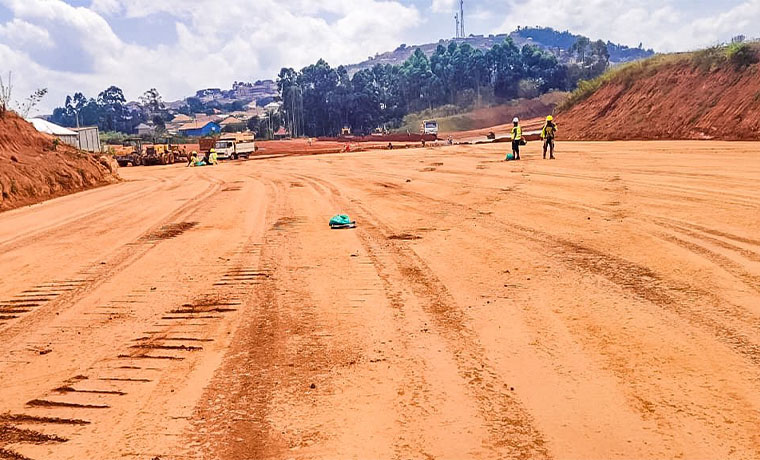
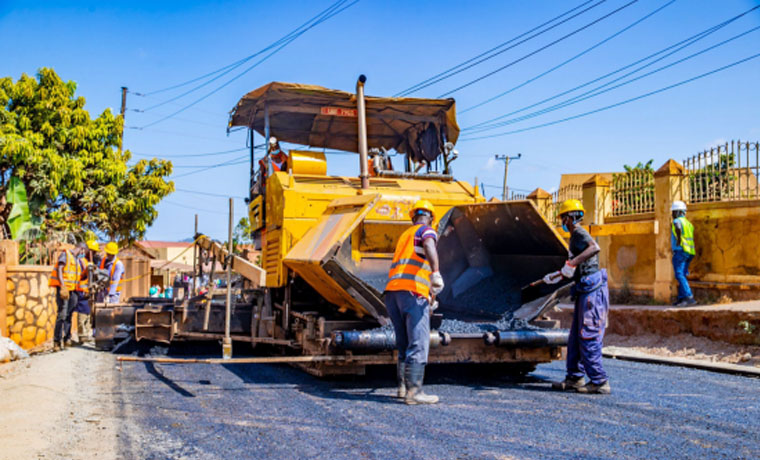
Byamukama said government is implementing an extensive portfolio of road infrastructure projects, including road upgrading, rehabilitation, bridge construction, routine and periodic maintenance, emergency reconstruction of flood-damaged roads and in-house engineering works.
Among the completed projects are the 33-kilometre Alwii–Nebbi Road, the 189.4-kilometre Soroti–Dokolo–Lira–Kamdini Road, the 42-kilometre Moroto–Lokitanyala Road, and 21 kilometres of roads in Pallisa and Kumi municipalities.
Several other projects remain under construction, while government plans to commence additional road upgrading and rehabilitation works during the 2026/27 Financial Year, subject to funding availability.
The minister added that works on district, urban and community access roads are continuing across the country, covering road opening, gravelling, rehabilitation, tarmacking and bridge construction aimed at improving connectivity and access to markets and public services.
Despite the progress, Byamukama acknowledged that financing remains a major obstacle to preserving Uganda’s road assets.
He disclosed that government allocated UGX326 billion for maintenance against an estimated annual requirement of UGX807 billion, leaving a funding gap of more than UGX480 billion.
The maintenance budget is intended to protect a national road asset valued at approximately UGX26.9 trillion.
“Government allocated UGX326 billion out of the estimated annual requirement of UGX807 billion to maintain the current national road asset, which is estimated at approximately UGX26.9 trillion,” the minister said.
The available resources will finance routine and periodic maintenance of paved and unpaved roads, bridge maintenance, drainage improvements and emergency repairs following floods and landslides.
The minister argued that increasing maintenance funding represents better value for money than allowing roads to deteriorate before undertaking expensive rehabilitation or reconstruction.
The ministry identified several structural challenges affecting timely delivery of road projects, including escalating land acquisition costs, climate change-induced damage to transport infrastructure, limited capacity among local contractors, lengthy procurement processes, ageing infrastructure, inadequate maintenance financing and delays in externally financed projects arising from counterpart funding obligations.
These constraints, Byamukama said, continue to affect implementation timelines despite sustained government investment in the transport sector.
Uganda’s road network is managed under the National Roads Act, 2008, while investment in transport infrastructure is guided by the National Development Plan IV (2025/26–2029/30), which identifies transport connectivity as a key driver of industrialisation, regional trade, tourism and agricultural commercialization.
The road sector is also central to Uganda’s commitments under the East African Community (EAC) integration framework and the African Continental Free Trade Area (AfCFTA), both of which depend on efficient transport corridors to facilitate cross-border trade and lower logistics costs.
Byamukama reaffirmed government’s commitment to expanding road infrastructure while preserving existing investments through increased maintenance.
“The Ministry will continue working closely with the Ministry of Finance, development partners and other stakeholders to mobilise resources and ensure timely implementation of road projects,” he said.
While the ministry’s performance indicators suggest that Uganda’s road network continues to improve, the widening maintenance funding gap raises questions about whether government can sustain those gains as climate pressures intensify and demand for transport infrastructure continues to grow.
With roads carrying the overwhelming majority of the country’s goods and passengers, Parliament’s scrutiny underscored a critical policy challenge: building new roads may capture public attention, but maintaining existing ones will ultimately determine the resilience and value of Uganda’s transport network-Parliament Wach Ug. Give us feedback on this story through our email: kamwokyatimes@gmail.com