Education authorities are raising concerns over a growing number of unlicensed schools established and operated by refugee communities in Kampala, Mukono, Wakiso, and other parts of the greater metropolitan area. Officials say many of these institutions are operating without registration or licensing from the Ministry of Education and Sports and do not meet the Basic Requirements and Minimum Standards required for educational institutions in Uganda.
According to Olivia Bulya, a Senior Inspector of Schools in Mukono Municipality, education officials have identified several schools, particularly those established by Sudanese refugees, that exclusively serve children from their communities while operating outside the country’s regulatory framework.
“We have traced some of these institutions within our communities. We see children going to and returning from these schools every day. But whenever we visit them for inspection, those running them often pretend not to understand what we are saying,” Bulya said.

She noted that education authorities have repeatedly requested the operators to present registration and licensing documents, but their efforts have largely been unsuccessful. Most of the institutions identified are Early Childhood Care and Education (ECCE) centres and primary schools catering mainly to children from refugee communities.
Faridah Nassolo, the Mukono Municipal Education Officer, said the lack of registration and cooperation from some of the schools has made it difficult for authorities to assess the quality of education being offered and ensure compliance with national standards.
“They do not have any paperwork. We have also raised the matter with higher authorities. Some of the refugees are operating with impunity and believe they can run things as they wish,” Nassolo said.
Nassolo said the absence of official records has made it difficult for education authorities to determine what is being taught in the schools, assess the qualifications of teachers, and verify whether the curriculum being implemented has been approved by the National Curriculum Development Centre (NCDC). She noted that authorities are investigating the institutions to establish the nature of the curriculum being offered and whether it complies with national education standards.
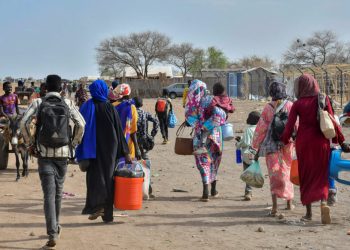
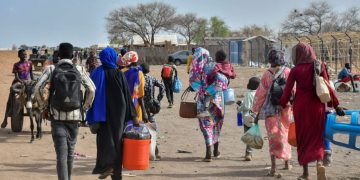
Investigations indicate that the schools are not limited to Mukono. Similar institutions are operating in several parts of Kampala and Wakiso districts, where large numbers of refugees, mainly from Sudan, have settled after fleeing conflict in their home country. Many of the schools are reportedly operating from residential premises.
Under Ugandan law, anyone intending to establish a school must obtain registration and licensing from the Ministry of Education and Sports, while pre-primary institutions must also be licensed by the respective local governments. All schools, including those serving refugee communities, are required to be officially registered. Additionally, any curriculum outside the national framework must receive approval from the National Curriculum Development Centre.
Peter Ikwap, the Principal Inspector at the Directorate of Education Standards, said the matter requires urgent intervention and coordinated action among the relevant government agencies. “The matter needs to be handled. I think the Ministry of Education can work with local governments and the Ministry of Relief, Disaster Preparedness and Refugees to sort out this issue urgently,” Ikwap said.
Brighton Barugahare, the Commissioner for Policy Analysis and Research at the Ministry of Education and Sports, emphasised that local governments must enforce education regulations irrespective of whether the operators are refugees or Ugandan nationals.
Uganda currently hosts more than 1.5 million refugees, many of whom reside in urban centres such as Kampala. Access to formal education remains a challenge for many refugee families due to overcrowded public schools, limited places in UNHCR-supported institutions, high private school fees, language barriers, and inadequate pre-primary education opportunities.
Although the government and its partners have in recent years expanded efforts to improve access to education for both refugees and host communities, significant gaps remain, prompting some refugee communities to establish informal learning centres to meet the growing demand for education-URN. Give us feedback on this story through our email: kamwokyatimes@gmail.com