By KT Reporter
Over the past 50 years, the world’s food systems have changed dramatically according to the 2025 Global Food Policy Report by the International Food Policy Institute (IFPRI)
Researchers have found that food systems have changed dramatically over the past 50 years, with food policy research both advancing and responding to this rapid evolution.

The report launched as part of the 50th anniversary of the International Food Policy Institute (IPRI) examines the evolution and impact of food policy research and assesses how it can better equip policymakers to meet future challenges and opportunities.
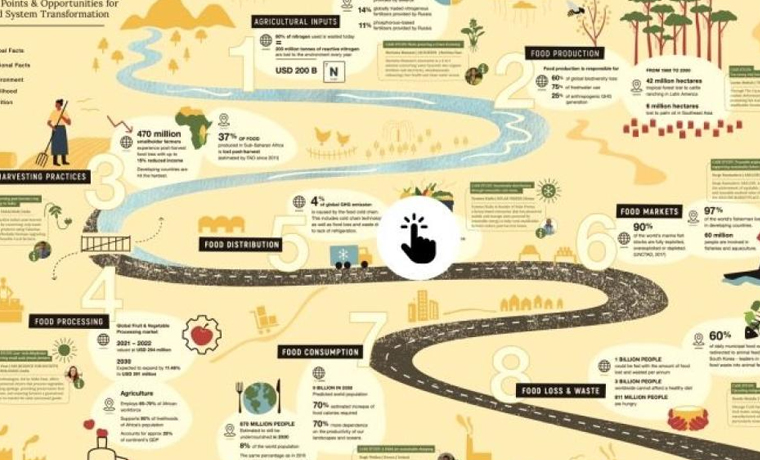
A food system encompasses every aspect of food production, processing, distribution, and consumption. It includes all the activities, people, and resources involved in feeding the global population. Around the world, an estimated 4.5 billion people rely on food systems for their livelihoods.
The 2025 Global Food Policy Report “Food Policy—Lessons and Priorities for a Changing World, a comprehensive reflection on five decades of food policy evolution and a call to action for a research agenda that meets the demands of the next generation.
The report, co-edited by Johan Swinnen, IFPRI Director General, and Christopher Barrett, Stephen B. and Janice G. Ashley Professor of Applied Economics and Management, Cornell University, and Chair of IFPRI’s Strategy and Program Council, highlights how food systems have transformed dramatically since IFPRI’s founding in 1975—from the early days of the Green Revolution to today’s complex challenges driven by climate change, rising inequality, persistent hunger, and rapid technological innovation.
Drawing from IFPRI’s own extensive research and that of its global, national, and local partners, the report provides a long-view analysis of policy’s role in shaping healthier, more equitable, resilient, and sustainable food systems.
“The report is both a retrospective and a road map. It looks back to understand how far we’ve come and looks ahead to identify the critical priorities for policy research to help navigate today’s pressing food systems challenges.” said Johan Swinnen.
Ismahane Elouafi, CGIAR Managing Director pointed out that that policies play a critical role in the fight against hunger and malnutrition, and that innovations cannot scale without an enabling policy environment.
“For the past 50 years, IFPRI has worked closely with partners around the world to generate vital evidence that informs policy decisions and frameworks to address these challenges while also fostering a more integrated management of water, energy, food, and environmental systems.” Ismahane Elouafi noted.
It takes a sweeping view of the past half-century, reviewing the evolution of both policies and policy research, highlighting lessons learned, and presenting key considerations for addressing the challenges and opportunities of today and tomorrow. It has been recognized that policies play a key role in advancing food systems and the health of all people and the planet.
While many factors influence policymaking, evidence-based food policy research is crucial for informing policy choices, policy implementation, and policy adaptation.
The reports says in 2025, our food systems look vastly different than in 1975—from a huge expansion of private sector activity in food value chains, rapid growth in trade, and the advent of numerous new technologies to substantial changes in people’s livelihoods and diets.
Poverty and hunger have declined significantly, but we are facing a new food crisis. Once again, rapid growth in food demand is outpacing expansion of the food supply and generating price shocks that imperil the health and nutrition of billions.
A slowdown in development momentum, a rapid rise in rates of overweight and obesity and diet-related noncommunicable diseases, the growing impact of climate change and environmental degradation, and increasing incidence of market volatility and conflict have heightened the urgency for food policy research to address these challenges and renew progress.
IFPRI was established in 1975 to provide policy research aimed at ending hunger and poverty. The Institute’s mission remains the same today, but it said it faces a much different scientific, political, and global context.
The 2025 Global Food Policy Report, Food Policy: Lessons and Priorities for a Changing World, reviews the food policy lessons from the past 50 years, drawing on research from IFPRI, partners, and colleagues, and reflecting on the impact of this work on food systems in low- and middle-income countries (LMICs).
The report has chapters focusing on different continents
It says Food systems in Africa have undergone significant transformations over the past four decades, with notable improvements in agricultural productivity and food security, but persistent challenges remain.
It examines how Africa’s agrifood policy landscape has evolved in response to complex challenges, including food insecurity, climate change, and socioeconomic disparities.
It explores research-based solutions to these challenges, and underscores the necessity of systemic, inclusive, and evidence-based approaches to address the agri-food system challenges projected for 2050.
Drawing from IFPRI’s own extensive research and that of its global, national, and local partners, the report provides a long-view analysis of policy’s role in shaping healthier, more equitable, resilient, and sustainable food systems.
The report is both a retrospective and a roadmap,” said Johan Swinnen. “It looks back to understand how far we’ve come and looks ahead to identify the critical priorities for policy research to help navigate today’s pressing food systems challenges.”
“We know that policies play a critical role in the fight against hunger and malnutrition, and that innovations cannot scale without an enabling policy environment,” Ismahane Elouafi, CGIAR Managing Director pointed out.
“For the past 50 years, IFPRI has worked closely with partners around the world to generate vital evidence that informs policy decisions and frameworks to address these challenges while also fostering a more integrated management of water, energy, food, and environmental systems.”
From 1975 to 2025: A changing landscape
In 1975, over one-third of the developing world’s population faced hunger, and agricultural policy was dominated by state intervention.
Over the decades, liberalization, globalization, and innovation reshaped the agrifood landscape—leading to significant gains in food availability and poverty reduction, while greater attention was given also to policies to combat environmental degradation and promote improved nutrition.
The 21st century has brought new hurdles such as more frequent climate shocks, rising conflicts, growing inequality, persistent malnutrition in all its forms—all slowing previous progress on reducing hunger and poverty.
The report traces how IFPRI and the broader policy research community have responded to—and often anticipated—these shifts by expanding the scope of research from agricultural production to agrifood value chains, and entire food systems, including processes that influence nutrition, food, health, sustainability, community development, and agriculture-URN. Give us feedback on this story through our email: kamwokyatimes@gmail.com