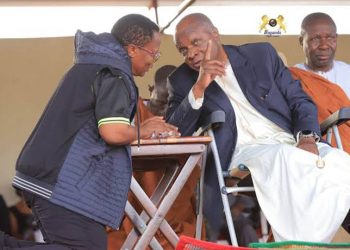
A leadership dispute at Lira University has escalated after the University Council demanded an explanation from Vice Chancellor Prof. Jasper Watson Ogwal-Okeng over a series of administrative decisions, prompting the Vice Chancellor to accuse the Council chairperson of exceeding his statutory powers and even suggesting he resign if he cannot operate within the law.
The Council, in a July 27, 2026 letter, asked Prof. Ogwal-Okeng to explain several decisions made after he resumed duty from sick leave on July 13, arguing that they appeared to disregard council resolutions adopted during his absence. Among the issues raised were his early return to office before the expected resumption date, the legality of his sick leave, whether he had obtained medical clearance before resuming duty, and administrative decisions that allegedly reversed council resolutions, including arrangements concerning the Deputy Vice Chancellor (Academic Affairs), who had been assigned to perform the functions of the Vice Chancellor during his absence.
However, in a strongly worded response dated July 31, Prof. Ogwal-Okeng rejected what he described as persistent interference by Council Chairperson David Opiokello in the day-to-day management of the university. The Vice Chancellor argued that under Section 31(1)(i) of the Universities and Other Tertiary Institutions Act, he is the university’s chief academic, administrative and financial officer and is solely responsible for managing its daily operations.

He accused the Council chairperson of issuing operational directives directly to university staff, bypassing the Office of the Vice Chancellor and acting beyond the authority granted to him by law. Prof. Ogwal-Okeng stated that the chairperson’s role is limited to presiding over Council meetings and consulting the Vice Chancellor as provided for under the law.
He directed that all future operational and administrative correspondence be routed through his office and insisted that Council decisions should only be communicated through formally adopted resolutions. He further warned university staff against implementing what he termed unlawful instructions issued outside established procedures.
In one of the strongest sections of the letter, the Vice Chancellor told the Council chairperson that if he found it difficult to operate within the legal framework governing public universities, “the most responsible action for you is to resign.” The letter was copied to the Chancellor, the Minister of Education and Sports, the Attorney General, the Permanent Secretary in the Ministry of Education, members of the University Council and Senate, the Academic Registrar and the university’s legal department, signalling the widening scope of the dispute.
The exchange of letters exposes growing tensions over governance and the separation of powers between the University’s governing council and its executive management, with both sides relying on provisions of the Universities and Other Tertiary Institutions Act to justify their positions. It remains unclear whether the Council has responded to the Vice Chancellor’s latest letter or what further action it intends to take-URN. Give us feedback on this story through our email: kamwokyatimes@gmail.com