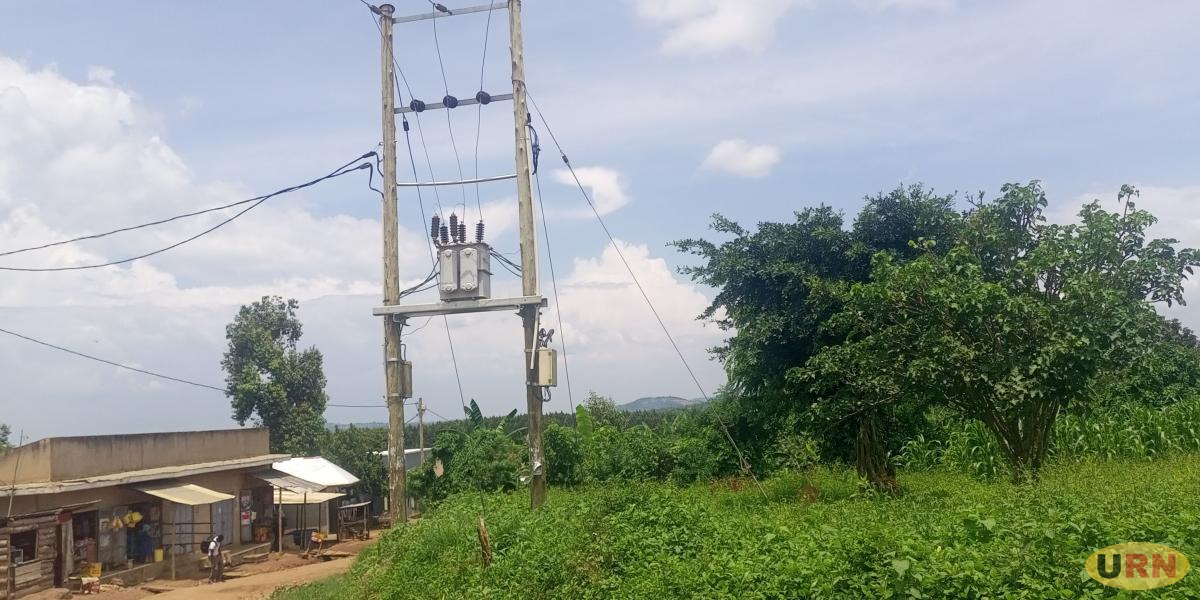
For nearly 50 hours, businesses in Bujuuko, along the Kampala-Mityana Road, sat in darkness, unable to operate normally. For Ruta, a baker in nearby Bulamazzi, every hour without electricity meant another risk of spoiled dough, lost revenue and disappointed customers.
Ruta and his wife started the bakery last year, hoping that running a business from their homestead would be more convenient than investing in Kampala city. Barely a year later, rising input costs and persistent power cuts are threatening their investment.
When he secured a loan to start the bakery, he knew repayments would begin a month later. What he did not anticipate was the sharp rise in input costs, particularly wheat flour, before the business could break even. Yet, as he explains, rising prices are part of the risks of doing business.

What is breaking his spirit is the repeated loss of ingredients and production caused by power cuts. “Business entuddemu,” Ruta says, using a Luganda expression that loosely translates to “the business is choking me.” “Imagine, you mix all your ingredients, heat the oven and put in your things. Two minutes later, power goes off!” he says.
His only hope is that electricity returns before the dough spoils. “But sometimes, you wait for seconds, then minutes, and then hours. By that time, the dough is spoiled, and you can only pour it away,” he laments.
The outages are also threatening his market. Ruta supplies supermarkets in Kampala, where missed deliveries can mean losing customers to competing suppliers. “You miss two deliveries, they drop you and take on other suppliers,” he says. Yet, his options are expensive: buy a diesel generator or invest in a solar system powerful enough to run the bakery.
“But where is the money? I can’t go to the banks again when I have just started paying off . Besides, I won’t make any profits using diesel,” he adds.
Ruta’s predicament brings to the fore the difficulties facing many small businesses in Bujuuko, a rapidly growing residential and commercial area where dairy dealers, bakers, salon operators, welders, millers and other entrepreneurs depend on reliable electricity to operate.
A recent analysis by structural engineer Charles Gava, chief executive of CG Engineering Consults, identifies Bujuuko as the location most frequently mentioned in planned electricity shutdown notices published by the Uganda Electricity Distribution Company Limited (UEDCL).
In his Substack report, Lights Out: Mapping 18 Months of Uganda’s Power Cuts, Gava examines the geographical distribution of outages, their possible causes and the relationship between rainfall, urbanisation and electricity infrastructure. His analysis covers planned shutdown notices published between May 2025 and October 2026, alongside unplanned outage alerts and other data.
Of approximately 2,180 planned shutdowns identified, Bujuuko appeared 54 times, followed by Bulenga with 43, Buloba and Busega with 41 each, Kalambi with 41, and Nakuwadde with 39. All are on or near Kampala’s western fringe along the Kampala-Mityana corridor.
The analysis found that outages are concentrated in the Greater Kampala Metropolitan Area, particularly the Kampala-Wakiso-Mukono belt, as well as along some long rural electricity feeders in western and northern Uganda.
Nationally, planned shutdowns alone account for an estimated 3.2 hours without electricity per customer each month, according to Gava. Gava’s analysis found that 38 of 63 recorded faults, or about 60 per cent, occurred within six hours of rain.
Only 28 per cent of all hours in the period had experienced rainfall during the preceding six hours. Based on these figures, faults were about 2.2 times more likely in the six hours following rainfall than during an average hour.
UEDCL has also identified heavy rain and storms as major contributors to power interruptions. Planned maintenance and network upgrades are another source of disruption. Between June and October 2026, UEDCL carried out a backbone conductor upgrade on the Mutundwe-Mityana 33-kilovolt feeder, resulting in about 60 separate shutdowns along the corridor.
Mutundwe was the most frequently named substation in the notices, appearing 90 times. “The work is necessary, but the people living along that road experienced it as a summer of near-weekly blackouts,” Gava says.
Beyond maintenance, rapid urbanisation is putting pressure on infrastructure that was installed when the affected areas had fewer households and businesses.
A former Umeme employee involved in extending power lines to settlements along the Mityana Road, speaking on condition of anonymity, says the pace of urban growth was underestimated.
Transformers installed about five years ago, despite initially having capacity to serve twice the number of mapped households, can no longer meet demand in some areas where household numbers have reportedly tripled. Gava says the combination of rising demand, overloaded feeders and expanding settlements is contributing to the problem.
“Outages follow load and network density first. New growth then adds pressure at the edges, where feeders are long, overloaded and constantly being extended, which is exactly the Mutundwe-Mityana story,” he says. UEDCL, which took over electricity distribution from Umeme in April 2025, acknowledges customer frustration and the need to improve reliability. The company has partly attributed the pressure on the network to growing demand.
Government figures indicate that electricity customer numbers increased from fewer than 1.64 million in 2021 to 2.78 million, while demand grew by about 60 per cent between 2021 and 2026. Ageing infrastructure is another challenge, with about 40 per cent of substation switching equipment reportedly more than 25 years old. Some equipment is obsolete, making repairs difficult because spare parts are unavailable.
UEDCL has partly attributed the infrastructure challenges to limited investment during Umeme’s final years of operating the distribution network. Acting Managing Director Eng. Joselynne Rwabwogo has also warned against illegal connections, which can damage equipment and increase demand beyond the network’s capacity.
Umeme, however, disputes claim that it underinvested. The company says it exceeded its contractual investment obligations, increased customer connections from approximately 280,000 to 2.2 million, and reduced electricity losses from 36 per cent to 16 per cent.
Under its 2005 concession agreement, Umeme was required to invest at least USD 65 million in the distribution network during the first five years, including USD 5 million in the first 18 months.
Company statements indicate that cumulative investment had reached about $105 million by the end of 2010 and USD 134 million by the end of 2011. Umeme says it had invested as much as USD 860 million by the end of its concession in 2025. The Electricity Regulatory Authority puts the total at between USD 737 million and USD 800 million.
The competing figures and explanations raise questions about whether investment in electricity distribution has kept pace with Uganda’s urban expansion and growing demand. For Ruta, the debate over infrastructure investment offers little immediate relief. A generator would increase his operating costs, while a solar installation capable of powering the bakery would require substantial upfront investment.
Meanwhile, every prolonged outage threatens his production and customer relationships, yet his experience points to the vulnerability of small businesses operating on narrow margins in rapidly growing commercial centres-URN. Give us feedback on this story through our email: kamwokyatimes@gmail.com