Parliament has slammed the brakes on a push to commit another US$434 million (about UGX 1.7 trillion) to Dei BioPharma, with legislators insisting that ownership, valuation, contractual and accountability gaps must be closed before more public money is released.
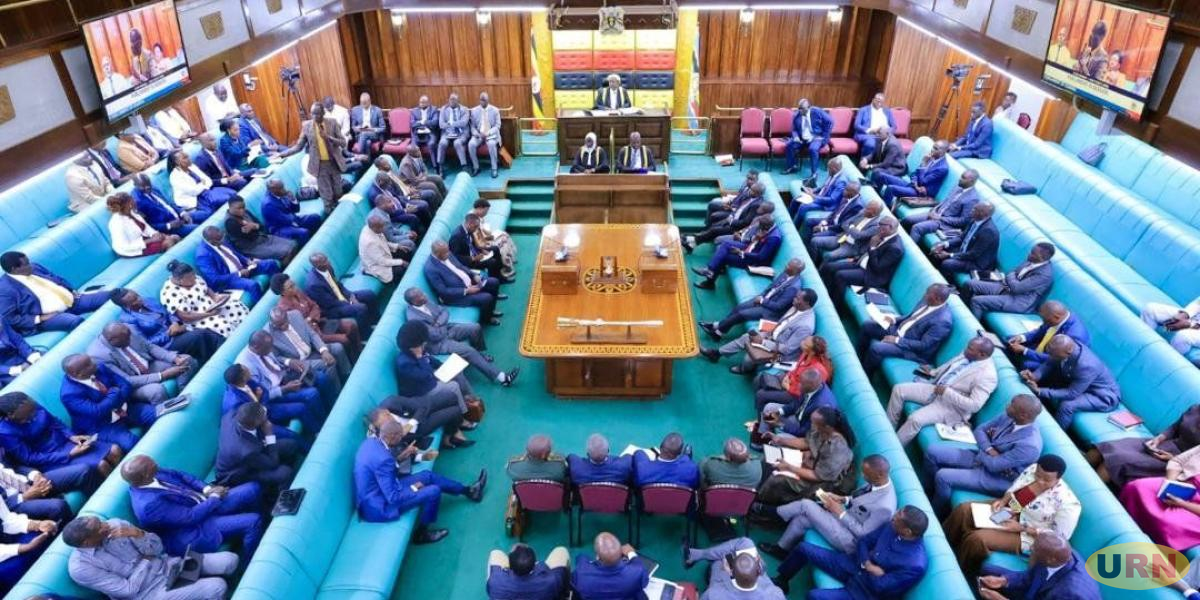
The showdown erupted in Wednesday’s plenary debate on the Presidential Affairs Committee’s report on selected science, technology and innovation projects, chaired by Deputy Speaker Thomas Tayebwa.
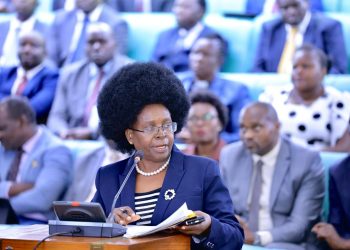
The committee, led by Martin Ojara Mapenduzi (MP, Bardege-Layibi Division, Gulu City), had recommended that the Ministry of Finance, Planning and Economic Development provide additional funding to complete and fully operationalise the pharmaceutical plant.

Tayebwa challenged whether Parliament could legitimately direct further expenditure while key processes underpinning the state’s existing investment remained unresolved.“You’re saying pay when you’re bypassing the processes,” he said, warning that lawmakers risked authorising spending before basic safeguards were in place.
The committee reported that government has so far invested Shs 723.4 billion in Dei BioPharma: Shs 70 billion in FY2023/24, Shs 75 billion in December 2023, and Shs 578.4 billion through a supplementary budget in FY2024/25. Despite this, it said no documentary evidence confirming the government’s reported 9.4 per cent shareholding was presented during its assessment.
Mapenduzi told Parliament that clear documentation of the state’s shares, expected returns, deliverables and performance targets must be provided in proportion to the public resources committed.
“Government should ensure that clear documentation of government’s shares in Dei BioPharma, the expected returns, deliverables and performance targets are provided,” Mapenduzi said.
Leader of the Opposition Joel Ssenyonyi seized on the missing shareholding proof to question the logic of approving more financing. “You’re saying there is no proof of government shareholding, but you’re saying government should inject a lot more money. This is extremely confusing,” he said.
Ssenyonyi also challenged the committee’s parallel recommendation of US$250 million (about UGX 1.017 trillion) for Inspire Africa Coffee, while the contractual and financing framework for that relationship had not been tabled. He demanded a value-for-money audit of all public funds already committed to such projects before any additional financing is approved.
“Before you can think about asking for more money, trillions of shillings at that, can we have a value-for-money audit of the money that has already been given before we add more money?” he asked.
His concerns extended beyond Dei BioPharma, questioning what he described as a pattern of bailouts for selected private firms while other enterprises struggle without comparable support.
“Numerous companies also require bailout from government,” he said. “Why does government continue to bail out these same companies which are problematic, but there are other genuine businesses which are saying we are also struggling.”
Buzaaya County MP Martin Kasule Mugabi questioned whether the investment structure adequately protects public capital, citing cases where government contributes the bulk of funding but ends up with a small equity stake.
“You find government has invested 100 billion, the investor has only invested 5 billion, but the government, we have only 5 per cent shares. This is not realistic,” Mugabi said. Budadiri County East MP Julius Nakiyi called for a fresh valuation of Dei BioPharma.
Using the committee’s figures, he argued that if 723 billion shillings represents 9.4% stake, the implied equity valuation of the company would be7.7 trillion. That, he said, raises serious questions about how the private shareholders’ 90.6 per cent interest was valued relative to the public contribution.
“The argument is these people overvalued their company so that they dilute the shareholding of government,” Nakiyi said. “So we need a resolution in this Parliament that we revalue this company. Then we determine the true value of government shareholding in this entity.”
PAC-Central chairperson Nsamba Patrick Oshabe widened the debate to the government’s overall approach to supporting private firms. He warned that repeated use of public funds to finance selected companies disadvantages businesses that raise their own capital and operate without state support.
“Some companies are depending entirely on the Consolidated Fund to run business,” Oshabe said.
“We are killing the private sector; we are killing innovation in the name of promoting innovation.” He also warned parliamentary committees against being “public relations teams” for private companies.
The committee’s report frames Dei BioPharma as a strategic industrial and public-health investment, not just a private firm seeking state aid. The 150-acre facility at Matugga, Wakiso District, is designed to produce generic medicines, vaccines, injectables, oncology drugs, penicillin and medical devices.
In FY2024/25, it produced and distributed six generic medicines, including paracetamol, tramadol, metformin, doxycycline and metronidazole, though several specialised lines remain under installation, validation and commissioning.
According to the committee, the plant is operating below its envisaged capacity due to infrastructure and financing gaps. “The current level and range of production remain below the envisaged capacity of the overall investment. Unless this financial gap is urgently addressed, government risks having a strategically important national investment operating below capacity,” the same Mapenduzi said.
The same committee argues that completing the facility could support import substitution, national medicine security, pharmaceutical exports and employment. It says the project already employs more than 1,000 people and could generate up to 20,000 jobs when fully operational.
It also recommended reliable electricity supply of up to 100 megawatts and upgraded water-treatment and storage infrastructure, noting the plant will need between seven million and 10 million litres of water daily at full operation.
Article 154 of the Constitution allows withdrawals from the Consolidated Fund only through authorised mechanisms such as an Appropriation Act or Supplementary Appropriation Act. Article 164 makes accounting officers accountable to Parliament for public funds and assigns Parliament responsibility for monitoring public expenditure.
The Public Finance Management Act, 2015 similarly sets out procedures for preparing, approving and managing the national budget and defines public resources to include public money, assets, loans and government investments.
Against this legal backdrop, the committee maintains that finishing Dei BioPharma could reduce dependence on imported medicines, strengthen national medicine security, support exports and create jobs, but only if accountability and valuation issues are resolved first-URN. Give us feedback on this story through our email: kamwokyatimes@gmail.com