Parliament on Thursday failed to set a deadline for the government to explain the whereabouts of people reported missing or detained without being produced in court.
The failure leaves families and legislators waiting for answers despite earlier assurances that the cases would be investigated.
Deputy Speaker Thomas Tayebwa told Parliament that he was reluctant to impose a timeline on the National Security Council, which must first consider the matter before the responsible minister presents a statement to the House.

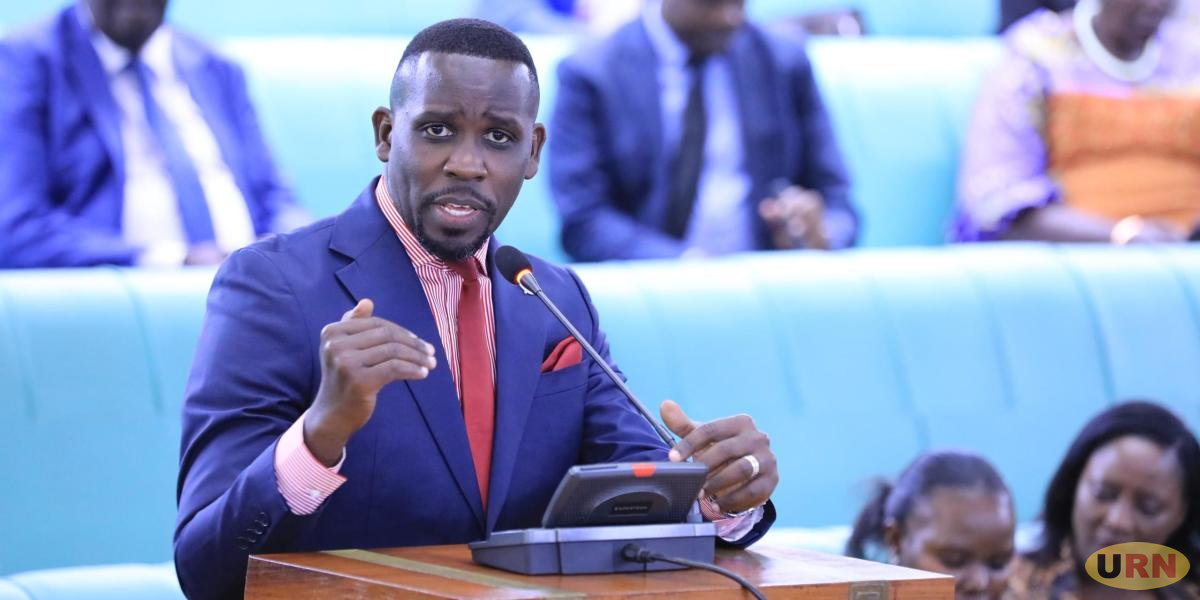
The delay came as Leader of the Opposition Joel Ssenyonyi, the Nakawa Division West MP, demanded updates on two outstanding government statements: one on alleged abductions and incommunicado detention, and another on enforcement of restrictions on the charcoal trade.
The statement on alleged abductions had been promised weeks earlier, while the charcoal trade statement was expected on October 21 following a directive by Speaker Jacob Markson Oboth.
Ssenyonyi questioned the government’s repeated failure to meet its commitments.
“I’m trying to avoid the word lies. But tell us things that are not true,” he told the House.
Government Chief Whip Jane Ruth Aceng, the Lira City Woman MP, asked legislators to allow the government more time.
On the charcoal trade restrictions, Aceng said the Ministry of Energy and Mineral Development was still harmonising its position with a presidential executive order and its author.
On the missing-persons report, she said the Minister of Internal Affairs was required to present the findings to the National Security Council before submitting a statement to Parliament.
“Please, just a little more patience,” Aceng appealed.
Tayebwa explained that Cabinet had directed that the report on alleged abductions and incommunicado detention be considered by the National Security Council first. The responsible minister was waiting for the Council to convene, he said.
“I would be uncomfortable giving a timeline to the National Security Council,” Tayebwa said, urging the minister to push for a meeting.
He assured legislators that Parliament would continue pressing the minister to finalise the report and present it to the House.
However, he gave no date by which the statement would be delivered.
Ssenyonyi questioned how much longer Parliament and the families of missing people would have to wait, noting that at least one person had reportedly been missing since August 2025.
He asked what would happen if the Council took another three or six months to convene, warning that the lack of a clear timeline undermined confidence in the government’s assurances.
The delay follows an October 1 parliamentary sitting in which Aceng confirmed that Ssenyonyi had submitted names of people reported missing or held without being produced in court.
She said the Ministries of Internal Affairs and Defence would prepare a report addressing each case, including establishing whether the individuals were in custody. She requested approximately two weeks to compile the information.
Among the cases raised by opposition legislators and human rights advocates are those of opposition activist Sam Mugumya, reportedly missing since August 2025; Christopher Gody, also known as King Zale, reported missing since April; and journalist Eria Jjengo.
The outstanding report is expected to clarify the circumstances surrounding the reported disappearances and detentions, including whether the named individuals are being held by security agencies. Parliament has not yet received the promised account.
Article 23 of Uganda’s 1995 Constitution safeguards personal liberty and sets conditions governing arrest and detention. It provides for access to legal representation and requires that a person arrested or detained be brought before a court as soon as possible and, in any case, within 48 hours.
The Constitution also protects individuals against torture and cruel, inhuman or degrading treatment. The reported disappearances and allegations of detention outside formal procedures raise questions about whether those safeguards are being respected and what steps authorities have taken to establish the whereabouts of the people named.
The debate over security accountability widened when Older Persons Representative for Eastern Uganda Ofwono Opondo, an NRM MP, raised the case of human rights activist Praise Aloikin Opoloje, who has alleged that security operatives abducted and beat her.
Citing her account, Opondo told Parliament that Opoloje had been lured to a police station before being taken away by people who identified themselves as operatives from the Chieftaincy of Military Intelligence, now known as Defence Intelligence and Security.“Is this the new law of the NRM?”
Opondo asked, calling for explanations from the Minister of Defence, the Attorney General and the Minister of Internal Affairs.
He argued that security institutions operate under the supervision of the NRM-led government and said it was “unacceptable for the NRM to preside over impunity and torturing citizens.”
Kabula County MP Enos Asiimwe raised a point of order, arguing that the NRM was not responsible for making arrests.
Opondo maintained that the responsible ministers should account for the conduct of security agencies.
Opoloje, a 27-year-old activist and law student who received the European Union’s 2025 Human Rights Defenders Award, was summoned to Namungoona Police Station on September 26, 2026, over a disputed carpet.
According to accounts from her associates and civil society groups, armed operatives subsequently took her away in a vehicle. Police later confirmed that she was in custody.
She was charged with using another person’s SIM card under communications regulations, remanded in custody and granted bail on October 14.Opoloje has publicly alleged that she was beaten and questioned about social media comments critical of Chief of Defence Forces Gen. Muhoozi Kainerugaba. Police maintained that her detention was lawful.
Her case illustrates the questions legislators want the government to address: who took people into custody, where they were held, the legal basis for their detention and whether their rights were respected.
The second outstanding government statement concerns enforcement of a 2023 presidential directive restricting the charcoal trade.
On October 14, Speaker Oboth suspended enforcement pending a government update expected on October 21 on the implementation of the restrictions and progress in promoting affordable alternative cooking fuels.
Ssenyonyi has argued that 87 to 94 per cent of Ugandans still rely on charcoal and firewood for cooking, citing 2024 Uganda Bureau of Statistics data. He says alternative energy sources remain unaffordable or inaccessible to many households.
The statement is expected to explain how the restrictions are being implemented and what measures the government is taking to provide practical alternatives for households that depend on traditional fuels.
Both outstanding statements concern commitments made to Parliament that have yet to be fulfilled. In the case of the missing-persons report, the absence of a deadline leaves legislators without a clear timetable for obtaining answers about people whose whereabouts remain uncertain. Tayebwa promised continued pressure on the responsible minister, but Parliament has no date for when the government will account for the cases-URN. Give us feedback on this story through our email: kamwokyatimes@gmail.com