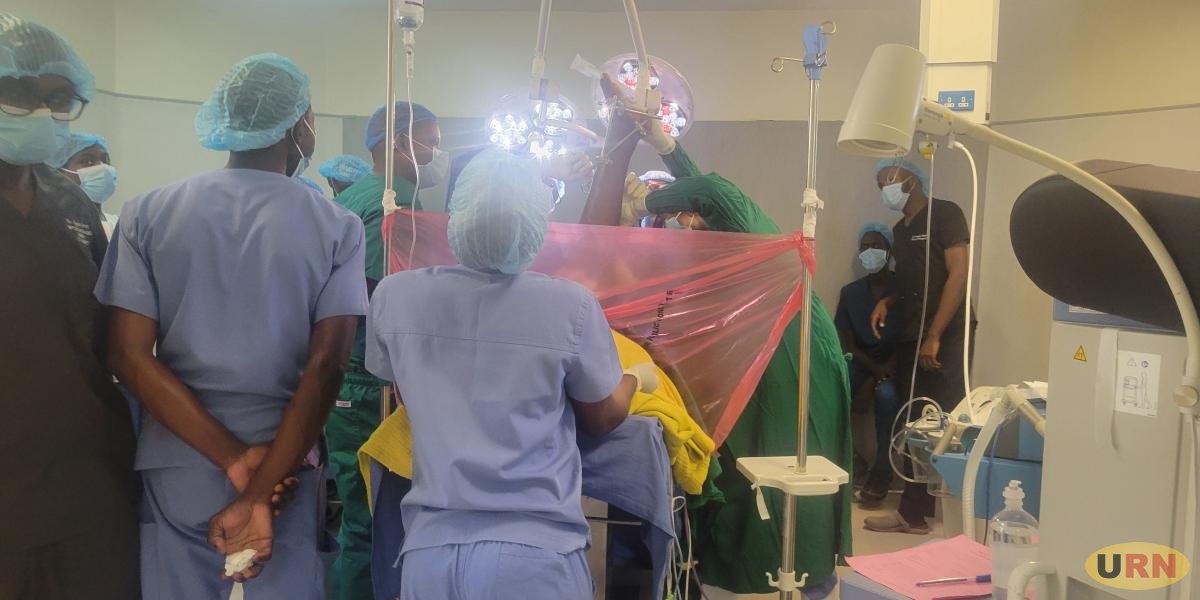
Ugandan surgeons at Mulago National Referral Hospital have teamed up with specialists from the Netherlands in a knowledge exchange programme aimed at reducing unnecessary amputations among patients with severe open fractures.
The programme brings together orthopaedic and plastic surgeons to operate on carefully selected patients whose limbs are at risk of amputation due to complex fractures and extensive tissue damage.
Dr Irene Ashaba Mugisha, head of the Plastic Surgery Unit at Mulago National Referral Hospital, told Uganda Radio Network (URN) in an interview that the multidisciplinary team was working on patients whose injuries required specialised and coordinated surgical care to save their limbs.

Ashaba said most of the beneficiaries were survivors of road traffic crashes who had sustained severe traumatic injuries. She noted that the demand for surgery to treat open fractures remains high at Mulago, reflecting Uganda’s significant road crash burden.
Road traffic crashes rank sixth among the causes of death and fourth in terms of disability-adjusted life years (DALYs) in the country. At the time of the interview, the team had performed seven operations, with another seven planned.
According to Ashaba, the collaborative approach is already yielding positive results, reducing the burden of multiple surgical procedures on patients and improving outcomes compared with the hospital’s routine approach to managing such injuries.
Explaining the rationale behind the collaboration, Renz Wierper, managing director of Global Surgery Amsterdam, said the initiative was informed by experience from similar programmes in other countries, including Tanzania and Sierra Leone.
Global Surgery Amsterdam brought together 24 surgeons from different specialities across Africa and Europe for the knowledge exchange programme.
Wierper said their experience had revealed significant gaps in the knowledge and skills required to manage fractures in low-resource settings, contributing to avoidable disability and deaths. He added that funding was not necessarily the biggest obstacle to providing surgical care. Instead, improving how medical teams assess and manage open fractures could make a significant difference in patient outcomes.
Wierper said the organisation had developed a short course to equip health workers in countries such as Uganda with the skills needed to work collaboratively and manage complex fractures using the resources available to them.
He said the organisation plans to continue conducting surgical mentorship programmes every October over the next four to five years. The long-term goal is to train enough local specialists to sustain the programme by transferring their knowledge and skills to other health workers.
However, Ashaba said the development of orthoplastic surgery in Uganda continues to face challenges, despite growing interest among doctors in the speciality. She noted that training opportunities remain limited, while some doctors who have already received specialised training lack suitable placements where they can apply their skills in clinical practice.
Ashaba warned that these constraints were limiting the development of the speciality at a time when the hospital was facing a growing demand for complex trauma care-URN. Give us feedback on this story through our email: kamwokyatimes@gmail.com