


 Wakiso District Woman MP Betty Ethel Naluyima
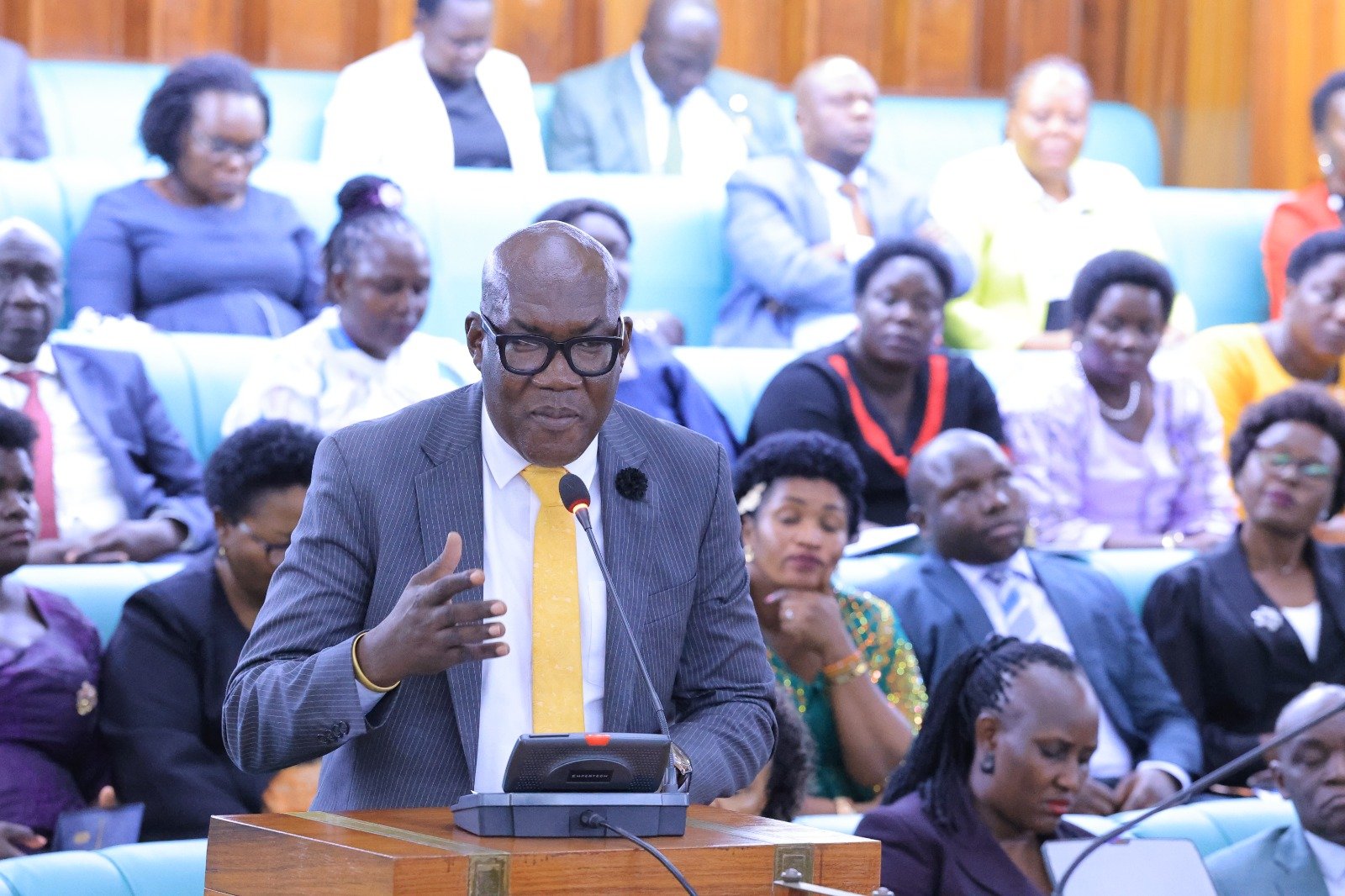 Jonam County MP Godfrey Alenyo Marshall
The Ministry of Information, Communications Technology and National Guidance has defended telecommunications operators against allegations of unexplained mobile data depletion, attributing the rapid exhaustion of internet bundles to faster 4G and 5G networks, high-resolution content and automatic background downloads.

In a ministerial statement presented to Parliament in response to concerns raised by Jonam County MP Godfrey Alenyo Marshall, ICT Minister Justine Kasule Lumumba argued that improvements in network technology have enabled users to download and stream larger volumes of content within shorter periods, accelerating the consumption of fixed-volume data packages.
The Ministry described the phenomenon as a consequence of technological advancement rather than evidence of deliberate manipulation of billing systems by telecommunications companies.
“This is a natural outcome of technological progress rather than a billing anomaly,” the ministerial statement said, explaining that faster connections enable data to be transferred more quickly.
The explanation comes amid longstanding complaints from Ugandan subscribers who question why purchased internet bundles sometimes disappear within minutes or hours, even when their browsing habits appear unchanged.
To explain the technical differences between network generations, the Ministry likened a one-gigabyte (1GB) data bundle to a 20-litre jerrycan of water, with the network representing the pipe through which the water flows.
Under the analogy, third-generation (3G) networks, with typical speeds of 1 to 5 megabits per second (Mbps), resemble a narrow pipe through which water flows slowly. Fourth-generation (4G) networks, operating at speeds of 10 to 50Mbps, are compared to a wider garden hosepipe, while fifth-generation (5G) networks, reportedly delivering speeds of 160 to 235Mbps, resemble a high-pressure fire-service hose.
The Ministry argues that although the data bundle remains the same size, faster networks enable users to consume its contents much more quickly, particularly when streaming high-definition videos, downloading large files or running multiple applications simultaneously.
“The jerrycan is the same size every time. Nobody has stolen any water. What changed is the size of the pipe, and how quickly water flows,” the statement emphasised.
However, network speed and data consumption are technically distinct. A 1GB file remains 1GB whether downloaded through 3G, 4G or 5G. Faster networks reduce the time required to transfer the same volume of information; higher consumption occurs when users or applications actually transfer more data.
The distinction is significant because faster connectivity alone cannot explain unexplained deductions from subscribers’ accounts. The government’s explanation therefore leaves questions about billing accuracy, transparency and the adequacy of regulatory oversight.
During the parliamentary debate, Alenyo, who first raised concerns about rapidly depleting data bundles, welcomed the Ministry’s proposals but questioned the practices telecommunications companies adopt when subscribers’ bundles expire.
“In this country, light is the fastest object in the world, but in Uganda, data is the fastest depleting substance in the world,” Alenyo remarked, capturing the frustration among consumers.
He raised concerns that telecommunications operators can automatically switch subscribers to more expensive data packages when their existing bundles are exhausted, potentially exposing customers to unexpected charges.
The legislator called for unused data to remain available to the customers who purchased it and urged telecommunications companies to publish clear explanations of their billing methods on their websites so subscribers can understand how data consumption and deductions are calculated.
His concerns highlight a wider consumer protection question: whether subscribers have sufficient control over purchased services, particularly when bundles expire, renew automatically or trigger alternative charging arrangements.
Wakiso District Woman MP Betty Ethel Naluyima also questioned the reliability and limitations of data packages, recounting an experience in which she travelled to Arusha, Tanzania, with international data bundles purchased in Uganda but could not use them upon arrival.
“I left Uganda when I had loaded international bundles, only to find that the bundles could not work,” Naluyima told Parliament.
She said she was unable to use the purchased bundles or load another package to communicate with colleagues back home, urging the Ministry to strengthen oversight and ensure operators sell services they can reliably deliver.
Naluyima also raised concerns about digital safety, asking what practical guidance the Ministry provides to women and older people to help them navigate online spaces safely.
Her intervention broadened the debate beyond data depletion to include the reliability of international roaming services, consumer information and digital literacy.
Deputy Speaker Thomas Tayebwa called on the Uganda Communications Commission (UCC) to investigate how telecommunications companies measure data consumption, determine tariffs and charge subscribers.
The debate followed a proposal by Shadow Minister for Information and Anti-Corruption Sheilah Draville for Parliament’s Committee on ICT to investigate the complaints.
Draville argued that consumers have limited means of independently verifying whether the volume of data deducted by telecommunications operators corresponds with their actual usage.
The legislators’ interventions place renewed pressure on the regulator to establish whether complaints arise from legitimate data consumption, technical discrepancies, billing errors or potentially unfair commercial practices.
While defending the integrity of telecommunications billing systems, the Ministry acknowledged that affordability remains a major obstacle to meaningful digital inclusion, despite reductions in the retail cost of mobile internet.
According to figures contained in the ministerial statement, the average retail price of 1GB of mobile data has declined by approximately 60 per cent over the past six years, from about Shs5,200 (US$1.40) in 2020 to approximately Shs2,000 (US$0.55).
However, civil society organisations and consumer advocates argue that lower per-gigabyte prices do not necessarily translate into affordable internet access for ordinary Ugandans, particularly those facing low incomes, high device costs and other indirect taxes.
The Ministry attributed the relatively high cost of mobile connectivity partly to Uganda’s limited number of active internet users, arguing that a larger customer base would enable operators to benefit from economies of scale and potentially reduce the unit cost of providing services.
It also identified the high cost of smartphones as a significant barrier, noting that many Ugandans live within mobile broadband coverage areas but remain disconnected because they cannot afford internet-enabled devices.
“Many people live within mobile broadband coverage but yet remain offline primarily because of the high cost of smartphones,” Lumumba reportedly told Parliament.
The minister identified import duties, Value Added Tax (VAT) and other statutory charges as factors contributing to the high retail prices of entry-level smartphones.
Under the Fourth National Development Plan (NDP IV), covering the 2025/26–2029/30 financial years, and the government’s broader digital transformation agenda, Uganda intends to expand digital access and increase smartphone ownership.
The Ministry said it was engaging the Ministry of Finance, Planning and Economic Development and UCC to explore possible tax adjustments on entry-level smartphones to lower acquisition costs and expand the number of people accessing mobile broadband.
Government expects that a larger digital user base would strengthen the commercial viability of telecommunications services and encourage operators to introduce more flexible packages, including potentially unlimited or speed-based internet subscriptions.
However, the anticipated transition from volume-based to speed-based billing is not automatic. It would depend on commercial decisions, network capacity, competition and the regulatory framework governing telecommunications services.
The government’s explanation has reignited a longstanding debate between telecommunications operators, regulators and digital rights organisations over transparency and accountability in the sector.
Digital rights watchdog Unwanted Witness has previously challenged UCC over what it considers inadequate consumer protections in telecommunications companies’ terms of service and billing arrangements.
The organisation has also supported citizen-led accountability initiatives, including the #DataTheftExhibition campaign, which highlighted complaints about rapidly depleting internet bundles and called for regulatory intervention.
In April 2024, Unwanted Witness published a citizen demand for telecom accountability, calling for investigations into alleged unfair data depletion and stronger safeguards for subscribers.
The organisation has argued that consumers need greater access to information about how operators calculate data usage, while independent analysts and consumer advocates have called for forensic audits of telecommunications billing systems.
These concerns do not, in themselves, establish that operators have systematically stolen subscribers’ data. However, they underscore the need for independent verification rather than relying exclusively on explanations provided by the companies whose billing practices are being questioned.
The Uganda Communications Act, 2013, provides UCC with a mandate to regulate the communications sector, oversee tariffs and charges, investigate consumer complaints and protect the interests of users.
The regulator therefore has a responsibility to ensure that subscribers receive accurate billing information, accessible complaint-handling mechanisms and appropriate remedies where errors or unfair practices are established.
The debate also intersects with the Data Protection and Privacy Act, 2019, particularly where applications and digital service providers collect and process subscribers’ personal information.
Meanwhile, the Collaboration on International ICT Policy for East and Southern Africa (CIPESA), a regional digital policy research organisation, has consistently highlighted the relationship between the cost of connectivity, device affordability and unequal access to digital services.
Its research on Uganda’s digital economy identifies affordability and connectivity gaps as significant barriers to participation, particularly for rural communities, women and low-income populations.
CIPESA has also drawn attention to Uganda’s comparatively high mobile data costs against some regional markets, including Kenya and Tanzania, reinforcing concerns that falling headline prices alone are insufficient to guarantee meaningful digital inclusion.
The parliamentary debate presents an opportunity for legislators and the communications regulator to move beyond competing explanations and establish the technical and commercial circumstances surrounding complaints of rapidly depleting data bundles.
UCC should consider independent technical audits of operators’ billing and data-accounting systems to determine whether deductions correspond with actual network usage.
Telecommunications companies should also provide subscribers with accessible, time-stamped usage records identifying when data is consumed and, where technically feasible, which applications or services account for significant usage.
Clear notifications before bundle exhaustion, transparent automatic-renewal arrangements, accessible complaint procedures and refunds where erroneous deductions are established would help restore public confidence.
Parliament should also seek clarification on the proposed smartphone tax reforms, the status of previous consumer complaints and the regulatory measures taken to address concerns about international roaming and unexpected bundle charges.
Ultimately, Uganda’s digital transformation ambitions will depend not only on expanding network coverage and introducing faster technologies but also on ensuring that consumers can afford, understand and trust the services they purchase.
The government may be right that faster networks and data-intensive applications contribute to rapid bundle depletion. But technological advancement cannot substitute for transparent billing, independent oversight and effective consumer protection.
The central question remains whether every megabyte deducted from a subscriber’s account can be accounted for, independently verified and justified-Give us feedback on this story through our email: kamwokyatimes@gmail.com