By KT Reporter
The manufacturing sectors have given a cautious welcome to the repossession of the electricity supply and distribution services by a state agency.
They hope that this brings a new, better era for the sector that contributes 26 percent to the country’s economic output.

They describe the transition from UMEME Limited, a private sector operator, to state-owned Uganda Electricity Distribution Company Ltd (UEDCL) as the dawn of a new era, which presents opportunities for a new transformation in the electricity sector.
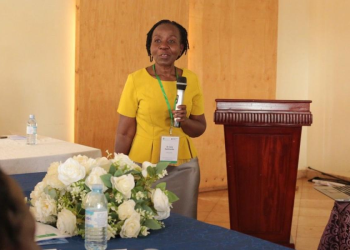
“This transition isn’t just about a change in providers, it’s a pivotal moment for stable, affordable power to fuel growth, competitiveness, and job creation,” says Gilbert Kibekityo, Research and Policy Analyst at the Uganda Manufacturers Association (UMA).
If handled well, they say, this transition represents a potential turning point in industrial productivity, efficiency, cost effectiveness and competitiveness, because these rely on a stable power supply to drive production.
The sector has faced unreliable electricity supply and high tariffs, which the industrialists say hinder growth.
“While Umeme improved access and industrial connections, high costs at more than 600 Shillings per kilowatt hour (unit) and frequent outages, forced reliance on costly diesel generators,” Kibekityo says, adding that this in turn raised production costs and reduces Uganda’s competitive in the East African Community (EAC) market.
He reminded UEDCL that the government’s industrialisation policy and the Vision 2040 to grow manufacturing’s GDP contribution to 31 percent will heavily depend on stable, affordable and efficient power distribution.
This is easier for UEDCL, whose main objective is service provision, according to him.
“Unlike profit-driven Umeme, UEDCL’s public ownership allows reinvestment in grid modernisation, potentially lowering tariffs and improving reliability,” he reasons, adding that manufacturers expect the company to resolve outdated infrastructure, inconsistent supply and slow response to fault incidents.
UMA, however, acknowledges the challenges that UEDCL faces in ensuring the reliability and affordability of the services.
These include disruptions due to grid failures, vandalism, and poor infrastructure maintenance.
“Issues like transformer theft, damage to high-voltage transmission lines and limited capacity in industrial parks have caused significant production losses,” Kibekityo says, adding that prioritising infrastructure protection, investing in anti-vandalism measures, upgrading transmission lines, and expediting repairs will create public trust.
This would be enhanced by implementing smart grid technology with real-time monitoring and predictive maintenance to further improve system reliability and efficiency.
UMA called for collaboration between the government agencies and the private sector to find or develop innovative and tailored electricity solutions.
“Through UMA, they can engage in dialogue to influence policies like special industrial tariffs and demand-side management programs, reducing energy costs and optimising grid use.
This collaboration enhances service responsiveness through faster fault resolution and better customer support, helping position Uganda as a regional manufacturing hub.”
As Umeme exits, the manufacturers hail its contributions to expanding electricity access are acknowledged, but say that the focus now shifts to the future.
“The manufacturing sector extends a cautious but hopeful welcome,” he says, adding, “The expectations are clear: prioritise industrial zones, ensure uninterrupted supply and implement policies that reduce the cost of power for manufacturers-URN. Give us feedback on this story through our email: kamwokyatimes@gmail.com