By KT Reporter
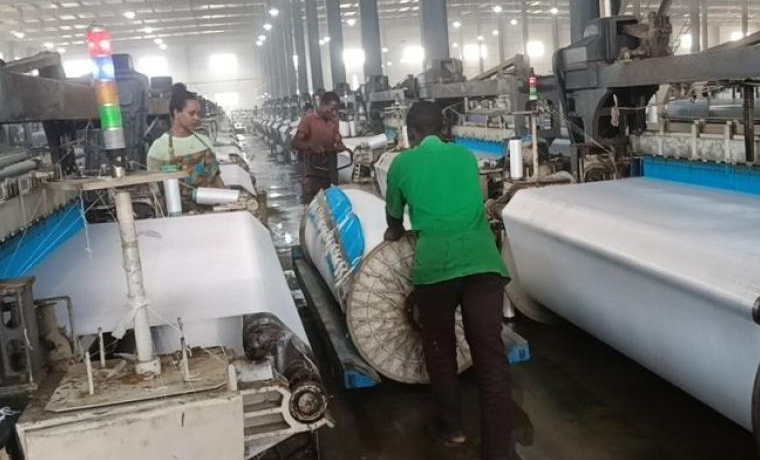
The Tianao Furniture Factory in the Sino-Uganda Mbale Industrial Park offers many young Ugandans a chance to find work and learn new skills. While workers appreciate fair treatment and timely pay, they still worry about low wages and difficulties in communication.
A year ago, Esabu Martin came to the Tianao Furniture Factory without skills, savings, or much hope. Now, he feels his life has changed for the better. “I came here with nothing in my pocket,” he says with pride. “But this company has given me skills. I can now make sofas, assemble machines, and I’m confident that in five years, I’ll be able to start my own furniture business.”

Martin’s story is similar to those of many young Ugandans who have worked at the Chinese-run industrial park. For many, it is their first time gaining practical skills and steady jobs.
Workers at Tianao Furniture Factory commend their Chinese supervisors for professionalism and respect at the workplace.
“Our bosses pay us on time, and they don’t mistreat us,” Martin explains. “Sometimes, when we finish work early, they even let us go home before time.”However, workers are frustrated by low daily wages. Some earn as little as seven thousand shillings per day, which they say is not enough to cover basic needs, as food and transport costs rise.
“We thank the government for bringing these industries,” said Sandra Nabukwasi, a sewing department employee. “But we ask our leaders to talk to the factory owners to increase our salaries, especially for those of us who have learned and mastered the skills.
”The workers are also urging the government to set a national minimum wage, arguing that without it, local employees in foreign-owned factories will continue to be underpaid despite their growing productivity and experience.
Tianao Furniture Factory has become a de facto training school for unskilled Ugandans eager to learn. Sandra, who joined the factory without any prior experience, says her journey has been eye-opening.
“When I came, I didn’t know anything,” she recalls. “But the Chinese masters taught me how to stitch fabrics and design sofa sets. Now, I can make any design a customer asks for.”
Sandra, like Martin, hopes to start her own upholstery business with the skills she has learned.According to Epau Ivan Jonathan, the Human Resource Manager at Sino-Uganda Industrial Park, over 11,000 Ugandans are currently employed across various factories, ranging from steel, textiles, to furniture production.
“When recruits arrive, they undergo one to two weeks of training before joining the production line,” Epau explained.
“We also partner with institutions like UTC Elgon to bridge the gap between classroom learning and industrial work.”Despite progress in skill-building, communication remains one of the factory’s biggest challenges. With only a few translators available, miscommunication between Chinese supervisors and Ugandan workers often leads to delays and frustration.
“Sometimes we can’t fully understand what the bosses mean, especially when giving instructions,” one worker shared. “We need more translators or basic language lessons for both sides.
”The Human Resource Department acknowledges this gap and says it is working with local authorities to recruit translators and organize short language courses to improve efficiency and cooperation.
Chinese administrators at the park, such as Laurent Zhang, attribute the success of these enterprises to Uganda’s friendly investment climate and supportive government policies.
He commended the Buy Uganda, Build Uganda (BUBU) initiative, saying it has helped expand the market for locally produced goods.“When people buy Ugandan-made products, it sustains factories like Tianao and creates more jobs,” Zhang noted.The Deputy Resident City Commissioner (DRCC) of Mbale, Mr. Yahaya Were, praised President Yoweri Museveni for attracting foreign investors to the region, saying the factories have reduced unemployment and crime.
“We urge workers to remain disciplined, avoid theft and fights, and learn as much as they can,” he said. “These industries have transformed the lives of many young people who once had no jobs.”Even as workers celebrate the skills and opportunities gained at Tianao, many say there’s still room for improvement.
“We need the government to encourage more youth to join these companies,” Martin urged. “At the same time, they should talk to our bosses about improving salaries and helping us communicate better.”
From the hum of sewing machines to the scent of freshly cut timber, the Tianao Furniture Factory symbolizes both progress and potential. It is a place where hope is being built—one skill, one chair, and one paycheck at a time.
-URN. Give us feedback on this story through our email: kamwokyatimes@gmail.com