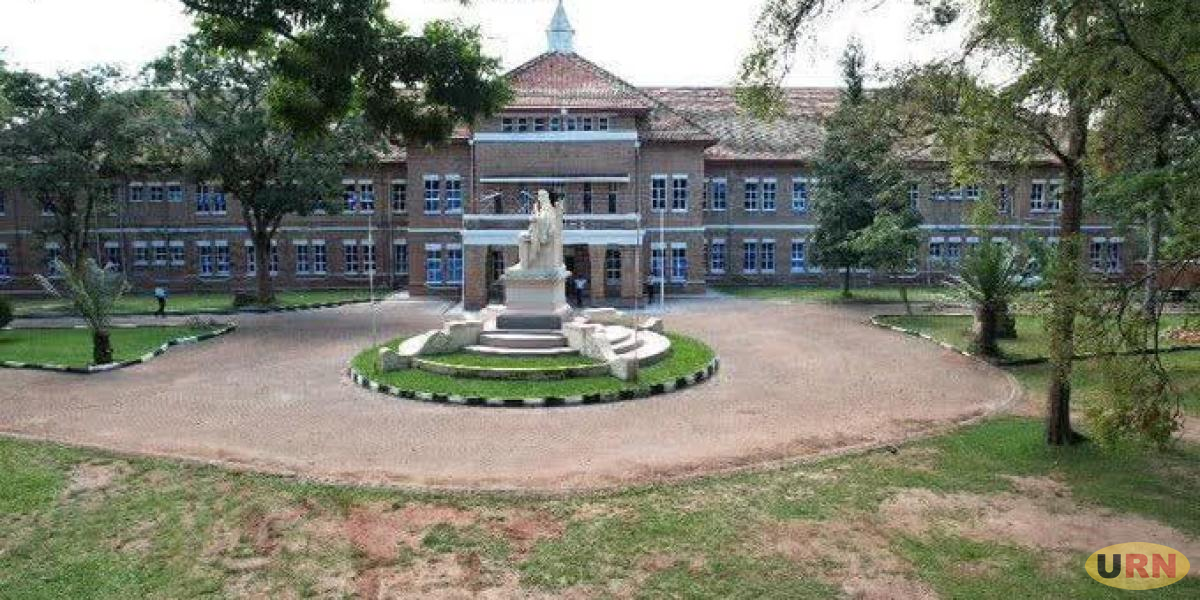
Kisubi Minor Seminary has marked 75 years of priestly and human formation, with the institution unveiling expanded facilities aimed at increasing student intake while strengthening its mission of preparing future priests and responsible leaders. Speaking during the Platinum Jubilee celebrations, the Rector of Kisubi Seminary, Rev. Fr. Francis Ssengendo, said the renovations and new structures are intended to respond to the growing number of young people seeking admission.
Rev Fr Ssengendo added that the expansion will provide seminarians with a better environment for academic, spiritual, and human formation. “We receive many young people who come with a desire to join the seminary. Our responsibility is to ensure they find facilities that support their growth, formation, and preparation for the mission ahead. That was the vision of the founders,” the rector said.
Rev Fr Ssengendo further explained that the seminary receives at least 250 applications from students seeking admission every year, excluding those who come through Nswanjere Preparatory Seminary. He noted that this reflects a significant increase compared to previous years, when the entire student population stood at about 140 to 150 students. To respond to the growing demand, the seminary has renovated some of its old structures and constructed new facilities aimed at accommodating more students while improving the environment for academic, spiritual and human formation.

The major project is a four-storey building named the Archbishop Joseph-Louis Cabana Memorial Building in honour of the founder of the seminary. The multi-billion-dollar facility houses dormitories that can accommodate up to 200 students, modern classrooms, a computer laboratory, and a library, among other facilities. Fr. Ssengendo said the project is part of the seminary’s effort to remain faithful to Archbishop Cabana’s vision of creating a place where young men could discern the call to the priesthood while also receiving formation that prepares them to serve society.
“(Archbishop) Cabana’s vision was to create a seminary and train men who would appreciate the gift of the priesthood. When you come to Kisubi, you can see his efforts from the structures he put up,” he said. He added that the seminary has worked to maintain and expand the institution while ensuring that the original vision of its founder remains alive.
“We have maintained and tried to expand the seminary in line with the vision of our father of great memory, and we wanted a project that would serve us for generations,” he said. Kisubi Seminary opened its doors in 1951 under the leadership of Archbishop Joseph-Louis Cabana, although construction of the institution had started earlier in 1949.
The seminary quickly established itself as both a centre of priestly formation and academic excellence. Records at the institution show that in 1956, the first candidates sat the Cambridge School Certificate examinations through St. Mary’s College Kisubi, achieving a 100 percent pass rate and setting the foundation for Kisubi’s long-standing academic reputation.
By 1957, student enrolment had grown to more than 110 seminarians, creating the need for further expansion. Since then, Kisubi Seminary has undergone several renovations and expansions to respond to changing needs and accommodate growing numbers of students. The Rector added that while the physical structures have evolved over the years, the seminary has remained committed to its core mission of priestly and human formation. He noted that the formation programme itself continues to be reviewed to address the realities facing young people today and prepare seminarians for their future responsibilities, while remaining rooted in the principles and vision of the founders and the Church.
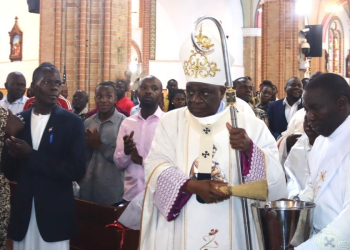
Speaking during the Platinum Jubilee celebrations, the Archbishop of Kampala, Paul Ssemogerere, has paid tribute to the generations of rectors, teachers, formators, parents, and benefactors whose dedication has shaped Kisubi Seminary into one of the influential centres of priestly and human formation.
Drawing from the day’s liturgy, he reflected on three themes, remembrance, fruitfulness, and identity, saying they capture the journey of Kisubi Seminary since its establishment in 1951. While acknowledging the human effort invested in building the seminary, Archbishop Ssemogerere said its story is ultimately one of God’s mercy.
For the last 75 years, Kisubi Seminary has grown into one of the leading minor seminaries with more than 700 men who began their formation there have gone on to become Catholic priests, including several bishops, while thousands of former students who did not join the priesthood have become educators, diplomats, public servants, academics, professionals, and business leaders.
Reflecting on the Parable of the Sower from the Gospel of Mark, Archbishop Ssemogerere likened the seminary’s history to fertile ground where God has generously planted the seeds of vocation. He, however, acknowledged that, like the seeds in the Gospel, not every vocation matures into the priesthood. Some young men abandon the journey because of life’s distractions, hardships, or personal choices.
Yet he said this does not diminish the seminary’s mission. “The parable does not end on a negative note. It ends in abundance,” he said. Archbishop Ssemogerere noted that while only a small proportion of seminarians eventually become priests, those who follow other careers continue serving society with the Christian values acquired during their years at the seminary.
Quoting St. John Paul II’s call to “look forward with confidence,” he reminded formators that producing good fruit requires constant cultivation through discipline, prayer, sacrifice, humility, and perseverance. He stressed that the purpose of a minor seminary extends beyond academic excellence. “The mission of a minor seminary is not simply academic excellence,” he said. “Its measure is our capacity to help young men become attentive listeners to God’s voice and to form hearts capable of receiving the Gospel so that they may bear fruit.”
Archbishop Ssemogerere urged the seminary leadership and formators to continue nurturing disciplined and prayerful young men rooted in Christian values. He also appealed to parents to support their children’s vocations and called on alumni, whether priests, professionals, public servants, or family members, to remain ambassadors of Kisubi’s values. Established on land gifted to Catholic missionaries by Kabaka Muteesa I in the late nineteenth century, Kisubi has a long history of Catholic education and formation.
Over the years, the seminary has produced generations of priests, bishops, and leaders serving in different fields. One of its major milestones came in 1964 when Fr. Francis Xavier Mugambe became the first priest fully formed at Kisubi Seminary. He later returned to serve as rector from 1981 to 1988. The seminary has been led by several rectors over the decades, including Msgr. Eugene Jjemba, the first African rector who served from 1960 to 1972, and Msgr. Charles Kasibante, who served the longest tenure of 13 years.
While Kisubi is widely known for producing priests, its mission extends beyond priestly formation. In an earlier interview, the Rector, Rev. Fr. Francis Ssengendo, noted that only about 10 percent of seminarians eventually become priests, while the majority pursue other careers, carrying with them the values, discipline, and knowledge acquired at the institution. Among Kisubi’s notable alumni are Archbishop Augustine Kasujja, the first African Apostolic Nuncio, Bishop Matthias Ssekamaanya, Bishop Joseph Antony Zziwa, Chairman of the Uganda Episcopal Conference, Bishop Lawrence Mukasa, and the late Bishop John Baptist Kaggwa, former Bishop of Masaka.
The seminary has also produced prominent lay leaders, including Acting State Minister for Higher Education Dr. John Chrysostom Muyingo, musician and lawyer Sylver Kyagulanyi, Makerere University academic Prof. Justinian Tamusuza, and Ronald Balimwezo, the Lord Mayor of Kampala, among other professionals. Meanwhile, the Platinum Jubilee celebrations brought together Church leaders, former rectors, priests, alumni, parents, benefactors, and current seminarians to reflect on the seminary’s contribution to the Catholic Church in Uganda and beyond-URN. Give us feedback on this story through our email: kamwokyatimes@gmail.com