The Church of Uganda’s Karamoja Diocese is preparing to celebrate 50 years of peacebuilding and community development, reflecting on its journey from a region plagued by insecurity to one increasingly opening up to development.
The Diocese will mark its Golden Jubilee this Sunday, October 25, 2026, at St. Philip’s Cathedral in Moroto under the theme, “Thus Far the Lord Has Brought Us.”Karamoja Diocese was carved out of Soroti Diocese in 1976. However, the Anglican Church’s history in the region dates back to 1929, when the first missionaries arrived in Lotome Sub-county, Napak District.The early years of the church coincided with the introduction of formal education in the area.
A teachers’ college was established under the white missionaries and was later renamed Moroto Core Primary Teachers College.Evangelists from Bunyoro, West Nile and Teso also supported the growth of the church in Karamoja.

According to church records, Rt. Rev. Brian Herd from the United Kingdom was the first bishop of Karamoja Diocese, followed by Rt. Rev. Howell Davies from Ireland. Both were consecrated at Namirembe Cathedral before being installed in Karamoja, but were later deported by former President Idi Amin.
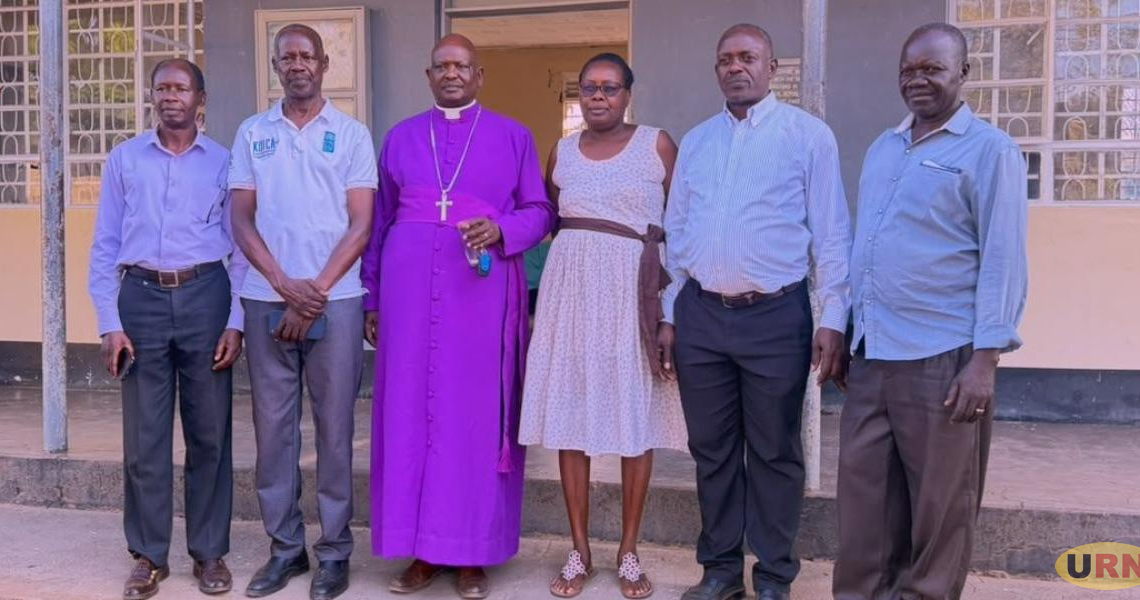
Rt. Rev. Peter Lomongin took over the leadership of the Diocese in 1986 and served until his death in 2007. He was succeeded by Rt. Rev. Joseph Abura, who became the fourth bishop and served until his retirement in August 2024.Rt. Rev. Michael Chorey is the fifth bishop of the Diocese.
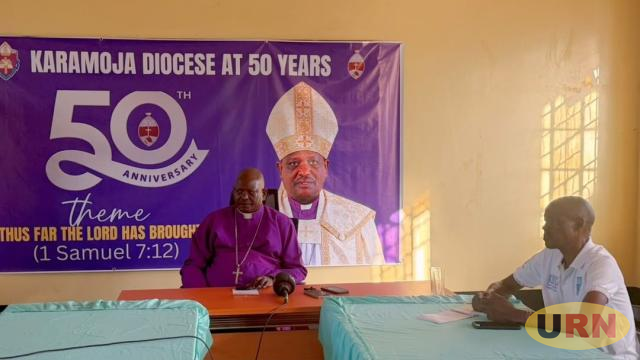
Speaking at a press conference ahead of the Golden Jubilee celebrations, Bishop Chorey said the theme reflects the challenges the church has faced over the past five decades, including harsh environmental conditions and insecurity that claimed lives.
“The theme is derived from the journey that the church walked through to reach where we are amidst challenges including harsh environment and insecurity that led to loss of lives, but the church remained stronger,” Chorey said.
He said the Diocese has grown from four parishes to 25, while the number of archdeaconries has increased from four to nine.
Bishop Chorey said the Diocese initially concentrated on programmes aimed at improving livelihoods through livestock extension, agriculture and education. The programmes were intended to improve food security, literacy and household incomes.
However, persistent insecurity undermined these efforts, forcing the church to make peacebuilding a central part of its work.
Chorey said church leaders and other organisations began visiting homesteads to encourage peaceful coexistence at a time when inter-cluster fighting among the Karamojong was common.
“The church has been actively involved in the promotion of peacebuilding through various means, including reconciling man to God and man to man,” Chorey said.
He said the church made peace a central message in its sermons and community engagements because insecurity was undermining its development programmes.
Although the security situation has improved, Chorey said the region continues to face other challenges as development activities expand. These include drug abuse among young people, child abuse, domestic violence and hunger.
He also cited the challenge of engaging young people, particularly those who identify with Generation Z, whose expectations and approaches to life sometimes differ from those promoted by the church.
The Diocese is also running savings programmes, community adult education and Functional Adult Literacy (FAL) classes in its parishes to address illiteracy.
Chorey said some people who enrolled in the adult literacy programmes have since progressed into formal education.
He added that the church encourages Christians to take advantage of government economic transformation programmes and use the opportunities to improve their livelihoods.
Simon Nangiro, the chairperson of the Golden Jubilee organising committee, said the celebrations would showcase the Anglican Church’s contribution to peace and development in Karamoja, a region long associated with armed violence.
Nangiro said the church has continued to promote peace, development and community participation.
He added that the Anglican Church has expanded its presence into rural communities, where it is implementing development programmes alongside its religious activities.
Nangiro said the church has also used agriculture, including a seed scheme programme, to respond to the needs of local communities.
Church leaders say the Diocese began engaging in development activities in the early 1980s through a seed scheme programme that supported agricultural production in Karamoja.
Under the programme, the region reportedly exported sorghum to Malawi and Ethiopia. Farmers in Kotido were also trained in ox-ploughing, which helped boost groundnut production.
Bishop Chorey recalled that the agricultural initiatives improved production and livelihoods, particularly among farmers in Kotido District. However, he said the gains were lost as insecurity escalated, disrupting farming activities and pushing communities deeper into poverty.“The church is optimistic that the project can still be revived to tackle the current hunger situation,” he said.
The Diocese hopes that reviving the programme could help address food insecurity and restore agricultural production in a region where many households continue to face livelihood challenges-URN. Give us feedback on this story through our email: kamwokyatimes@gmail.com