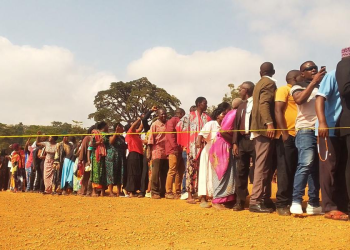
Judicial officers and court staff have been urged to make their physical, mental, emotional and spiritual well-being a priority, with the Judiciary warning that a healthy workforce is essential for fair, independent and effective justice delivery. The call was made by Deputy Chief Justice Moses Kazibwe Kawumi, who represented Chief Justice Dr. Flavian Zeija during celebrations marking the International Day of Judicial Well-Being at the Judiciary Headquarters in Kampala over the weekend.
Held under the theme “Judicial Well-Being for Effective Justice Delivery,” the event began with a procession through Kampala before participants took part in aerobics, blood donation, free medical screening and wellness awareness sessions. Delivering the Chief Justice’s message, Justice Kazibwe said judicial wellness directly influences the quality of justice delivered.

“A healthy, supported Judiciary is less vulnerable to corruption and external influence. Conversely, a stressed or burned-out judge is more likely to face health challenges that can affect judgment and decision-making,” he quoted Chief Justice Zeija as saying. Justice Kazibwe said judicial officers who are physically and mentally healthy are better equipped to make objective decisions, demonstrate empathy and uphold the integrity of the justice system.
He noted that the growing international focus on judicial well-being reflects the immense pressures judicial officers face, including heavy case backlogs, traumatic cases, public scrutiny and demanding deadlines. He said these challenges informed the United Nations’ decision to designate July 25 as the International Day of Judicial Well-Being, encouraging judiciaries worldwide to safeguard the welfare of judges as a pillar of judicial independence.
Drawing lessons from the Nuremberg Trials, the International Criminal Tribunal for Rwanda and the International Criminal Tribunal for the former Yugoslavia, Justice Kazibwe said judicial officers require emotional resilience in addition to legal competence to handle complex and often distressing cases. Quoting both the Bible and the Qur’an, he said caring for one’s body and mind is a shared responsibility rooted in faith and essential for serving society with wisdom and integrity.
Justice Kazibwe highlighted several initiatives already introduced by the Judiciary to promote staff welfare, including weekly aerobics, health runs, gym facilities, professional counselling services, wellness programmes through the Judicial Training Institute, HIV screening campaigns, sexual harassment prevention initiatives, peer support networks and quarterly interfaith prayer breakfasts.
While applauding these interventions, he reminded judicial officers that personal wellness ultimately depends on individual choices. He encouraged them to exercise regularly, maintain healthy diets, seek medical attention promptly and embrace professional counselling whenever necessary. “Seeking help should never be viewed as a sign of weakness but rather as an act of responsibility,” he said.
Justice Kazibwe also acknowledged concerns previously raised by the Uganda Judicial Officers Association (UJOA), including the need for improved medical insurance, better deployment policies, enhanced court infrastructure, laptops, transport, accommodation and improved working conditions, particularly for officers serving in remote areas. He assured members that proposals such as establishing a demonstration farm in Kapeka and creating a UJOA Rotary Club would be considered as resources permit.
Representing the Principal Judge, Lady Justice Olive Kazaarwe Mukwaya urged judicial officers to avoid self-medication and instead seek professional healthcare whenever they fall ill. She encouraged staff to utilise their medical insurance, undergo regular medical check-ups and pay greater attention to preventive healthcare, especially women’s health. Chief Registrar Agnes Alum described the commemoration as a reminder that judicial officers are human beings working under demanding conditions.
“He said” should be “She said”: She said heavy workloads, emotional strain and limited resources can negatively affect performance if not properly managed, urging officers to prioritise self-care before reaching burnout. UJOA President Her Worship Daphine Ayebare reaffirmed the association’s commitment to improving members’ welfare through continued engagement with Judiciary leadership on remuneration, allowances and better working conditions.
She also announced plans for a UJOA Golf Tournament on October 10, 2026, the Annual Dinner on November 28, 2026, the establishment of a demonstration farm to boost members’ incomes, the creation of a UJOA Rotary Club and efforts to establish a Judiciary Club to strengthen fellowship among judicial officers.During the health education sessions, Ministry of Health Technical Advisor for Self-Care Dr. Roselline Achola warned that inadequate sleep, prolonged stress and unhealthy lifestyles contribute significantly to poor physical and mental health. Meanwhile, National Medical Stores Chief Stores and Operations Manager Paul Okware cautioned against self-medication, urging judicial officers to consult qualified health professionals, adhere to prescribed treatment and complete medication as directed.
Judiciary Public Relations Officer Her Worship James Ereemye Jumire Mawanda thanked the Judiciary leadership, UJOA, the Ministry of Health, National Medical Stores, development partners and participants for supporting the commemoration, saying the lessons shared should translate into healthier lifestyles and stronger justice delivery-URN. Give us feedback on this story through our email: kamwokyatimes@gmail.com